
Watering
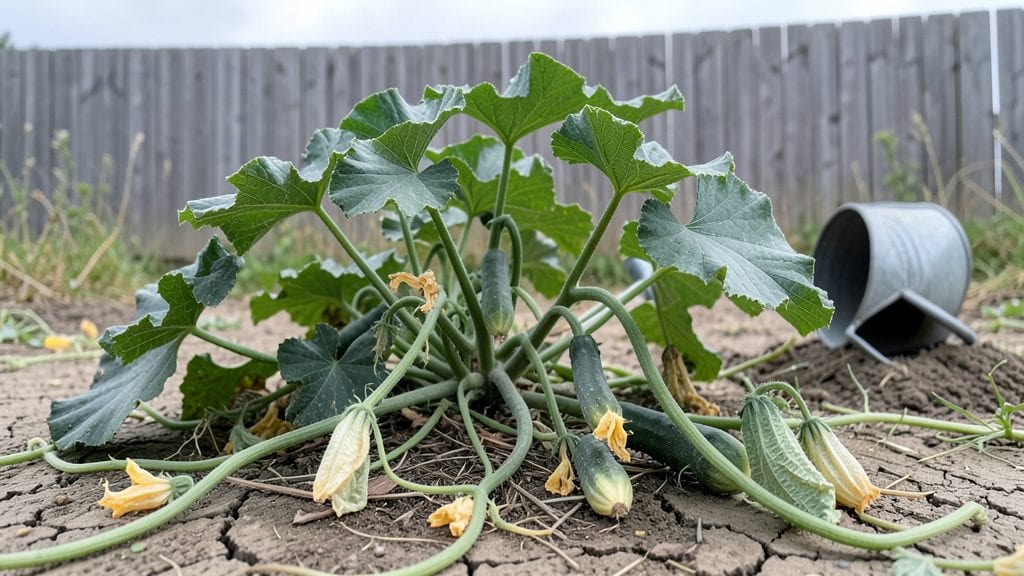
This underwatered cucumber plant, with its limp vines and crispy edges, is practically begging for a drink—so let’s fix it fast! 🌱 The good news? Even severely underwatered cucumbers can bounce back with the right recovery steps.
I’ve nursed plants from limp to lush in just three stages, and the secret lies in understanding how fast cucumbers drink and when to intervene.
Cucumbers are thirsty—they need 1-2 inches of water per week, but sandy soil or small pots dry out faster. Yellowing leaves and dry soil at the surface? That’s your plant begging for deeper hydration.
The first 48 hours are critical: soak the soil until water runs out the bottom, then repeat every 2-3 days until leaves perk up again.
By stage 3, you’ll see new growth with a deep green glow, not the dull yellow of stress. The key is keeping soil consistently moist—not soggy—while protecting roots from heat stress. Mulch helps retain moisture, and a 5-gallon watering can ensures even distribution without drowning the plant.
Prevention is easier than rescue: check soil moisture with your finger daily during heatwaves, and upgrade to larger containers if roots are cramped. Once you master this, your cucumbers will stay juicy, productive, and happy—no more wilting surprises.
Root Causes Of Thirsty Plants
Underwatering in cucumber plants isn’t just about forgetting to water—it’s often a mix of environmental, soil, and human factors working against your green thumbs. Let’s break down the real reasons your cucumbers might be crying out for hydration, so you can fix the problem at its source.
Cucumbers are heavy drinkers—their fast-growing vines and fruit demand consistent moisture. If you’re watering sporadically (or worse, relying on rain alone), their roots struggle to keep up.
- Why it happens: Cucumbers have shallow, fibrous root systems that spread widely but don’t store much water. Even one missed watering session can stress them, especially in hot, dry climates where evaporation speeds up. - Science behind it: Plants lose water through transpiration (evaporation from leaves).
If soil moisture drops below 30-40%, roots can’t absorb enough to replace it, leading to wilting. - Actionable fix: Stick to a daily watering routine (morning is best) and adjust frequency based on weather—soil should stay moist but not soggy.
Not all soil is created equal. If your cucumbers are planted in clay-heavy, compacted, or sandy soil, water either pools (causing rot) or drains too fast (leaving roots parched).
- Why it happens: - Clay soil holds water but strangles roots by cutting off oxygen. - Sandy soil drains too quickly, giving roots zero time to absorb moisture. - Poor organic matter (like compost) means soil can’t retain water or nutrients. - Science behind it: Roots need aeration (oxygen) and capillary action (water retention).
Compacted soil blocks both, while sandy soil lacks the hydrophilic (water-loving) particles needed to hold moisture. - Actionable fix: Amend soil with compost or coconut coir to improve water retention. For clay, add perlite or vermiculite to loosen it.
Cucumbers in pots are especially vulnerable to underwatering because their root systems are confined and compete for every drop of water.
- Why it happens: - Small pots (under 5 gallons) dry out 3x faster than ground soil. - Lack of depth means roots can’t grow downward to seek moisture. - No mulch = more evaporation from the soil surface. - Science behind it: Containers lose moisture 2-3 times faster than in-ground beds due to exposed sides.
Without mulch, the top inch of soil can dry out in hours on sunny days. - Actionable fix: - Use at least 5-gallon pots (bigger is better). - Mulch heavily with straw or wood chips to slow evaporation. - Water at the base (not overhead) to reduce runoff.
Heat, wind, and even high humidity can trick cucumbers into thinking they’re thirstier than they are—leading to overwatering or underwatering cycles.
- Why it happens: - High temperatures (above 85°F) double transpiration rates, draining soil faster. - Strong winds dry out leaves and soil before roots can respond. - Low humidity (common in desert climates) makes plants lose water aggressively. - Science behind it: The VPD (Vapor Pressure Deficit)—the dryness of the air—directly impacts how fast water leaves leaves.
In hot, dry air, cucumbers wilting can happen in minutes. - Actionable fix: - Shade cloth (30-50%) can reduce stress on hot days. - Windbreaks (like burlap screens) protect plants from drying winds. - Morning watering (before 10 AM) gives roots time to absorb before peak heat.
If roots are injured, rotted, or infected, they can’t absorb water efficiently—even if you’re watering correctly.
- Why it happens: - Overwatering in the past can cause root rot (fungal/bacterial infections). - Physical damage (from digging, pests, or transplant shock) reduces root surface area. - Nematodes (microscopic worms) chew on roots, leaving them unable to uptake water. - Science behind it: Healthy roots have millions of tiny root hairs that absorb water.
Damage to just 10% of roots can reduce water uptake by 50%. - Actionable fix: - Check roots (gently lift a plant) for mushy, dark spots (rot) or gnarled knots (nematodes). - Avoid soggy soil—let the top 2 inches dry between waterings. - Use neem oil or beneficial nematodes (like Steinernema) to combat pests.
Many gardeners wait until wilting is severe before acting—by then, roots may already be permanently damaged.
- Why it happens: - Early wilting (especially in the afternoon) is the plant’s first warning sign. - Yellowing leaves (not just wilting) can indicate root stress before it’s obvious. - Soil pull test: If soil clumps don’t stick together when squeezed, it’s too dry. - Science behind it: Cucumbers close stomata (leaf pores) to conserve water when stressed.
By the time leaves droop, cell damage may already be irreversible. - Actionable fix: - Water when the top 1-2 inches of soil feel dry (not bone-dry). - Use a moisture meter for accuracy—aim for 40-60% moisture in the root zone. - Revive wilting leaves with a light misting (but focus on deep watering at the base).
Revive Your Cucumber Plant Now
Seeing your cucumber plant droop like a soggy noodle isn’t the end of the world—it’s just a cry for help! 💦 With the right care, you can nurse it back to health and watch those vines bounce back stronger than ever.
Below, we’ve mapped out practical, step-by-step fixes based on the most common causes of underwatering, plus pro tips to keep your plant thriving long-term.
If your cucumber plant is parched, slow and deep watering is the first line of defense. Shallow drinks won’t cut it—cucumbers have deep roots that need hydration down to the base.
How to Do It Right:
- 💧 Use the "Finger Test": Stick your index finger 2–3 inches into the soil. If it feels dry, it’s time to water.
- 🍳 Water at the Base: Pour water directly onto the soil (not the leaves) until it drains out the bottom of the pot or flows evenly into the garden bed.
- ⏰ Best Time to Water: Early morning (6–9 AM) or late afternoon (4–7 PM) to reduce evaporation and fungal risks.
- 🌡️ Check Drainage: If water pools on top, your plant is suffocating. Ensure pots have drainage holes or loosen compacted garden soil.
💡 Pro Tip:
For container plants, soak the pot in a basin of water for 10–15 minutes. This mimics natural rainfall and encourages roots to absorb moisture evenly.
Cucumbers are thirsty plants—they need 1–2 inches of water per week, more in extreme heat. If you’ve been skimping, it’s time to up your game.
Fixes for Common Mistakes:
| Problem | Solution | Prevention Tip |
|---|---|---|
| Inconsistent watering | Stick to a schedule (e.g., every 2–3 days in summer, every 4–5 in spring/fall). | Use a watering timer or phone reminders. |
| Overwatering then neglect | Let the top 1–2 inches dry out between waterings. | Mulch around plants to retain moisture. |
| Small, frequent waterings | Water deeply 2–3 times per week instead of daily light sprinkles. | Invest in a moisture meter for accuracy. |
🎯 Special Case: Heatwaves
During scorching weather, cucumbers may need daily watering—especially in containers. Watch for wilted leaves (even if soil feels damp) and adjust accordingly.
Poor soil = poor hydration. If your cucumber’s roots can’t access water efficiently, even deep watering won’t help. Let’s fix that!
🔪 Soil Fixes:
- 🥘 Amend Heavy Clay Soil: Mix in compost or coconut coir to improve drainage and aeration.
- 🌡️ Lighten Sandy Soil: Add peat moss or well-rotted manure to help retain moisture.
- 🔄 Repot if Needed: If roots are circling or soil is waterlogged, move to a larger pot with fresh, well-draining potting mix.
✨ Organic Moisture Retention Hack:
Sprinkle hydrogel crystals (available at garden centers) into the soil before watering. They absorb and release moisture slowly, acting like a built-in reservoir.
Even with perfect watering, other factors can sabotage recovery. Shield your cucumber plant from these common culprits:
🌞 Too Much Sun?
- Fix: Provide afternoon shade (use shade cloth or move pots to partial shade).
- Prevent: Plant cucumbers where they get 6–8 hours of morning sun but afternoon relief.
🍃 Overcrowded Roots?
- Fix: Thin out nearby plants or prune competing vines to reduce water competition.
- Prevent: Space cucumbers 12–24 inches apart in gardens or 1 plant per 5-gallon pot.
🐛 Pest Pressure?
- Fix: Spray leaves with neem oil or soapy water to deter aphids/sap-suckers that stress plants.
- Prevent: Inspect plants weekly and remove pests manually.
Once your cucumber plant perks up, keep it happy with these easy maintenance habits:
- ✅ Mulch with straw or wood chips to lock in moisture.
- ✅ Water at the base—never from above to avoid fungal diseases.
- ✅ Monitor soil with a moisture meter or your finger.
- ✅ Fertilize lightly with compost tea every 4 weeks for steady growth.
- ✅ Train vines on a trellis to improve airflow and reduce stress.
With these fixes, your cucumber plant should bounce back in 3–7 days—and if you’ve been consistent, you’ll soon be harvesting crisp, juicy cukes all season! 🥒💚
Frequently asked questions
How often should I water cucumbers to prevent wilting?
Cucumbers need 1-2 inches of water per week, but containers dry out faster. Water deeply when the top 1-2 inches of soil feel dry—usually every 2-3 days in summer or 4-5 days in cooler months. Morning watering prevents evaporation and fungal issues.
Why do my cucumber leaves turn yellow even when I water regularly?
Yellowing leaves often signal root stress from overwatering, poor drainage, or nutrient deficiencies. Check for soggy soil (root rot risk) or compacted roots. Amend soil with compost and ensure pots have drainage holes. Yellowing at leaf edges may also indicate chlorosis from iron deficiency.
Can I save a cucumber plant with completely crispy leaves?
Act fast! Trim severely wilted leaves and give the plant a deep soak until water drains through. Place in shade for 24 hours to reduce stress. If roots are healthy (firm, white), new growth should appear in 3-7 days. If roots are mushy or black, the plant may be beyond saving.
What’s the best way to test if my cucumber plant needs water?
Use the finger test: Stick your finger 2-3 inches deep into the soil. If it feels dry, water immediately. For containers, lift the pot—if it’s light, roots need moisture. A moisture meter (under $10) gives precise readings and prevents over/underwatering.
Will mulch really help my underwatered cucumbers recover?
Mulch (straw, wood chips) locks in 30-50% more moisture by reducing evaporation. Apply a 2-3 inch layer around plants, keeping it 2 inches away from stems to prevent rot. Mulched plants stay hydrated 3-5 days longer between waterings.