
Companion Plants
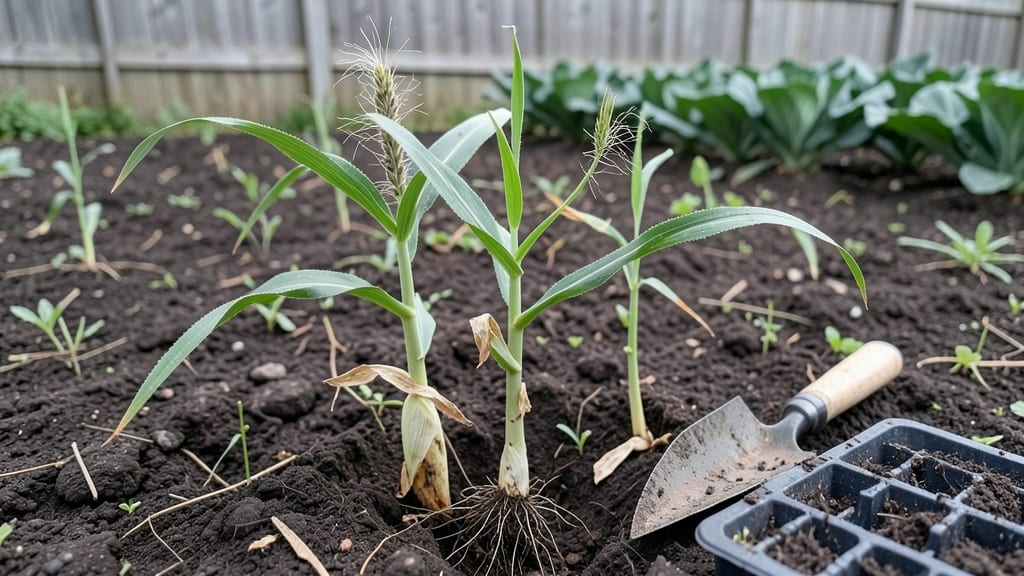
Planting sweetcorn plants directly in the garden is how you guarantee those juicy, buttery ears we all crave. 🌽 I’ve learned the hard way that store-bought seedlings often struggle—direct-sown corn thrives when planted in blocks, not rows, because wind pollination works best when tassels brush against each other.
The secret isn’t complicated: warm soil, proper spacing, and patience pay off with ears so sweet they’ll make your neighbors jealous.
Start when soil reaches 60°F—usually 2-3 weeks after your last frost—and plant seeds 1 inch deep, 6 inches apart in blocks (not straight rows). Sweetcorn needs full sun (6+ hours daily) and well-draining soil rich in organic matter.
If your soil feels cool or compacted, mix in compost to speed up germination and root growth. Most varieties take 70-90 days to mature, so check your first-frost date and work backward.
Once sprouted, keep soil consistently moist but not soggy—dry spells stress plants and shrink ear size. Thin seedlings to 12 inches apart when they’re 4 inches tall, and watch for those silky white tassels (that’s when pollination happens).
A light mulch helps retain moisture and keeps weeds at bay. By midseason, you’ll see 6-foot-tall stalks with ears forming—proof you’re on the right track.
Common mistakes? Planting too early (seeds rot in cold soil), spacing too widely (poor pollination), or neglecting water during tasseling. But when done right, you’ll harvest ears so plump and sweet they taste like summer in every bite. Ready to grow your best corn yet?
📚 In This Guide
- What you need
- Instructions
- Tips and common mistakes
- Wrapping up and next steps
What you need
- ● Sweetcorn seeds: Choose heirloom or hybrid varieties (e.g., 'Golden Bantam,' 'Silver Queen,' or 'Peaches & Cream'). Buy 1–2 lbs for a family-sized harvest (about 25–50 plants per pound).
- ● Well-draining soil: Test for pH 6.0–6.8. Amend with compost or aged manure (1–2 inches mixed into the top 6–12 inches of soil).
- ● Fertilizer: Balanced starter fertilizer (e.g., 5-10-10) at planting time.
- ● High-nitrogen fertilizer (e.g., 10-10-10) after germination (follow package rates).
- ○ Optional: Slow-release organic fertilizer (e.g., worm castings or bone meal) for steady nutrients.
- ● Watering tools: Drip irrigation or soaker hose (to keep soil consistently moist but not soggy).
- ● Watering can with a fine rose (for seedlings).
- ● Planting tools: Trowel or small hand shovel (for digging holes 1–2 inches deep).
- ● String or stakes (to mark rows 12–18 inches apart).
- ● Companion plants: Marigolds (🌼 pest deterrent), beans (🌱 nitrogen-fixing), or basil (🍃 flavor booster).
- ● Mulch: Straw or grass clippings to retain moisture and suppress weeds.
- ● Row covers: Lightweight fabric to protect seedlings from pests or frost.
- ● Pest control: Neem oil or diatomaceous earth (for corn earworm prevention).
Step-by-Step instructions for planting sweetcorn plants
Direct-sowing sweetcorn delivers the juiciest ears—here’s how to plant them for maximum yield and tenderness.
🌱 Step 1: Prepare the Soil for Optimal Germination
Sweetcorn thrives in loose, nutrient-rich soil with a pH between 6.0 and 6.8. Work the 2-3 inches of compost into the top 6 inches of soil using a garden fork or tiller. Break up any clumps to create a fine, crumbly texture—corn roots need room to spread without resistance. If your soil drains poorly, mix in 1-2 inches of coarse sand to improve aeration.
Test moisture by squeezing a handful of soil—it should hold together but not feel soggy. If it’s too dry, water deeply 24 hours before planting so the soil is evenly moist but not waterlogged. Avoid planting in cold, wet soil—corn seeds rot below 50°F. Wait until the ground warms to at least 60°F at a 2-inch depth for reliable germination.
🌱 Step 2: Plant Seeds in Blocks for Better Pollination
Sweetcorn is wind-pollinated, so plant 4 seeds in a 12-inch square (a "block") rather than single rows. Space blocks 30-36 inches apart in all directions to allow airflow and easy harvesting. Press seeds 1 inch deep—deeper planting delays germination, while shallower sowing risks drying out. I use my thumb to make small holes, then drop 2 seeds per hole (thinning later ensures strong plants).
Cover seeds with soil and gently firm the surface with your hand to eliminate air pockets. Water lightly with a fine spray to settle the soil without displacing seeds. Place a small stake or marker at each block to track growth—corn seedlings emerge in 7-14 days, depending on soil temperature. If planting multiple rows, stagger them by 2-3 weeks to extend the harvest window.
☀️ Step 3: Provide Consistent Water and Sun for Lush Growth
Sweetcorn needs full sun (6-8 hours daily) and 1-1.5 inches of water weekly, delivered at the soil level to avoid wetting leaves (which spreads disease). I water deeply 2-3 times per week in dry climates, aiming for moist but not soggy soil. Use a soaker hose or drip irrigation to keep moisture consistent—uneven watering causes ears to dry out or crack.
Watch for first true leaves (long, narrow, and pointed) as a sign of healthy germination. Once seedlings reach 6 inches tall, side-dress with ½ cup of 10-10-10 fertilizer per block, working it into the soil 2 inches away from stems. This boosts root development and tassel formation. Mulch with 2 inches of straw to retain moisture and suppress weeds—corn hates competition.
✂️ Step 4: Thin and Support Plants for Maximum Yield
When seedlings are 4-5 inches tall, thin to 1 strong plant per original hole by snipping weak stems at the base with clean scissors. Leave the most vigorous seedling—look for thick stems and dark green leaves. If you planted 2 seeds per hole, remove the smaller of the two to avoid overcrowding.
Install 3-foot-tall stakes or a trellis when plants reach 18 inches to support heavy ears. Tie stems loosely with soft garden twine as they grow—corn can get top-heavy. Remove any lower leaves touching the soil to prevent rot. Pollination occurs when tassels (male flowers) appear at the top and silks (female flowers) emerge from ear husks. You’ll see bright yellow silk strands—this is your cue to increase water slightly to plump up developing ears.
🌿 Step 5: Harvest at Peak Juiciness for Sweetest Ears
Harvest when silks turn brown and ears feel firm but yield slightly to gentle pressure. Use a sharp knife to cut ½ inch below the ear—this prevents the plant from tearing. I test ripeness by peeling back the husk: milky white liquid inside the kernels means peak sweetness. Harvest in the morning when sugars are highest, and store ears in the fridge for 3-5 days or blanch and freeze for long-term use.
Pull up remaining plants when ears stop forming (usually 2-3 weeks after the first harvest). Compost the stalks—corn roots fix nitrogen in the soil, improving next year’s garden. For continuous harvests, replant 1-2 blocks every 2 weeks during the growing season. The key to juicy sweetcorn? Consistent care from seed to silk.
Tips & tricks for planting sweetcorn plants
Direct-sowing sweetcorn requires precision—but these insider tricks will help you avoid common pitfalls and grow ears that burst with juiciness every time.
Soil Temperature is Non-Negotiable: That 60°F minimum at 2-inch depth in Step 1 isn't just a suggestion—it's the threshold where corn seeds finally activate their germination enzymes. I've planted in soil that felt warm at the surface only to watch seeds rot when deeper temps stayed below 50°F. Use a soil thermometer for 3 consecutive days to confirm consistency. If your garden runs cool, consider black plastic mulch laid 24 hours before planting to accelerate warming.
The Block System Pays Off: Those 12-inch squares in Step 2 aren't just for pollination—they create microclimates that retain moisture better than rows. For even better results, I add a ½-inch layer of vermiculite to each block before planting. It improves moisture retention during germination while preventing soil compaction. Just be sure to water with a fine spray afterward to avoid displacing seeds.
Watering Wisdom for Juicy Ears: The 1-1.5 inches weekly guideline in Step 3 assumes average rainfall. In my dry climate, I actually measure ½ inch every 2-3 days during tasseling (when those bright yellow silks appear). Uneven watering causes ears to develop unevenly—some kernels stay dry while others become mushy. A soaker hose placed at the base of each block delivers water exactly where it's needed without wetting leaves, which prevents fungal diseases that dull sweetness.
Harvesting Hack for Peak Flavor: That milky white liquid test in Step 5 is foolproof, but here's the secret: harvest 2 hours after sunrise when starches have converted to sugars overnight. I also cut ears ½ inch below the ear using a sharp knife—this prevents stem tearing and keeps the cob intact. For maximum juiciness, store harvested ears in the fridge with their husks on for up to 5 days, or blanch and freeze for long-term storage.
Pro Tips for Planting Sweetcorn Plants
- Direct-sowing sweetcorn requires precision—but these insider tricks will help you avoid common pitfalls and grow ears that burst with juiciness every time.
- Soil Temperature is Non-Negotiable: That 60°F minimum at 2-inch depth in Step 1 isn't just a suggestion—it's the threshold where corn seeds finally activate their germination enzymes.
- The Block System Pays Off: Those 12-inch squares in Step 2 aren't just for pollination—they create microclimates that retain moisture better than rows.
Frequently asked questions
Got questions about planting sweetcorn? You’re not alone! Here are answers to the most common queries to help you grow juicy, homegrown ears like a pro.
When is the best time to plant sweetcorn?
Sweetcorn thrives in warm soil—aim for after the last frost when soil temps hit 60°F (15°C). In most regions, this is late spring to early summer. For longer seasons, try succession planting every 2–3 weeks for continuous harvests!
Can I plant sweetcorn from store-bought kernels?
Technically yes, but it’s not ideal. Store-bought kernels are often treated to prevent sprouting. For better success, save seeds from organic, heirloom varieties or buy fresh seed from a nursery. Pro tip: Test germination by soaking kernels in water for 24 hours—if they sprout, they’re viable!
What should I do if my sweetcorn plants look wilted or have holes?
Wilted leaves or chewed foliage usually mean pests like corn earworms or cutworms. Try these fixes:
- Handpick worms from ears at night (they hide in silks).
- Use row covers early in the season to block moths.
- Apply neem oil or Bt (Bacillus thuringiensis) as a natural pesticide.
Do sweetcorn plants need companion plants?
Sweetcorn benefits from companion planting to deter pests and improve growth. Try pairing it with:
- Beans or peas (fix nitrogen in the soil).
- Marigolds or basil (repel insects).
- Avoid planting near potatoes or tomatoes—they compete for nutrients.
How long does it take for sweetcorn to mature?
Most sweetcorn varieties take 60–100 days to harvest, depending on the type:
- Early-season: 60–75 days (e.g., ‘Silver Queen’).
- Mid-season: 75–90 days (e.g., ‘Peaches and Cream’).
- Late-season: 90–100+ days (e.g., ‘Ambrosia’).
Wrapping up and next steps
Planting sweetcorn isn’t just about growing a crop—it’s about harvesting sun-kissed, buttery kernels that taste like summer in every bite.
With the right companion plants, soil prep, and a little patience, you’ll be rewarded with abundant, juicy ears that’ll make your garden (and your dinner table) the talk of the neighborhood. 🌽✨
Now that you’re armed with the know-how, roll up your sleeves and get those seeds in the ground! Start small if you’re new, or go big if you’re dreaming of a corn maze. And remember—every ear you harvest is a victory lap for your green thumb. Happy planting! 🌱💚
Next step: Mark your calendar for planting day and gather your supplies—your future meals (and bragging rights) are waiting!