
Aphids
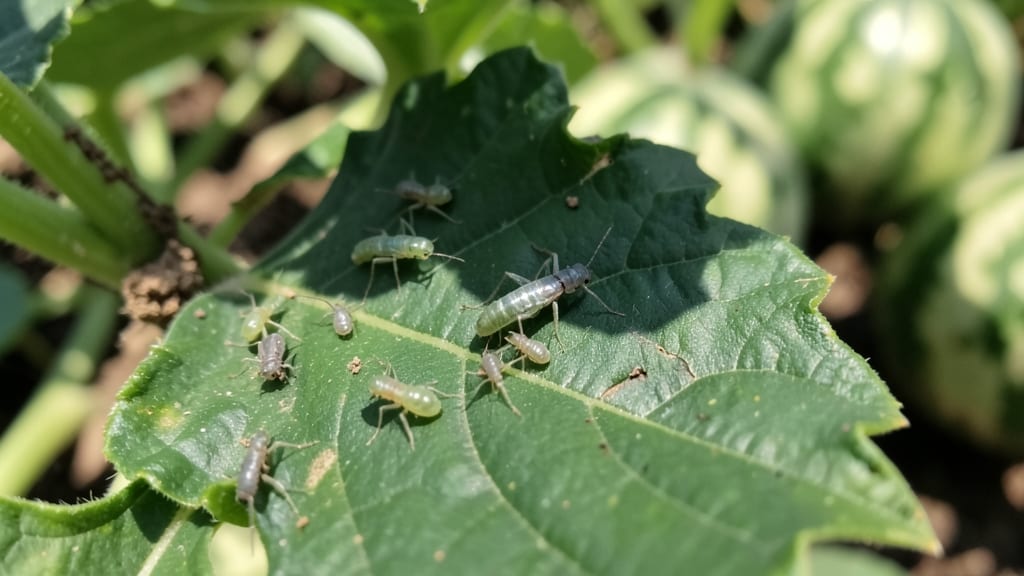
Last summer, the aphids on my watermelon plants struck fast, teaching me the painful lesson that ignoring them leads to stunted vines and bitter fruit—all while those tiny green pests feasted on new leaves and stems, draining sap that leaves plants looking weak and curled.
The good news? I’ve since perfected a 3-step organic removal that restores vines to healthy, productive plants—no harsh chemicals needed.
First, you’ll need to identify the problem correctly—aphids on watermelons often hide on the undersides of leaves or along growing tips, where they shield themselves from sprays.
Once spotted, the solution starts with a strong blast of water to knock off clusters, followed by an organic spray like neem oil or insecticidal soap. This combo disrupts their life cycle while keeping your plants safe. The key is consistency: repeat treatments every 5–7 days until they’re gone.
What I love about this method is how it works alongside preventive care—healthy vines resist pests better. Focus on balanced watering, proper spacing, and companion planting (like marigolds or basil) to deter future infestations.
Within 2–3 weeks, you’ll see new growth pushing out, and those vines will be back to thriving—ready to produce sweet, plump melons instead of struggling under pest pressure.
For stubborn cases, I’ll admit I’ve had to call in reinforcements—like ladybugs or lacewings—but even then, the damage stays minimal. The goal isn’t perfection; it’s healthy plants that bounce back. Here’s how to turn your watermelon vines around, step by step.
Root Causes Of Watermelon Aphids
Aphids don’t just randomly appear on your watermelon plants—they’re drawn by specific conditions that make your garden a five-star buffet. 🍽️ Understanding these triggers is the first step to stopping them before they become a full-blown infestation.
Below, we break down the three primary reasons aphids target watermelon vines, backed by science and actionable insights.
Aphids thrive where plants are weak, and watermelons are no exception. When your vines are stressed by poor spacing, competition for nutrients, or environmental factors, they release honeydew-laden sap—a sweet, sticky signal that aphids can’t resist.
Why It Happens:
- Poor Air Circulation 🌬️ Watermelon vines need 6–12 inches of space between plants to grow strong. Crowded vines struggle to photosynthesize efficiently, leading to stunted growth and sugar-rich sap—aphids’ favorite snack.
Studies show that poor ventilation also increases humidity around leaves, creating a moist environment that aphids adore.
- Nutrient Deficiencies 🌱💀 Aphids are drawn to plants that are nitrogen-deficient because they produce softer, more tender leaves (easier to pierce) and higher sugar content (more appealing). If your soil lacks phosphorus or potassium, watermelons become even more vulnerable to pests.
- Drought or Overwatering 💦🔥 Fluctuating moisture levels stress plants, triggering them to produce more sugars as a survival mechanism. Aphids detect these chemical changes and swarm in. Overwatering, meanwhile, creates soft, mushy leaves that aphids can easily colonize.
What You Can Do:
✅ Space plants properly (6–12 inches apart) for better airflow. ✅ Test soil nutrients and amend with compost or balanced fertilizer (look for 10-10-10 or 5-10-10 NPK ratios). ✅ Water deeply but consistently—aim for 1–1.5 inches per week—to avoid stress spikes.
Aphids are plant vampires that feed on phloem sap, a sugary liquid that fuels growth. Watermelons, especially young or fast-growing ones, produce abundant sap, making them a prime target.
But it’s not just the sap—honeydew, the sticky byproduct of aphid feeding, attracts more aphids (and ants, which farm them like cattle).
Why It Happens:
- Young, Fast-Growing Leaves 🌱🚀 New watermelon leaves are rich in sugars because the plant is diverting energy to growth. Aphids use their stylets (tiny mouthparts) to tap into these nutrient-dense veins, triggering more sap production—a vicious cycle.
- Honeydew Feedback Loop 🍯🐜 When aphids feed, they excrete honeydew, a sugary residue that:
- Attracts more aphids (they follow the scent).
- Encourages sooty mold (a black fungal growth that weakens plants).
- Lures ants, which protect aphids in exchange for honeydew (creating a mutualistic relationship).
- Certain Watermelon Varieties 🍉🔍 Some heirloom or hybrid watermelons have thicker, sweeter leaves, making them more appealing to aphids. If you’ve noticed aphids preferring certain vines, variety selection may play a role.
What You Can Do:
✅ Prune young, tender leaves to reduce aphid feeding sites. ✅ Disrupt honeydew chains by wiping leaves with a soapy water spray (1 tsp mild soap per quart of water). ✅ Use ant barriers (like Tanglefoot around the base of plants) to break the aphid-ant alliance.
Aphids are cold-sensitive but love warmth and still air. If your garden fits their ideal climate, they’ll reproduce exponentially—some species can multiply 20-fold in a week under perfect conditions.
Why It Happens:
- Warm Temperatures (60–80°F) ☀️🌡️ Aphids hibernate in eggs during cold winters but wake up and reproduce rapidly when temps rise. Watermelons, which thrive in 70–90°F, provide the perfect growing conditions for both the plant and the pest.
- Stagnant Air & Sheltered Spots 🌬️❌ Aphids hate wind—it dries them out and washes away their sticky trails. If your watermelon patch is near fences, dense foliage, or low-lying areas, it creates a protected microclimate where aphids can establish colonies undisturbed.
- Early Spring Planting ⏳🌱 Planting watermelons too early (before last frost) means they’re young and vulnerable when aphids emerge. Cooler spring temps also weaken natural predators (like ladybugs and lacewings), giving aphids a head start.
What You Can Do:
✅ Plant after the last frost and choose heat-tolerant varieties (e.g., ‘Sugar Baby’ or ‘Crimson Sweet’). ✅ Improve airflow by pruning dense vines and staking plants to keep them off the ground. ✅ Encourage natural predators by planting companion flowers (like dill, fennel, or marigolds) nearby.
Key Takeaway: Aphids on watermelons aren’t random—they’re responding to stress, sweetness, and shelter. By addressing these three core triggers, you can make your garden less inviting and more resilient. 🚀 Next, we’ll cover how to remove them organically before they take over!
Quick Fixes for Aphid-Infested Watermelons
Aphids may be tiny, but their damage can feel huge—especially when they’re sucking the life out of your watermelon vines. The good news? You don’t need harsh chemicals to kick them out.
Below, we’ve mapped practical, organic solutions directly to the most common causes of aphid outbreaks, plus prevention tips to keep your plants thriving. Let’s get those pests packed up and out for good!
Aphids love stressed plants—think crowded vines, nutrient-deficient soil, or weak growth. If your watermelons are struggling, they’re basically an all-you-can-eat buffet for these pests. Fix it with:
🌱 Step 1: Thin Out the Vines (🔪)
Overcrowding = aphid heaven. Give your plants room to breathe (and grow strong!). - How: Snip off excess vines or leaves to improve airflow.
Aim for 12–18 inches of space between plants. - Pro Tip: 💡 Remove yellowing or damaged leaves first—they’re aphid magnets.
🌱 Step 2: Feed Them Right (🍽️) Weak plants attract pests.
Boost their health with organic fertilizers rich in: - Nitrogen (for leafy growth) – Try compost tea or fish emulsion. - Phosphorus (for root strength) – Bone meal works wonders. - Potassium (for pest resistance) – Wood ash or banana peels (yes, really!).
🌱 Step 3: Water Wisely (💦)
Aphids adore dry, dusty leaves. Deep watering at the base (not overhead) keeps foliage moist and less appealing.
- Morning watering = less humidity = fewer fungal issues.
- Avoid soggy soil—aphids also love damp, rotting leaves.
If aphids are still winning, your garden might need a pest-control team. Ladybugs, lacewings, and parasitic wasps are nature’s cleanup crew—but they need an invite!
🐞 Step 1: Plant Companion Flowers (🌸)
Aphids hate strong-smelling herbs and flowers that attract their predators. Add these near your watermelons:
- Marigolds (repel aphids + attract ladybugs)
- Dill or Fennel (lure parasitic wasps)
- Basil (confuses aphids with its scent)
🐞 Step 2: DIY Predator Hotel (🏠)
Create a ladybug habitat with:
- A small mesh cage filled with leaves and twigs.
- Place it near your watermelons—ladybugs will move in within days!
🐞 Step 3: Release Beneficial Insects (🐝)
Buy aphid-specific predators from garden centers:
- Ladybugs (eat 5,000 aphids in a lifetime!)
- Lacewing larvae (voracious aphid hunters)
- Aphid midge larvae (tiny but mighty)
Pro Tip: 🌡️ Release them at dusk—they’re less stressed in cooler temps.
When pests are deeply embedded, a gentle but effective spray can save the day. Skip the chemicals—these organic options work fast:
💦 Option 1: Soapy Water Blast (🧼)
- Mix 1 tsp mild castile soap + 1 quart water in a spray bottle.
- Spray directly on aphids (avoid beneficial insects).
- Reapply every 2–3 days until gone.
💦 Option 2: Neem Oil Knockout (🌿)
Neem oil disrupts aphid feeding and reproduction.
- Recipe: 1 tbsp neem oil + 1 tsp soap + 1 quart water.
- Spray undersides of leaves (where aphids hide).
- Reapply every 5–7 days for 2 weeks.
💦 Option 3: Garlic Pepper Spray (🧄)
Aphids hate garlic’s sulfur compounds.
- Blend 4 garlic cloves + 1 tsp cayenne pepper + 1 quart water.
- Strain, add 1 tsp soap, and spray on infested areas.
- Best for severe cases—smells strong but works!
⚠️ Warning: Test sprays on a small leaf first—some plants are sensitive!
Once you’ve evicted the aphids, lock the door with these long-term strategies:
✅ Rotate crops – Don’t plant watermelons in the same spot yearly (aphids remember!). ✅ Use reflective mulch – Silver mulch confuses aphids with its glare. ✅ Prune regularly – Remove aphid hotspots (new growth, flower buds). ✅ Encourage biodiversity – A healthy garden ecosystem = fewer pests. ✅ Check new plants – Quarantine store-bought or nursery plants for 2 weeks before planting.
| Problem | Solution | Prevention Tip |
|---|---|---|
| Weak/stressed plants | Thin vines + fertilize | Rotate crops yearly |
| Overcrowding | Space plants 12–18 inches apart | Use reflective mulch |
| Lack of predators | Plant marigolds + release ladybugs | Add dill/fennel as traps |
| Severe infestation | Neem oil or garlic spray | Prune regularly |
| Persistent outbreaks | Soapy water + companion planting | Quarantine new plants |
Remember: Aphids are easy to remove when you act fast and prevent them with smart gardening. Your watermelons will be thriving, pest-free, and ready for harvest in no time! 🍉✨
Frequently asked questions
Why do aphids prefer watermelon plants over other vegetables?
Watermelon vines produce sugar-rich sap that aphids crave, especially in young, fast-growing leaves. Their thick, tender foliage also provides ideal shelter, while the plant's honeydew byproduct attracts even more pests. Unlike hardier veggies, watermelons struggle to recover quickly from aphid damage, making them prime targets.
Will aphids kill my watermelon plants if I don't treat them?
While aphids rarely kill watermelons outright, severe infestations can stunt growth, distort fruit, and spread sooty mold (a black fungus). Left untreated, your plants will produce smaller, bitter melons with poor yields. Early intervention prevents long-term damage and keeps vines healthy.
How often should I spray neem oil on watermelon aphids?
Apply neem oil every 5–7 days for 2 weeks to disrupt aphid life cycles. Always mix with 1 tsp soap per quart to help it stick. Spray in the early morning or evening to avoid harming bees, and focus on leaf undersides where aphids hide.
Can I use dish soap to kill aphids on watermelons?
Yes, but use mild castile soap only—dish soap can damage plant leaves. Mix 1 tsp soap per quart of water and spray directly on aphids. Reapply every 2–3 days until they disappear. Avoid spraying flowers to protect pollinators.
What’s the fastest way to get rid of aphids on watermelon vines?
Combine a strong water blast (knocks off clusters) with a neem oil spray (disrupts reproduction). For stubborn cases, release ladybugs or lacewings—they devour aphids within 3–5 days. Consistency is key: repeat treatments until no new aphids appear.