
Pruning
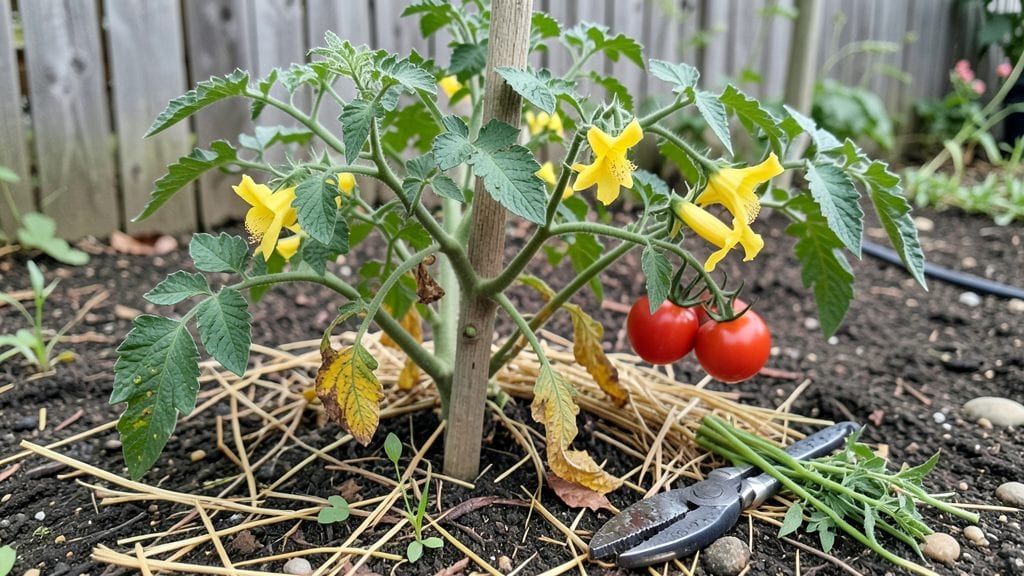
Pruning tomato plant leaves isn't just about shaping your plant—it's the secret to stronger yields and healthier vines. I learned this the hard way after my first garden season, where thick foliage trapped moisture and my tomatoes struggled.
The right cuts improve airflow, prevent disease, and direct energy where it matters: to fruit production.
You only need three basic tools: clean pruning shears, a small bucket for clippings, and a sharp knife for stubborn stems. Focus on three types of cuts: removing leaves below the first flower cluster, trimming suckers (those little shoots between stems), and thinning crowded branches.
Timing matters too—prune in the morning on dry days to avoid stressing the plant.
When done right, you'll see plumper tomatoes, fewer cracked fruits, and plants that stay upright without staking. The difference between a bushy mess and a productive vine comes down to these simple cuts.
Most gardeners see 20-30% more tomatoes after mastering this technique, and the process takes just 10-15 minutes per plant once you get the hang of it.
This works for both determinate (bush) and indeterminate (vining) varieties, though indeterminate tomatoes benefit most. Start with just a few cuts on one plant to see the difference before going all-in. Your next harvest will thank you.
📚 In This Guide
- What you need
- Instructions
- Tips and common mistakes
- Wrapping up and next steps
What you need
- ● Pruning shears or sharp bypass pruners – Choose sterilized, sharp ones (e.g., Felco or Fiskars) to avoid disease spread. 1 pair is all you need.
- ● Disposable gloves – Opt for nitrile or latex-free gloves (e.g., blank">Gloves by Gardeners.com) to protect against thorns and bacteria. 1–2 pairs per session.
- ● Disinfectant solution – Mix 1 part bleach to 9 parts water (or use 70% isopropyl alcohol) to sterilize tools between cuts. Small spray bottle or bowl for soaking.
- ● Garden twine or plant ties – 1–2 rolls (e.g., blank">Gardeners.com twine) to support pruned plants if needed.
- ● Trash bag or compost bin – For discarded leaves/stems. 1–2 bags per session.
- ● Hand pruners (smaller) – For tight spaces (e.g., Fiskars Micro-Tip).
- ● Garden journal/notebook – To track pruning dates and plant progress.
- ● Epsom salt or calcium supplement – 1–2 tbsp per gallon of water to spray pruned areas for faster healing.
- ● Sunhat & sunscreen – If pruning during peak sun hours!
Instructions for pruning tomato plants to boost fruit production
Here’s how to shape your tomato plants for bigger yields—no guesswork, just proven cuts.
Remove Suckers for Stronger Growth
Suckers are the small shoots that grow in the crotch between the main stem and a branch. These compete with your fruit for energy, so pinch them off early. Use your thumb and forefinger to gently squeeze the sucker at its base until it snaps cleanly. Start checking for suckers when plants reach about 12 inches tall—that’s when they begin forming.
Don’t wait until suckers grow larger than your pinky finger. The bigger they get, the harder they drain your plant’s resources. Focus on the first 6-8 inches of the main stem first, where suckers appear most aggressively. You’ll see new growth slow down slightly after pruning, but this is normal—your plant is redirecting energy to existing fruit.
Trim Lower Leaves to Improve Airflow
Remove all leaves from the bottom 6-12 inches of the plant, especially those touching the soil. Use clean, sharp pruning shears to cut just above a leaf node or branch. This prevents soil-borne diseases like blight from spreading upward. If you’re growing in containers, trim leaves that block sunlight from reaching the fruit clusters.
You’ll notice the stems look a bit bare after this step, but that’s intentional. More sunlight and airflow mean fewer fungal issues and riper tomatoes. Avoid removing leaves higher up unless they’re yellow or diseased—those help shade developing fruit from sunburn.
Prune Excess Branches for Better Fruit Quality
Once your plant has 3-4 main stems, stop pruning suckers entirely. Instead, focus on removing any branches that grow straight upward or cross over others. These compete for sunlight and weaken the plant. Cut them back to a leaf node using sterilized pruners—never tear them by hand, as this can damage the stem.
Watch for signs of over-pruning: if your plant suddenly wilts or stops producing flowers, you’ve gone too far. A well-pruned tomato should still have plenty of leaves—just fewer unnecessary ones. After pruning, water deeply to help the plant recover and support new growth.
Deadhead and Harvest Regularly
As flowers turn into small tomatoes, pinch off any yellowing or diseased leaves immediately. Use your fingers to twist them off gently at the base—no need for shears. This keeps the plant’s energy focused on healthy fruit. Harvest tomatoes as soon as they ripen, even if others remain on the vine. Overripe tomatoes drain the plant and attract pests.
You’ll see a difference within 2-3 weeks: fewer but larger tomatoes, stronger stems, and less disease pressure. Keep pruning throughout the season, but reduce intensity as plants near the end of their cycle. The goal is balance—enough leaves for photosynthesis, but enough airflow to keep fruit healthy.
Tips & tricks for pruning tomato plants
Here's what I learned after years of trial and error—these tricks will help you avoid common mistakes and get the best results from your tomato plants.
Timing Matters: Start pruning when your plants reach about 12 inches tall, as this is when suckers begin forming. I check my plants every 3-4 days once they hit this height, focusing on the first 6-8 inches of the main stem where suckers appear most aggressively. This early intervention prevents those little shoots from draining your plant's energy before they even have a chance to grow.
Tool Selection: Always use clean, sharp pruning shears for cutting branches and leaves—dull tools can damage stems and invite disease. I keep a small bottle of rubbing alcohol nearby to wipe down my shears between cuts. For suckers, your fingers work perfectly, but make sure they're clean to prevent spreading any potential pathogens. Sterilized tools are especially important if you notice any signs of disease on your plants.
Visual Cues for Pruning: Look for suckers that are larger than your pinky finger—these are stealing energy from your fruit. In Step 2, when trimming lower leaves, focus on removing any leaves touching the soil or blocking sunlight from reaching the fruit clusters. For Step 3, branches growing straight upward or crossing others are the ones to remove. These visual cues help me decide exactly what to prune without overdoing it.
Recovery Strategy: After pruning, water your plants deeply to help them recover. I always give my tomatoes a good soak after any significant pruning session. This helps the plant adjust to the sudden change in its structure and supports new growth. Watch for signs of over-pruning like wilting or reduced flower production—these are clear signals to ease up on the cuts.
Pro Tips for Prune Leaves Tomato Plants
- Here's what I learned after years of trial and error—these tricks will help you avoid common mistakes and get the best results from your tomato plants.
- Timing Matters: Start pruning when your plants reach about 12 inches tall, as this is when suckers begin forming.
- Tool Selection: Always use clean, sharp pruning shears for cutting branches and leaves—dull tools can damage stems and invite disease.
Frequently asked questions
Got questions about pruning tomato leaves? You’re not alone—this step can feel tricky at first! Below, we’ve rounded up the most common concerns to help you prune like a pro and boost those juicy harvests.
When is the best time to prune tomato leaves?
Prune your tomato plants early and often—start when they’re 12–18 inches tall, then repeat every 1–2 weeks. Focus on removing suckers (the small shoots between the main stem and branches) and yellow/diseased leaves. Avoid heavy pruning late in the season, as it can stress plants before harvest. Pro tip: Morning pruning lets wounds heal faster in warm, dry conditions.
Do I really need to prune tomato plants? Won’t it hurt them?
Not pruning can hurt your yield! Pruning improves airflow, reducing disease risk (like blight) and directing energy to fruit production. However, determinate tomatoes (bush varieties) need minimal pruning—just remove diseased leaves. Indeterminate varieties (vining types) thrive with regular pruning for bigger, healthier tomatoes. Skip pruning if your plants are already struggling or in poor soil.
What’s the difference between suckers and leaves I should remove?
| Suckers | Leaves to Remove |
|---|---|
| Small shoots growing in the _V_-shaped junction between the main stem and branches. Always remove these! |
|
Remember: Never remove more than 1/3 of the foliage at once to avoid shocking the plant.
Can I prune tomatoes in hot or humid weather?
Prune during cool, dry conditions (early morning or late afternoon) to prevent stress. Humid weather speeds up disease spread, so avoid pruning if rain is forecasted. If you must prune in heat, do it lightly and water deeply afterward. Use sterilized pruners to minimize infection risk.
What if my tomato plant looks sad after pruning?
Don’t panic! Mild wilting or slower growth is normal for 2–3 days as the plant adjusts. If leaves crisp or drop entirely, you may have over-pruned. Fix it:
- Water deeply and consistently.
- Avoid fertilizing for 1–2 weeks.
- Provide shade if temperatures exceed 90°F (32°C).
Wrapping up and next steps
Pruning your tomato plants isn’t just about tidying up—it’s a game-changer for healthier vines, bigger yields, and fewer pests! By mastering the three key cuts (suckers, lower leaves, and yellowing foliage), you’re giving your plants the energy to focus on what matters most: plump, flavorful tomatoes. 🍅✨
Ready to see the difference? Grab your pruners and start small—even just one plant can make a world of difference. Next up: monitor your progress and adjust as your tomatoes grow. Happy pruning!