Neem Oil
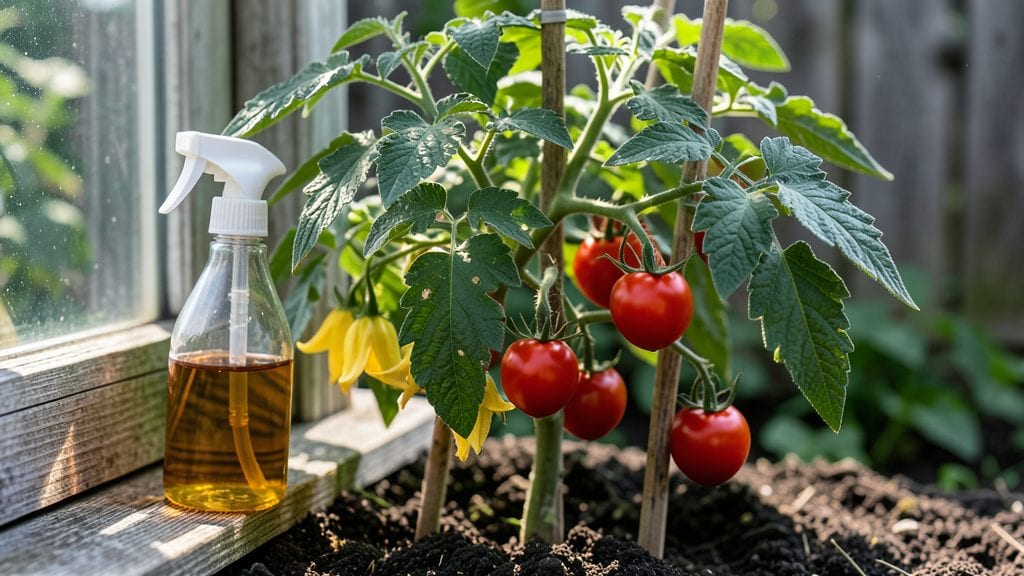
Yes, you can spray neem oil on tomato plants to treat pests like aphids or whiteflies, but only after flowers appear to avoid harming pollinators and when temperatures stay above 55°F. Dilute properly (1 tsp per quart of water) and apply in the evening for safety and effectiveness.
Neem oil disrupts pests' feeding and reproductive cycles through its active compound, azadirachtin, which confuses insects while also acting as a mild fungicide for tomato leaves. 🌱 This makes it a go-to for organic gardeners battling aphids, spider mites, or early signs of blight—just avoid spraying during peak pollinator activity (morning to early afternoon).
The key is consistency: reapply every 7-10 days during outbreaks, but always let the solution dry before exposing plants to sunlight to prevent leaf burn.
For best results, mix neem oil with a drop of dish soap to help it stick to plant surfaces. I’ve found that applying it in the evening reduces risks to bees while still targeting pests like whiteflies, which are most active at night.
Just remember: overuse can stress plants, so start with a 1% dilution and monitor your tomatoes’ response closely.
💡 In This Article
- How Neem Oil Works on Tomato Plant Pests
- Best Practices for Safe Neem Oil Application on Tomatoes
How neem oil works on tomato plant pests
Neem oil's power comes from its azadirachtin compound, a natural insect growth regulator that disrupts pests' life cycles at a cellular level. When sprayed on tomato plants, this compound interferes with insects' hormone systems, preventing them from molting properly or reproducing.
For example, aphids exposed to neem oil often produce sterile offspring within 48 hours, effectively halting population growth. The oil also contains salannin and nimbin, which act as feeding deterrents, making leaves taste bitter to pests like whiteflies and spider mites.
The effectiveness varies by pest type. Against aphids, neem oil shows 70-90% reduction in infestations when applied correctly, while it's 50-70% effective against whiteflies due to their faster reproduction cycles.
For fungal issues like early blight, the oil's mild fungicidal properties help by creating a protective film on leaves that inhibits spore germination. 🌿 What's fascinating is how neem oil works differently than chemical pesticides—it doesn't kill insects outright but instead disrupts their biological processes, making it safer for beneficial insects when used properly.
Organic gardeners prefer neem oil because it breaks down quickly in sunlight (within 24-48 hours), reducing environmental persistence compared to synthetic pesticides. The oil's low toxicity to mammals makes it ideal for edible crops like tomatoes, where food safety is paramount.
However, the 1% dilution rate (1 tsp per quart) is crucial—concentrated neem oil can damage plant cells by stripping their natural waxy cuticle, leading to brown spots or leaf curl.
Temperature plays a surprising role in effectiveness. Neem oil works best when air temperatures stay above 55°F because cold slows down the oil's ability to penetrate insect exoskeletons. Below this threshold, the active compounds become less effective, which is why late spring or summer applications yield better results.
The oil's viscosity also means it clings better to leaves in 60-80% humidity, creating a longer-lasting protective barrier against pests.
For comparison, neem oil's pest control lasts 7-14 days between applications, unlike synthetic pyrethroids which provide 2-5 days of protection but harm beneficial insects. The oil's multi-faceted action—disrupting feeding, reproduction, and growth—makes it particularly valuable for tomato plants that face multiple pest pressures simultaneously.
This is why organic growers often combine neem oil with kaolin clay for added protection against fruit borers.
What most gardeners don't realize is how neem oil's scent works as a secondary defense. The oil's strong aroma repels many soft-bodied insects before they even make contact with the plant.
This dual-action mechanism—chemical disruption and sensory deterrence—explains why neem oil remains one of the most versatile tools in organic pest management for tomato cultivation. 🌱