Propagation
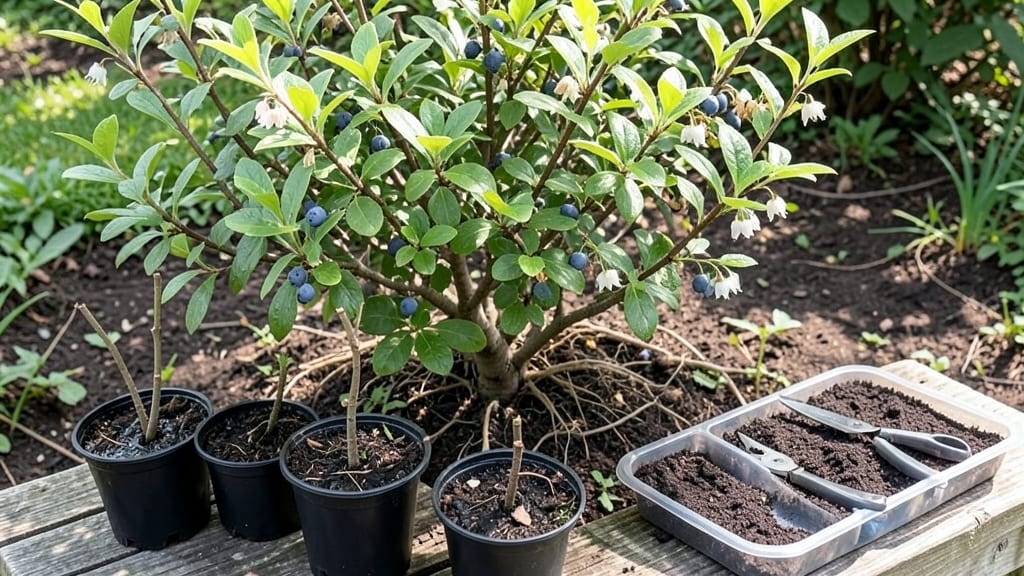
Blueberry plant propagation through layering is how I doubled my bushes last spring without buying a single new plant. 🌿 The key lies in bending a healthy branch to the ground while it's still attached, encouraging roots to form before severing it completely—no soil required.
This method works best with mature blueberry bushes in early summer when new growth is firm but not woody. All you need are sharp pruning shears, a small stake to hold the branch in place, and a bit of patience.
The roots typically form within 6-8 weeks, and the new plant will be ready for transplanting in the following spring.
You’ll end up with vigorous, disease-resistant plants that produce fruit years sooner than seedlings. The berries stay true to the parent plant’s variety, and the process saves money while expanding your garden effortlessly. Once rooted, these new bushes thrive just like their parents.
Perfect for gardeners in zones 4-8 who want to propagate existing plants without the hassle of starting from seed. The technique scales from a single bush to an entire row, making it ideal for both small yards and larger homesteads.
📚 In This Guide
- What you need
- Instructions
- Tips and common mistakes
- Wrapping up and next steps
What you need
- ● Mature blueberry plant: Choose a healthy, 1- to 2-year-old stem (at least pencil-thick) with visible buds. Avoid flowering or fruiting branches.
- ● Sharp pruning shears or knife: Sterilized to prevent disease. A bypass pruner (clean cut) is ideal.
- ● Plastic or metal tubing: ½-inch to ¾-inch diameter (e.g., PVC pipe, plastic straws, or flexible tubing). Length should match your stem (12–24 inches).
- ○ Rooting hormone: Optional but recommended (e.g., clonex or rootone) to boost root growth.
- ● Moisture-retentive medium: Sphagnum moss or coconut coir (pre-moistened). Avoid regular soil—it can compact and suffocate roots.
- ● Twist ties or zip ties: To secure the tubing and medium in place (non-metal, to avoid cutting stems).
- ● Water spray bottle: For gentle hydration without disturbing the layer.
- ● Clear plastic bag or humidity dome: To maintain humidity (e.g., a zip-top bag or propagation dome).
- ● Patience and a sunny spot: Layering takes 4–8 weeks—keep your setup in indirect light (6+ hours/day).
- ● Hydrogen peroxide (3%): Dilute 1:10 with water to sterilize pruning tools and prevent bacterial infections.
- ● Heat mat: Set to 70–75°F to speed up rooting (especially in cooler climates).
- ● Fertilizer (low-nitrogen): Add a seaweed extract or fish emulsion (½ strength) once roots form.
- ● Journal or labels: Track progress with dates, moisture levels, and root development.
- ● Grow lights: If natural light is limited, use a LED grow bulb for 12–14 hours/day.
Step-by-Step instructions for blueberry plant propagation using layering
Here's how to multiply your blueberry bushes without digging—just bend, bury, and wait.
🌿 Step 1: Select and Prepare a Healthy Stem
Choose a 1-year-old stem from your existing blueberry plant that's flexible but not brittle—it should bend easily without snapping. Look for stems that are about pencil-thick (roughly ½ inch in diameter) and have at least 3-4 leaf nodes along its length. These nodes are where roots will form.
Gently bend the stem downward until it touches the soil. The goal is to create a 45-degree angle without breaking the stem. If the stem is too stiff, you may need to make a small ½-inch cut on the underside to encourage bending. This is normal and won't harm the plant.
💧 Step 2: Bury the Stem and Secure It
Using your fingers, create a 1-inch deep trench in the soil along the bent stem. Bury 2-3 of the lower leaf nodes completely, leaving the top nodes exposed. The buried portion should be moist but not soggy—water lightly if the soil feels dry to the touch.
Secure the bent stem in place with u-shaped wire or bent coat hanger (if using metal, bend it into a gentle curve first). This keeps the stem buried while allowing it to photosynthesize through the exposed leaves. If you don't have wire, use plastic plant ties or even a small rock to hold it down temporarily.
☀️ Step 3: Maintain Moisture and Light for Root Growth
Keep the soil consistently moist around the buried stem—not waterlogged. Roots typically form in 4-8 weeks, but the process can take longer in dry conditions. Water every 2-3 days until the top ½ inch of soil feels slightly damp (like a wrung-out sponge).
Place the layered stem in partial shade for the first 2 weeks to reduce stress. After that, move it to morning sun with afternoon shade—blueberries prefer 6-8 hours of sun daily but can scorch when young roots are establishing. You'll know roots are forming when you see new growth at the buried nodes.
✂️ Step 4: Separate the New Plant When Roots Form
After 8-12 weeks, gently dig around the buried stem to check for roots. If you feel resistance when pulling lightly or see white root tips, it's ready to separate. Use clean pruners to cut the new plant just below the roots, leaving 2-3 inches of stem attached to the parent plant.
Transplant the new plant to its permanent location, ensuring the root ball stays intact. Water deeply after planting to help it establish. The original plant may take 1-2 weeks to recover, but it'll soon send out new stems to replace what you've removed.
Tips & tricks for perfect blueberry plant propagation using layering
Here's what I've learned from successfully propagating blueberries this way—these tricks will help you avoid common pitfalls and get better results.
Stem Selection is Everything: Don't just grab any stem! Look for ones that are 1-year-old and have 3-4 leaf nodes—these are your root-forming powerhouses. I've found that stems with ½-inch diameter (about pencil-thick) bend best without breaking. If you're unsure, gently flex the stem—it should bend like a bow, not snap like a twig.
The Cutting Technique: When you need to make that ½-inch cut on stiff stems (Step 1), use clean pruners and cut on the underside where the stem bends. This prevents tearing and gives the stem a better chance to heal. I've tried cutting from the top, and it always seemed to heal slower—don't make my mistake!
Moisture Management: The consistently moist soil requirement in Step 3 is non-negotiable. I've learned to check moisture by feeling the top ½ inch of soil—it should feel like a wrung-out sponge. Too much water causes rot, too little stalls root growth. A spray bottle helps maintain even moisture without oversaturating.
Light Transition Strategy: During the first 2 weeks of partial shade (Step 3), I've found it helps to gradually increase sunlight exposure. Move the plant to a slightly sunnier spot each day until it's getting morning sun with afternoon shade. This gradual transition prevents shock and gives young roots time to establish before full sun exposure.
Pro Tips for Blueberry Plant Propagation
- Here's what I've learned from successfully propagating blueberries this way—these tricks will help you avoid common p...
- Stem Selection is Everything: Don't just grab any stem! Look for ones that are 1-year-old and have 3-4 leaf nodes—the...
- The Cutting Technique: When you need to make that ½-inch cut on stiff stems (Step 1), use clean pruners and cut on th...
Frequently asked questions
Got questions about propagating blueberries with the layering method? You’re not alone—this technique can feel tricky, but we’ve got answers! Here are some of the most common questions (and solutions) to help you grow those juicy berries with confidence.
When is the best time to start layering blueberry plants?
The ideal time is early spring or late summer when the plant is actively growing but not flowering. Spring layering gives roots time to establish before winter, while late summer avoids stress before dormancy. Avoid layering during extreme heat or cold—think moderate weather wins!
How long does it take for layered blueberry stems to root?
Root development typically takes 4–8 weeks, depending on moisture, temperature, and plant health. You’ll know it’s working when you see new growth at the tip or feel slight resistance when gently tugging the stem. Patience is key—don’t rush it!
What if my layered stem isn’t rooting? Troubleshooting tips?
If your stem isn’t rooting, check these fixes:
- Moisture: Keep the soil consistently damp (not soggy). Use a spray bottle to mist the stem daily.
- Light: Ensure the layered area gets partial shade—too much sun can dry it out.
- Stem health: If the stem looks wilted or mushy, it may be rotting. Trim it back and try again.
- Fertilizer: A light dose of balanced fertilizer (10-10-10) can encourage root growth.
Can I layer blueberry plants in containers instead of the ground?
Use a large container with drainage holes and well-draining soil. Bury the stem 2–3 inches deep and keep it moist. Containers work great for patio growers or if your yard has poor soil. Just ensure the pot stays stable—wind can topple lightweight setups!
Will my new blueberry plant produce berries right away?
Probably not! Layered blueberries are juvenile plants and may take 1–3 years to bear fruit. Focus on nurturing strong roots first—think of it like raising a toddler (patience pays off!). Once established, they’ll reward you with years of delicious harvests.
Can I reuse the mother plant after layering?
Yes! The mother plant can continue producing berries while you layer new stems. Just avoid overcrowding—prune old canes to redirect energy to new growth. It’s like cloning your favorite plant without sacrificing the original!
Wrapping up and next steps
Mastering the layering method for blueberry propagation opens the door to a thriving, soil-free way to grow your own plants! Whether you're a beginner or a seasoned gardener, this technique is a game-changer for expanding your blueberry patch with minimal fuss. 🌱
Now that you’re equipped with the knowledge, roll up your sleeves and give it a try—your future blueberry harvests will thank you! For even more success, consider experimenting with different layering timings or combining methods to see what works best for your climate. Happy propagating! 🌟