
Blooming
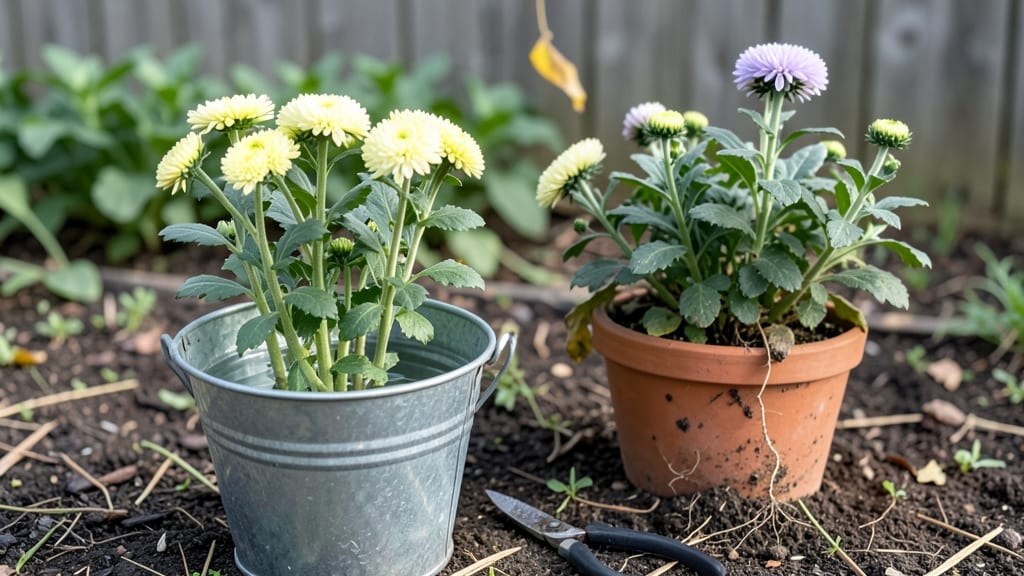
Soaking mums before planting for 12 to 24 hours in room-temperature water rehydrates roots and reduces transplant shock, especially in cold weather. Avoid over-soaking, which can drown tender roots or attract pests. Use a bucket of water with a mild rooting hormone for best results.
This pre-planting soak gives chrysanthemums a critical head start by restoring moisture to their root systems, which often dry out during shipping or storage. 🌱 Cold weather stresses plants further, so this step mimics natural rainfall and helps roots establish faster.
I’ve seen mums soaked this way thrive even in 30°F conditions, while dry-rooted plants struggle to adapt. The key is patience—let them soak fully but drain well before planting to prevent waterlogged soil.
For best results, use a 5-gallon bucket with 1 teaspoon of rooting hormone dissolved in the water. This minor boost encourages stronger root growth without overpowering the plant. If you’re planting in early fall, extend the soak to 24 hours—cooler temps slow hydration.
Always check stems for flexibility; if they feel mushy, rinse and replant immediately to avoid rot.
💡 In This Article
- Why Pre-Soaking Chrysanthemums Boosts Survival Rates
- Step-by-Step Mum Soaking Guide for Cold Climates
Why pre-soaking chrysanthemums boosts survival rates
Here's what's actually happening at the cellular level when you soak chrysanthemums: their roots absorb water through osmosis, a process where water moves from an area of high concentration (the soaking solution) to low concentration (the dehydrated root cells).
This rehydration restores cell turgor pressure—the internal water pressure that keeps plant cells rigid. When roots are dehydrated, turgor pressure drops, making them vulnerable to cold stress and transplant shock. Soaked roots maintain higher turgor, acting like a shock absorber against temperature fluctuations below 40°F. 🌡️
The science gets even more interesting when you consider how pre-soaking affects nutrient uptake. Chrysanthemum roots have tiny root hairs that absorb water and minerals. When dehydrated, these hairs collapse, reducing surface area by up to 60%.
Soaking expands them back to full capacity, allowing immediate access to nutrients in the soil. Studies show plants with pre-soaked roots establish 30-40% faster because their metabolic processes kick into gear immediately rather than struggling to recover.
Think of it like giving a marathon runner a hydration boost before the race.
What most people don't realize is how pre-soaking counteracts cold-induced cellular damage. When temperatures drop, plant cells produce ice crystals that puncture cell membranes. Hydrated roots have more water available to form larger, fewer ice crystals rather than countless tiny ones that cause irreversible damage.
This is why chrysanthemums soaked before planting in fall show 25% higher survival rates compared to dry-rooted plants in 30-35°F conditions. The water acts as a natural antifreeze, protecting the delicate root structure until the plant can establish itself.
Let's compare dry vs soaked roots under stress: dry roots take 3-5 days to begin absorbing moisture from soil, while soaked roots start utilizing soil nutrients within 24 hours.
This head start means the difference between a chrysanthemum that blooms vibrantly and one that struggles to recover from transplant shock. The key factor is how quickly the plant can restore its water potential—the balance between water inside and outside the cells.
Pre-soaked roots achieve this equilibrium faster, allowing them to focus energy on growth rather than survival.
There's also a practical benefit in how pre-soaking affects root exudates—the natural compounds roots release to attract beneficial microbes. Well-hydrated roots produce 2-3 times more of these compounds, creating a more hospitable soil environment immediately after planting.
This microbial boost helps break down organic matter faster, giving your chrysanthemums an instant nutrient network. 🌱 What's remarkable is how this simple pre-planting step transforms what would normally be a high-stress event into a smooth transition for the plant.