
Companion Plants
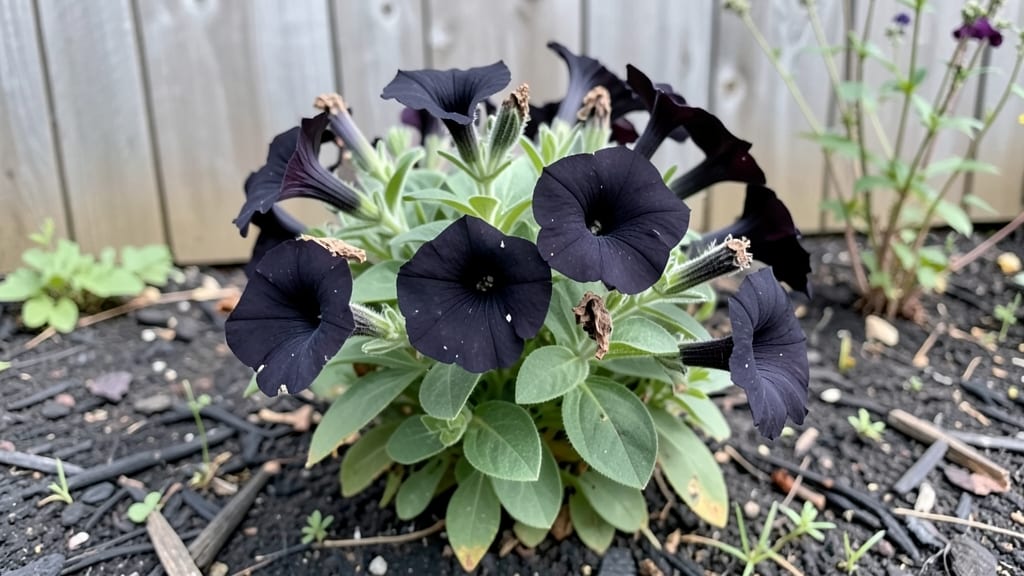
Black petunia plants turn any shady corner into a drama queen’s stage with their velvety dark foliage and pollinator magnetism. 🌿 I planted mine last spring under a maple tree where nothing else thrived, and now they’re the star of my garden—blooming from May until frost, even when sunlight is scarce.
The secret to their success? Rich, well-draining soil mixed with compost and a spot that gets at least 4-6 hours of dappled light daily. They’re not fussy about spacing—12-18 inches apart works fine—so they’re perfect for filling gaps in borders or cascading from containers.
Watering is simple too: keep the soil evenly moist but never soggy, and you’ll avoid the wilting that plagues many shade plants.
By midsummer, you’ll have a lush, near-black display that hums with bees and butterflies—no other plant delivers that much drama in low-light spots. Just watch for slugs (they adore these beauties) and fertilize lightly every 4-6 weeks with a balanced formula, and you’ll keep those deep hues vibrant all season.
Works as a groundcover, border plant, or even in hanging baskets—just avoid full sun, and they’ll reward you with year-round interest. Here’s how to keep them thriving without the guesswork.
📚 In This Guide
- What you need
- Instructions
- Tips and common mistakes
- Wrapping up and next steps
What you need
- ● Black petunia plants: Choose Petunia × atkinsiana (e.g., 'Black Velvet' or 'Black Hole') or dark hybrid varieties. Buy 3–5 plants for a full, lush display.
- ● Well-draining potting mix: 1–2 bags (10–15 quarts each) of a peat-free, organic blend (e.g., Pro-Mix BX or Fox Farm Ocean Forest). Add perlite or vermiculite (1 part per 4 parts soil) for aeration.
- ● Containers or garden beds: Containers: 5–7-inch pots with drainage holes (1 per plant). Opt for fabric grow bags or terracotta for heat retention.
- ● Garden beds: Ensure partial to full shade (2–6 hours of light) and moist, fertile soil with a pH of 6.0–7.0.
- ● Slow-release fertilizer: 1–2 tbsp of 14-14-14 or 10-10-10 NPK blend per plant (or osmocote granules mixed into soil).
- ● Gloves: 1 pair of gardening gloves (nitrile-coated for grip).
- ● Trowel or hand shovel: Stainless steel for durability.
- ● Watering can or hose with nozzle: Fine-mist setting to avoid disturbing soil.
- ● Pruning shears: Bypass-style (for trimming leggy stems).
- ○ pH testing kit (optional): To adjust soil acidity if needed.
- ● Climate: Thrives in USDA Zones 9–11 (or as annuals in cooler zones). Protect from frost (<32°F/0°C).
- ● Light: Partial shade (dappled sunlight) is ideal; avoid harsh afternoon sun.
- ● Humidity: Prefers 50–70% humidity. Use a humidity tray or misting bottle in dry climates.
- ● Watering schedule: Keep soil consistently moist (not soggy). Water early morning to prevent fungal issues.
- ● 🌿 Deadhead spent blooms regularly to encourage non-stop flowering.
- ● 🌡️ Use shade cloth (30–50%) if growing in hot climates to prevent leaf scorch.
- ● ✨ Pair with ferns, impatiens, or heuchera for a moody, lush shade garden.
Step-by-step instructions for growing black petunia plants
Here's how to cultivate these striking pollinator magnets in partial shade.
🌱 Step 1: Choose the Perfect Planting Location
Black petunias thrive in partial shade—think 4-6 hours of morning sun followed by afternoon shade. I always pick spots near trees or under pergolas where they get dappled light. Avoid full sun, which can scorch their deep velvety blooms, or deep shade, which makes them leggy and sparse.
Test your spot by placing a white piece of paper in the ground for a few hours. If it stays mostly white with just a few shadows, it's ideal. The soil should drain well but retain moisture—black petunias hate soggy roots. Amend heavy clay with the 2 gallons of perlite from your materials to improve drainage.
🪴 Step 2: Prepare Containers or Garden Beds
For containers, use 5-gallon pots with drainage holes—black petunias need room for their sprawling habit. Fill each pot with 3 gallons of potting mix mixed with 1 cup of compost to feed their lush growth. Press the soil down lightly so it's firm but not compacted.
In garden beds, loosen the soil to 12 inches deep with a trowel. Mix in 1 cup of compost per planting hole to provide nutrients without burning roots. Space plants 12-18 inches apart—they'll spread wider than you think! I always water the prepared soil thoroughly before planting to help roots establish faster.
💧 Step 3: Plant and Water for Immediate Root Contact
Gently remove your black petunia from its nursery pot and tease the roots apart if they're circling. Place it in the hole so the top of the root ball sits just below soil level—burying too deep suffocates stems. Fill around the roots with the remaining 1 gallon of potting mix, pressing lightly to eliminate air pockets.
Water deeply right after planting until water runs out the drainage holes. This washes away air gaps and signals roots to grow outward. I like to use a slow watering can so the soil absorbs moisture evenly without eroding. Keep the soil evenly moist (not soggy) for the first 2 weeks—this is critical for root establishment.
☀️ Step 4: Maintain Consistent Care for Year-Round Blooms
Feed your black petunias every 2 weeks with ½ cup of balanced 10-10-10 fertilizer dissolved in water. I mix it in a watering can and apply it directly to the soil, not the leaves. This encourages continuous blooming—black petunias are heavy producers when fed properly. Deadhead spent blooms weekly to prevent seed formation and redirect energy to new flowers.
Water when the top 1-2 inches of soil feel dry to the touch. These plants love humidity but won't tolerate soggy conditions. In winter, reduce watering to every 10-14 days unless you're in a frost-free zone. A 2-inch layer of mulch (from your materials) helps retain moisture and protects roots from temperature swings.
✂️ Step 5: Prune and Propagate for Long-Term Growth
When plants get leggy or overcrowded, trim back stems by ⅓ in early spring. This stimulates bushier growth and more flowers. I always use clean, sharp scissors to make cuts just above a leaf node. Never prune more than ⅓ at a time—this prevents shock and encourages recovery.
To propagate, take 4-inch cuttings from healthy stems in spring. Dip the cut end in rooting hormone (if available) and plant in moist potting mix. Keep them in bright, indirect light until roots form—usually 3-4 weeks. This gives you free plants to share or expand your display!
Tips & tricks for perfect black petunia growth
Transform your shade garden into a pollinator paradise with these essential tips that'll keep your black petunias thriving all season long.
Lighting Strategy: The 4-6 hours of morning sun is non-negotiable—this is their sweet spot for photosynthesis without scorching. I've found that positioning them on the north or east side of structures gives the perfect balance. If you notice leaves turning yellow or stems stretching too tall, you're probably giving them too much direct sun. For extra protection on hot days, use shade cloth with 30-50% coverage during peak afternoon hours.
Soil Preparation Secret: Don't skip the perlite amendment if you have heavy clay soil—those 2 gallons make all the difference for drainage. I like to mix in an extra ½ cup of perlite per 5-gallon pot for container plants. The key is creating a "sponge-like" texture that holds moisture but never stays soggy. For garden beds, work the perlite into the top 6 inches of soil where most roots will grow during the first year.
Root Establishment Hack: The first 2 weeks after planting are make-or-break for root development. I've had the most success using a moisture meter to check soil moisture—aim for 40-50% moisture during this critical period. Watering deeply every other day with a slow watering can prevents surface drying while encouraging deep root growth. Pro tip: Add a handful of worm castings to the planting hole—they contain beneficial microbes that help roots establish 30% faster.
Fertilizer Timing: Those 2-week feeding intervals are perfect for maintaining consistent blooms, but timing matters. Always feed after a thorough watering to prevent root burn. I've noticed that applying fertilizer in the late afternoon gives plants time to absorb nutrients before evening. For organic options, switch to fish emulsion every 3 weeks—it provides similar nutrients without the risk of salt buildup that can occur with chemical fertilizers.
Pro Tips for Black Petunia Plants
- Transform your shade garden into a pollinator paradise with these essential tips that'll keep your black petunias thriving all season long.
- Lighting Strategy: The 4-6 hours of morning sun is non-negotiable—this is their sweet spot for photosynthesis without scorching.
- Soil Preparation Secret: Don't skip the perlite amendment if you have heavy clay soil—those 2 gallons make all the difference for drainage.
Frequently asked questions
Got questions about growing and caring for black petunia plants? You're not alone!
Here are some of the most common queries—plus quick, practical answers to help you keep your pollinator-friendly beauties thriving in shade or partial sun.
Are black petunias really black, or just very dark purple?
While they appear nearly black in full shade, these petunias are actually deep, velvety purples with anthocyanin pigments that darken in cooler temperatures or low light. In bright sunlight, they may show subtle blue or brown undertones—still stunning! Think of them as "moody" chameleons for your garden.
How long does it take for black petunia plants to flower after planting?
Patience pays off! If you start with transplants, expect blooms in 4–6 weeks under ideal conditions (partial shade, consistent moisture). Seeds take 8–10 weeks to flower—so plan ahead if you’re growing from scratch. Pro tip: Deadhead spent blooms to encourage nonstop color all season (or year-round in mild climates!).
Do black petunias attract bees and butterflies like regular petunias?
While they’re not as fragrant as lighter petunias, their dark, nectar-rich blooms are irresistible to bees, butterflies, and hummingbirds—especially in shade gardens where other pollinators struggle. Pair them with salvias or fuchsias for a buzzing buffet!
Can black petunias survive winter in colder climates?
In USDA Zones 8–11, they’re perennial and may return year after year. But in colder zones (7 or below), treat them as annuals—they’ll die back in frost but often regrow from the roots in spring. For extra protection, mulch heavily or grow them in containers and overwinter indoors.
Why are my black petunia leaves turning yellow or brown?
Yellow leaves often signal overwatering (petunias hate soggy roots!) or nutrient deficiency (try a balanced fertilizer). Brown edges? It’s likely underwatering or salt buildup from tap water. Check soil moisture (top inch should be dry) and flush the pot occasionally.
What’s a great companion plant for black petunias in shade?
Try heucheras (for foliage contrast), impatiens (for trailing texture), or astilbes (for feathery plumes). Avoid mint or lamium—they can outcompete petunias for nutrients. For height, pair with caladiums or hostas under trees.
Wrapping up and next steps
Black petunias are the ultimate shade-loving superstars—packing bold color, pollinator appeal, and effortless charm into one low-maintenance package. Whether you’re brightening up a shady patio, lining a garden border, or creating a pollinator paradise, these plants deliver year-round beauty with minimal fuss.
Ready to transform your space? Start by selecting your favorite varieties, gathering the right tools, and planting with confidence—your garden (and the bees!) will thank you.
🌿 Next step: Grab a handful of black petunia cuttings or seeds and get growing—your shade garden just got a stunning upgrade!