Pruning
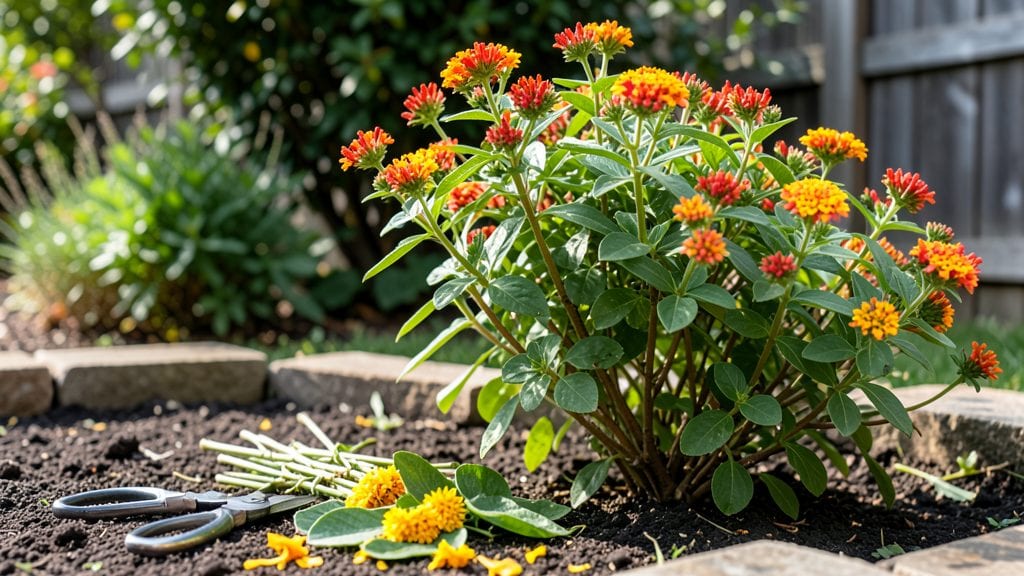
Trimming lantana plants three times a year turns scraggly bushes into nonstop blooming powerhouses. 🌸 I learned the hard way—skipping pruning means fewer flowers and leggy growth that looks like overgrown weeds.
The secret isn’t complicated: cut back old growth, shape the plant, and you’ll get vibrant blooms from spring through frost.
You only need three tools: sharp pruning shears, clean gloves, and a bucket for clippings. The first cut comes in early spring to shape the plant after winter dormancy.
Then, trim back about one-third of the plant in midsummer to encourage new growth and more flowers. A light cleanup in fall keeps the shape tidy for winter.
After each trim, you’ll see fresh green shoots pushing out within weeks, followed by clusters of bright flowers. The plants stay compact, bushy, and covered in blooms instead of long, bare stems. Lantana actually thrives on regular pruning—it’s how you get that lush, tropical look without heavy maintenance.
Works for all lantana varieties, whether you’re growing them in pots or garden beds. The key is consistency—skip a season, and you’ll lose that dense, flowering habit. Here’s exactly how to do it right the first time.
📚 In This Guide
- What you need
- Instructions
- Tips and common mistakes
- Wrapping up and next steps
What you need
- ● Pruning shears – Sharp, bypass-style shears (for clean cuts on stems up to ½ inch thick). Quantity: 1 pair
- ● Loppers – For thicker stems (½–1.5 inches). Quantity: 1 pair
- ● Hand pruners – For precision trimming of small branches. Quantity: 1 pair
- ● Gloves – Thick, cut-resistant gloves (lantana has thorny stems!). Quantity: 1 pair
- ● Disinfectant – Rubbing alcohol (70%+) or bleach solution (1:9 ratio) (to sterilize tools between cuts). Quantity: Small bottle
- ● Heavy-duty trash bags – For disposing of pruned branches. Quantity: 2–3 bags
- ○ Garden twine or zip ties – Optional, for securing large branches during heavy pruning. Quantity: Small roll
- ● Hose or bucket of water – To rinse off sap or dust after trimming.
- ● Safety glasses – If working near your face or in windy conditions.
- ● Knee pads – For comfort during ground-level pruning.
- ● Plant food or compost – To nourish the plant post-pruning (apply after cuts heal).
Instructions for trimming lantana plants
Here's the foolproof method I use to keep lantana blooming nonstop—just three cuts a year, timed perfectly.
✂️ Step 1: Late Winter Pruning for New Growth
After your last frost date, grab your pruners and cut back the entire plant by about one-third of its height. This hard prune removes dead wood and stimulates fresh, vigorous growth from the base. I always prune just above a leaf node or bud—this ensures new shoots will emerge from that spot.
Don't worry if it looks harsh at first. Lantana is surprisingly resilient, and you'll see new green shoots within 2-3 weeks. This is the time to also remove any branches that are crossing or rubbing against each other—they'll compete for energy and reduce flowering.
✂️ Step 2: Mid-Season Deadheading for Continuous Blooms
Every 4-6 weeks during the growing season, trim back the flowering stems by about half their length. Cut just above the first set of leaves below the flowers. This encourages the plant to produce more side shoots, which will each develop into new flower clusters.
Here's the thing—lantana blooms are dense, so you might need to work your way through the plant in sections. Watch for spent flowers turning brown—that's your cue to trim. I like to do this on a dry morning when the plant is at its freshest, and I always sterilize my pruners with rubbing alcohol between cuts to prevent disease spread.
✂️ Step 3: Late Summer Light Pruning for Shape and Health
About 6 weeks before your first frost, give your lantana a light trim to remove any leggy growth or branches that are growing outward instead of upward. Cut back just enough to maintain a nice rounded shape—think of it as a final touch-up before winter.
Remove any branches that are looking tired or have fewer leaves than usual. These won't recover well in cooler weather. You'll also want to trim back any suckers growing from the base—they'll compete with your main plant for nutrients. This final prune helps the plant focus its energy on root development for next season.
🌿 Step 4: Winter Cleanup for Spring Readiness
After the first hard frost, when the plant has completely died back, cut everything down to about 6 inches tall. This removes all dead growth and makes it easier to spot new shoots in spring. I like to rake up and dispose of the debris—lantana can harbor pests over winter, and keeping the area clean helps prevent problems next year.
This is also a great time to check for any signs of disease or pests. Look for holes in the stems, sticky residue, or unusual spots on the leaves. If you find anything, treat it immediately so your plant starts the next season strong. With these three cuts, your lantana will reward you with nonstop blooms all season long.
Tips & tricks for perfect lantana pruning
These simple tricks will help you maintain vibrant lantana plants with minimal effort—no green thumb required.
Timing is Everything: Pay attention to your local frost dates. The late winter prune should happen right after your last frost date, not before. I check my local weather service for this—it's worth the 30-second search to avoid cutting back too early when frost can still damage tender new growth. In Step 2, those 4-6 week intervals might seem vague, but they're perfect because lantana blooms naturally in cycles. Just watch for browned flowers as your cue rather than relying strictly on the calendar.
Pruning Precision: When you're cutting back in Step 1 or Step 2, aim to leave a slight angle just above the leaf node or bud. This angled cut prevents water from pooling on the cut surface, which helps prevent rot. I like to hold the branch between my thumb and forefinger while cutting—this gives me better control and a cleaner cut. For thick branches, I use my pruners to make a small notch first, then complete the cut to avoid tearing the bark.
Tool Maintenance: Your pruners are more important than you might think. After each use, wipe them clean with a damp cloth and apply a light coat of mineral oil to the blades. I keep a small bottle of rubbing alcohol handy to sterilize between cuts—this simple step prevents disease spread, especially when working with multiple plants. Sharp tools make cleaner cuts that heal faster, so take 2 minutes to sharpen your blades every few pruning sessions.
Seasonal Adjustments: If you're in a particularly warm climate where frost never occurs, you can skip the Step 4 winter cleanup and just do a light trim every 8-10 weeks instead. The key is always to remove spent blooms and leggy growth. In cooler climates, don't be tempted to prune too early in spring—wait until after the last frost to avoid damaging tender new growth that can't survive another freeze.
Pro Tips for Trimming Lantana Plants
- These simple tricks will help you maintain vibrant lantana plants with minimal effort—no green thumb required.
- Timing is Everything: Pay attention to your local frost dates. The late winter prune should happen right after your l...
- Pruning Precision: When you're cutting back in Step 1 or Step 2, aim to leave a slight angle just above the leaf node...
Frequently asked questions
Got questions about trimming lantana plants?
Whether you're a beginner gardener or a seasoned pro, these FAQs will help you keep your lantana thriving with vibrant blooms year-round.
When is the best time to trim lantana?
Trim lantana plants three times a year: in early spring (to encourage new growth), mid-summer (to promote fall blooms), and late fall (to shape and clean up before winter). Light trims can even be done year-round to maintain shape and remove dead flowers.
How much should I cut back lantana?
For most lantana varieties, you can prune back up to ⅓ of the plant without harming it. Avoid over-trimming—lantana is resilient but benefits from a balanced approach. Focus on removing dead or leggy stems first, then shape as needed.
Can I trim lantana too much?
Yes! Over-trimming—especially cutting back more than ⅓ of the plant at once—can stress lantana and reduce flowering. If you accidentally shear it too hard, don’t worry: lantana bounces back quickly. Just avoid heavy cuts in winter when growth slows.
Are there alternatives to trimming if I don’t want to prune?
If you prefer a hands-off approach, lantana is naturally low-maintenance! Simply deadhead spent blooms occasionally to encourage more flowers. For unruly growth, you can also pinch back new growth tips with your fingers instead of cutting.
Will trimming lantana attract more bees or pests?
No—lantana’s nectar-rich flowers naturally attract pollinators like bees and butterflies, and trimming actually enhances this by promoting fresh blooms. However, avoid using pesticides near lantana, as they can harm these beneficial insects. Healthy, well-trimmed plants thrive with happy pollinators!
Wrapping up and next steps
Trimming your lantana plants doesn’t have to be a chore—it’s your secret to vibrant, year-round blooms! With just three strategic cuts (light pruning, shaping, and rejuvenation), you’ll encourage bushier growth, prevent overcrowding, and keep those cheerful flowers coming.
Whether you’re a green thumb or a beginner, these simple steps make maintenance a breeze.
Ready to transform your garden? Grab your shears and give it a try—your lantana will thank you with a nonstop floral show! 🌸 For extra tips, check out our FAQ section or explore other pruning guides to keep your yard thriving.