Planting
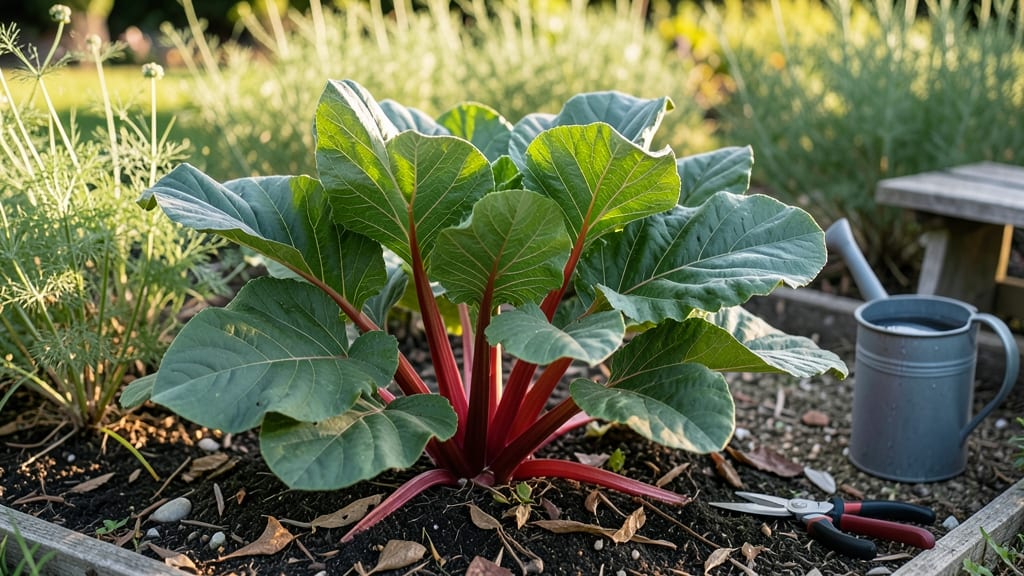
A small rhubarb plant in your garden means tart, vibrant stalks for years with minimal space. I’ve grown mine in a corner where nothing else thrived, and now it’s the most reliable crop in my yard—no fuss, just harvests from early spring until frost.
The key? Treating it like the low-maintenance powerhouse it is, not some finicky diva.
Rhubarb thrives in cool climates but handles heat better than most people think—just give it 6 hours of sun daily and well-draining soil. A 3-foot-wide spot is perfect, and you’ll only need to water when the top inch of soil feels dry.
The first year is all about roots, so resist the urge to harvest until the second spring. Trust me, patience pays off with foot-long stalks by summer.
Here’s the secret most beginners miss: only eat the stalks—the leaves contain oxalic acid, which is toxic. Once you start harvesting, cut stalks at the base and leave the leaves to feed the plant.
My first-year plant gave me 12 stalks by midsummer, and now it’s a year-round producer with almost no effort. The tart-sweet flavor in pies or smoothies? Pure reward for a little upfront care.
This plant handles neglect like a champ, but a thick layer of mulch in winter keeps it happy. If you’ve ever struggled with finicky crops, rhubarb is your redemption—foolproof, productive, and compact. Let’s get yours growing strong for decades to come.
📚 In This Guide
- What you need
- Instructions
- Tips and common mistakes
- Wrapping up and next steps
What you need
- ● Rhubarb crowns or plants: Choose disease-resistant varieties like ‘Victoria’ or ‘Strawberry’ (1–3 crowns for a compact harvest).
- ● Well-draining soil: Mix 1 part compost with 2 parts garden soil (pH 6.0–7.0 ideal).
- ● Organic mulch: Straw or shredded leaves (2–3 inches thick) to retain moisture.
- ● Balanced fertilizer: 10-10-10 or compost tea (apply sparingly in early spring).
- ● Garden trowel or spade (for digging planting holes).
- ● Gloves (to protect hands from thorns and soil).
- ● Watering can or hose with a gentle nozzle (rhubarb hates soggy roots!).
- ● Pruners or sharp knife (for harvesting and trimming).
- ○ Optional: Raised bed kit (if growing in containers or poor soil).
- ● Sunlight: Full sun (6+ hours daily) or partial shade (4–6 hours).
- ● Space: 1–2 feet diameter per plant (or 3–4 feet apart in rows).
- ● Patience: Rhubarb takes 2–3 years to mature for full harvests!
Step-by-Step guide to growing a compact rhubarb plant
Here’s how to cultivate a thriving small rhubarb plant that delivers sweet, tangy stalks without taking over your garden.
Choose the Right Location and Prepare the Soil
Rhubarb thrives in full sun—at least 6 hours of direct sunlight daily—but tolerates partial shade in hot climates. Pick a spot where the soil drains well but retains moisture, as soggy roots lead to rot. I always test the soil first by digging a 6-inch hole and filling it with water. If it drains within 30 minutes, the spot is ideal.
Amend the soil with 2-3 inches of compost mixed into the top 12 inches of soil. Rhubarb prefers slightly acidic to neutral soil (pH 6.0-7.0). If your soil is heavy clay, add 1 part sand to 3 parts soil to improve drainage. Avoid fresh manure—it can burn the roots and cause uneven growth.
Plant the Rhubarb Crown at the Correct Depth
Plant your rhubarb crown (the thick, fleshy base of the plant) in early spring, about 2 weeks before your last frost date. Dig a hole 12 inches deep and 12 inches wide, placing the crown with the buds facing upward. Spread the roots gently over the hole’s bottom and cover them with 3 inches of soil. Press lightly to remove air pockets but don’t compact.
Leave the top of the crown exposed—it should sit just 1 inch below the soil surface. Planting too deep smothers the buds, while burying it too shallowly risks frost damage in cold climates. Water deeply right after planting to settle the soil and encourage root establishment.
Water and Mulch for Consistent Moisture
Keep the soil evenly moist but never soggy during the first growing season. Water 1-2 inches per week, adjusting for rain. You’ll know it’s right when the top 1 inch of soil feels damp but not wet. Overwatering causes crown rot, while underwatering stunts stalk production.
Apply a 3-inch layer of organic mulch (like straw or shredded leaves) around the plant, keeping it 6 inches away from the crown. Mulch conserves moisture, regulates soil temperature, and suppresses weeds. Refresh the mulch annually in early spring to maintain its protective layer.
Fertilize and Prune for Compact Growth
Feed your rhubarb in early spring with a balanced, slow-release fertilizer (10-10-10 ratio). Sprinkle ½ cup around the base, then water deeply to dissolve it. Avoid high-nitrogen fertilizers—they promote leafy growth at the expense of stalks. Repeat in mid-summer for a second feeding.
Prune dead or diseased leaves as soon as you spot them to prevent spread. In early spring, cut back any remaining foliage to 2 inches above the crown to encourage new growth. Never harvest stalks in the first year—let the plant focus on establishing roots. After that, harvest selectively in spring and early summer, leaving at least half the stalks to support the plant.
Overwinter and Prepare for Next Year’s Harvest
Rhubarb is perennial, meaning it comes back year after year with proper care. In fall, cut back all foliage to 1 inch above the crown and add an extra 2-inch layer of mulch to insulate the roots. This protects against winter temperature swings and early frost.
In late winter, just before new growth appears, remove the old mulch and check for signs of pests or disease. If the crown looks healthy, add a light layer of fresh compost around the base. You’ll see new shoots emerge in 2-3 weeks—this is your signal that the plant is ready for another productive season.
Tips & tricks for perfect small rhubarb plant growth
A few key strategies will help your compact rhubarb plant thrive for years to come without taking over your garden space.
Sunlight Strategy: While rhubarb tolerates partial shade, the 6 hours of direct sunlight mentioned in Step 1 is crucial for stalk development. In hot climates, morning sun with afternoon shade works best. I've seen plants in full afternoon sun develop leafy growth at the expense of stalks—this is your plant's way of protecting itself from heat stress.
Soil Test Tip: The 30-minute drainage test in Step 1 is your best friend for preventing root rot. If water pools after 30 minutes, amend with more sand or organic matter. I always add a handful of perlite to heavy clay soils to improve aeration without altering the soil structure too dramatically.
Planting Depth Secret: That 1-inch exposure of the crown above soil level in Step 2 might seem counterintuitive, but it's what prevents crown rot. I've seen gardeners bury the entire crown and end up with no stalks—those buds need air to develop properly. Mark the planting depth with a small stake if you're unsure where the soil line should be.
Watering Wisdom: The 1-2 inches per week guideline in Step 3 works best when delivered consistently. I use a rain gauge to track rainfall and adjust my watering accordingly. A soaker hose placed 6 inches from the crown gives even moisture without wetting the leaves, which helps prevent fungal diseases.
Pro Tips for Small Rhubarb Plant
- A few key strategies will help your compact rhubarb plant thrive for years to come without taking over your garden sp...
- Sunlight Strategy: While rhubarb tolerates partial shade, the 6 hours of direct sunlight mentioned in Step 1 is cruci...
- Soil Test Tip: The 30-minute drainage test in Step 1 is your best friend for preventing root rot. If water pools afte...
Frequently asked questions
Got questions about growing a small rhubarb plant? You're not alone!
Here are answers to the most common queries from gardeners just like you—whether you're a beginner or looking to troubleshoot.
How long does it take for a small rhubarb plant to produce harvestable stalks?
A small rhubarb plant typically takes 2–3 years to reach its full potential, but you can start harvesting lightly in the second year (just 1–2 stalks per plant to avoid stressing it). Patience pays off—once established, it’ll reward you with years of harvests!
Can I grow rhubarb in containers, or does it need a garden bed?
Yes! Rhubarb thrives in large containers (at least 12–18 inches deep) with well-draining soil. Just ensure the pot has drainage holes and place it in a spot with full sun to partial shade. Container-grown rhubarb may need extra winter protection in cold climates.
Why are the leaves on my small rhubarb plant turning yellow or wilted?
Yellowing leaves often signal overwatering, nutrient deficiency, or root rot. Check the soil—it should be moist but not soggy. If the roots smell foul, trim the affected parts and repot with fresh, well-draining soil. Pests like slugs can also cause damage, so inspect the undersides of leaves.
When is the best time to harvest rhubarb from a small plant?
Harvest in early spring (after the last frost) when stalks are firm and at least 8–10 inches tall. Cut them at the base with a clean knife, leaving the leaves (they help feed the plant). Avoid heavy harvesting until the plant is 2+ years old to ensure strong regrowth.
Can I grow rhubarb indoors or under grow lights?
Rhubarb is not ideal for indoor growing—it needs cold stratification (a winter dormancy period) and plenty of sunlight (6+ hours daily). If you’re set on indoor rhubarb, use a south-facing window or grow lights on a 14-hour cycle, but expect slower growth and smaller yields.
Pro Tip:
For a compact harvest, try the ‘Little Gem’ or ‘Victoria’ varieties—they’re perfect for small gardens and containers! And remember: Never eat the leaves (they contain oxalic acid), but the stalks are a delicious, tart treat.
Wrapping up and next steps
Growing a small rhubarb plant is a rewarding way to enjoy fresh, tangy harvests in even the tiniest garden spaces! With the right location, soil prep, and a little patience, you’ll soon have a thriving plant that delivers delicious stalks for years.
Whether you’re a beginner or a seasoned gardener, this compact powerhouse proves that big flavors don’t require big plots.
Ready to dive in? Start by selecting your variety—like ‘Victoria’ or ‘Strawberry’ rhubarb—and grab your supplies. Then, follow the steps to plant, nurture, and harvest with confidence. Happy gardening! 🌱✨