
Planting
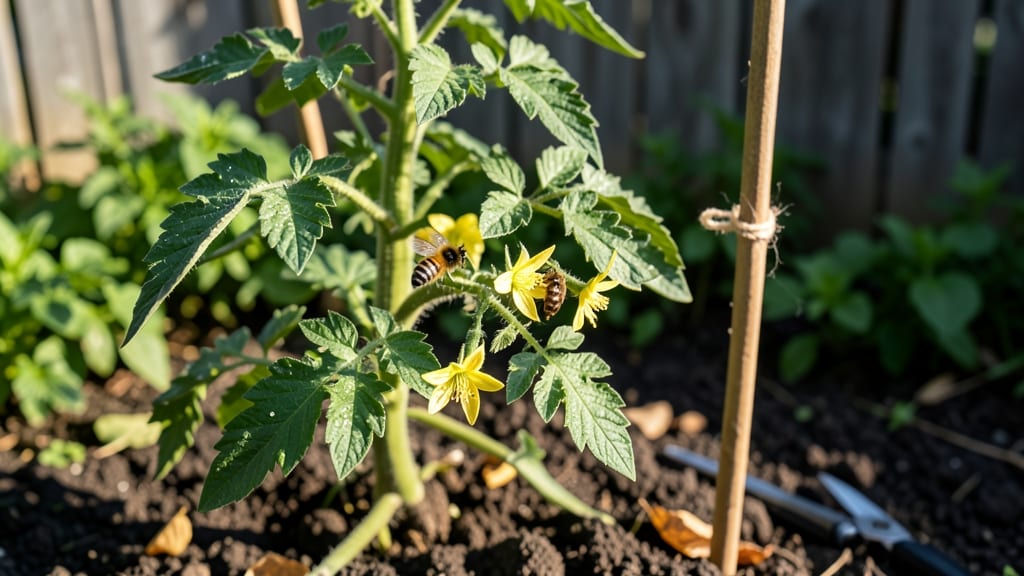
Tomato plant pollination happens when bees, wind, or gentle human touch move pollen from flower stamens to pistils, kickstarting fruit growth. Without this step, tomato blossoms simply wilt and fall away.
Bees are the superstars of tomato pollination, carrying pollen between flowers as they forage for nectar. 🐝 This natural process is most efficient in open gardens where wind can also help distribute pollen, especially for self-pollinating tomato varieties.
The key moment happens when pollen lands on the pistil's sticky tip, triggering ovary swelling within days—a sure sign pollination worked. In greenhouses where bees can't visit, gardeners often need to step in with cotton swabs or gentle shaking to mimic nature's work.
What's fascinating is how tomato flowers adapt to different pollinators. Some varieties even open their petals wider to attract bees, while others release pollen more easily when touched.
This biological dance explains why you might see perfect blooms but no fruit—it's not just about having flowers, but ensuring they get properly pollinated to develop into tomatoes.
💡 In This Article
- How Bees and Wind Pollinate Tomato Flowers
- Manual Tomato Pollination Techniques for Greenhouses
How bees and wind pollinate tomato flowers
Bees play a crucial role in tomato pollination by collecting pollen on their bodies while foraging for nectar. Each tomato flower has 5 stamens (male reproductive parts) that produce yellow pollen, which bees unintentionally transfer to the pistil (female part) when moving between flowers.
This cross-pollination increases genetic diversity and often results in stronger fruit development compared to self-pollination. A single bee can visit 50-100 flowers per minute, making them incredibly efficient pollinators in open garden settings.
The wind also contributes to pollination, especially for tomato varieties with looser flower structures that release pollen more easily. When the wind blows at 5-10 mph, it can carry pollen grains up to 10 feet between plants.
However, wind pollination is less efficient than bee pollination because pollen grains are heavy and often fall before reaching another flower. The ideal scenario combines both methods—bees for precision and wind for broader pollen distribution in larger plantings.
Tomato flower anatomy makes this process fascinating. The pistil's sticky stigma captures pollen grains, which then travel down the style to fertilize the ovary. Within 24-48 hours of successful pollination, you'll notice the ovary begin to swell as it transforms into a tomato.
This visible change is your first sign that pollination worked. Some tomato varieties, like cherry tomatoes, are more efficient at self-pollination because their flowers are more compact, while larger varieties often rely more on external pollinators.
Here's what happens when pollination fails: flowers wilt and drop off within 3-5 days without setting fruit. This is why gardeners in enclosed spaces often struggle—without bees or wind, pollen simply falls to the ground.
The key difference between natural and self-pollination lies in genetic diversity. Cross-pollinated tomatoes often develop 20-30% larger and more flavorful fruit compared to self-pollinated varieties, which can become inbred and weaker over generations.
Bees aren't the only helpful pollinators—bumblebees and even butterflies can assist, though they're less efficient. The most effective pollination occurs when bees visit flowers at their peak opening time, typically between 9 AM and 3 PM when temperatures are 70-85°F.
At these temperatures, tomato flowers release the most pollen and remain receptive to pollination for the longest duration. Cool mornings or rainy days can significantly reduce pollination success rates.
What most gardeners don't realize is how flower position affects pollination efficiency. Determinate tomato varieties (bush types) often have flowers that face downward, making them more accessible to bees, while indeterminate varieties (vining types) may have flowers that face upward, requiring bees to work harder to reach them.
This anatomical difference explains why some tomato plants produce more fruit than others in the same growing conditions.