
Diseases
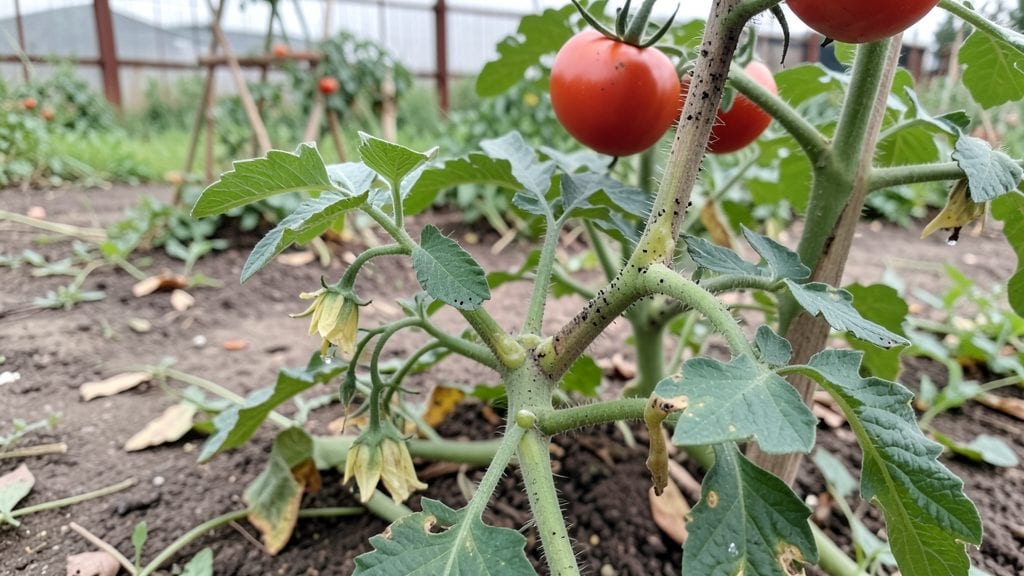
When your tomato plants suddenly wilt despite perfect care, it’s often tomato plant wilt disease—and the clock starts ticking before you can act. ✨ I’ve seen entire harvests lost in days when these silent killers strike, but the good news is that catching it early makes all the difference.
The first signs—yellowing leaves, drooping stems, or crispy edges—look like drought stress, but the roots tell a different story.
Most wilting stems from fungal infections like Fusarium or Verticillium wilt, which thrive in warm, moist soil and spread through contaminated tools or infected plants. Bacterial wilt can also strike, but it moves faster, often within hours. The key to saving your plants?
Diagnosing correctly—check stems for dark streaks, dig for mushy roots, and note which plants are affected first. Crop rotation and resistant varieties are your best defenses, but once symptoms appear, organic treatments like compost tea or copper sprays can buy time.
You’ll learn to spot the early warnings before they cripple your plants, plus how to revive struggling tomatoes with simple, soil-focused fixes. The goal isn’t just to save a few plants—it’s to protect your entire garden from future outbreaks.
Let’s turn that wilting into a comeback story before the season slips away.
Whether you’re dealing with backyard beds or container gardens, these methods work in any climate where tomatoes grow. The first step is knowing what you’re up against—so let’s get those plants back on track before the heat sets in.
Root Causes Of Wilting Tomatoes
Tomato plants can go from lush and green to drooping and sad in no time—often leaving gardeners scratching their heads. Wilting isn’t just about thirst; it’s a cry for help from your plants, signaling deeper issues.
Understanding the why behind wilting is the first step to saving your harvest. Below, we break down the most common culprits, from soil-born villains to environmental stressors, and explain how they sabotage your tomatoes.
Fungal diseases are the #1 cause of wilting in tomatoes, often creeping in unnoticed until it’s too late. These pathogens thrive in warm, humid conditions and disrupt the plant’s vascular system, blocking water flow.
🍄 Verticillium & Fusarium Wilt: The Vascular Blockers
- How it happens: These soil-borne fungi (Verticillium dahliae and Fusarium oxysporum) infect the plant’s roots and clog its xylem vessels—the plant’s plumbing.
Think of it like a kinked hose: water can’t move upward, even if the soil is moist. - Key signs: - Wilting starts in one branch and spreads unevenly (unlike uniform drought stress). - Yellowing leaves with green veins (a classic "fern leaf" pattern). - Stems may develop dark streaks when cut open. - Why it’s deadly: Once established, these fungi persist in the soil for years, making them nearly impossible to eradicate.
They target susceptible varieties like Roma, Beefsteak, and Cherry tomatoes.
🍅 Early Blight & Late Blight: The Leafy Saboteurs
- How it happens: While these diseases primarily attack leaves, severe infections can stress the plant enough to cause wilting. Alternaria solani (early blight) and Phytophthora infestans (late blight) weaken the plant by reducing photosynthesis, leading to water loss.
- Key signs:
- Brown, concentric "target" spots on lower leaves (early blight).
- Oily, dark lesions that spread rapidly in humid weather (late blight).
- Wilting may occur if >50% of the foliage is damaged.
- Environmental trigger: Overhead watering (especially at night) creates the perfect fungal buffet.
Wilting isn’t always about disease—sometimes, it’s a simple (but critical) mismatch between your plant’s needs and your care routine.
💧 Overwatering: The Suffocation Effect
- How it happens: Tomatoes need consistent moisture, but waterlogged soil cuts off oxygen to the roots.
Without oxygen, roots can’t absorb water or nutrients, leading to wilting—even if the soil feels damp. - Key signs: - Yellowing leaves (not just wilting). - Soggy, foul-smelling soil (a red flag for root rot). - Roots may turn black or mushy when inspected. - Why it’s tricky: Containers and heavy clay soils are high-risk because they drain poorly.
🔥 Underwatering: The Slow Desiccation
- How it happens: Tomatoes have shallow roots and need 1–2 inches of water per week.
Skipping watering (or relying on rain alone) causes the plant to lose turgor pressure—like a balloon losing air. - Key signs: - Uniform wilting (all leaves droop at once). - Dry, crispy leaf edges. - Soil pulls away from the pot edges (if container-grown). - Pro tip: Mulch heavily (with straw or grass clippings) to retain moisture and prevent soil crusting.
🏗️ Poor Drainage: The Root’s Nightmare
- How it happens: Compacted or clay-heavy soil traps water, while sandy soil drains too fast, leaving roots high and dry.
Either way, roots can’t establish properly, leading to wilting under stress. - Key signs: - Wilting after heavy rain (soil stays soggy too long). - Roots growing only at the surface (visible in containers). - Fix it: Amend soil with compost + perlite (for containers) or plant on a slight mound to improve drainage.
Pests don’t just eat leaves—they disrupt the plant’s ability to transport water, leading to wilting.
🐜 Root-Knot Nematodes: The Underground Vampires
- How it happens: These microscopic worms pierce roots, creating galls (lumpy growths) that block water uptake.
Infested plants wilt even when watered, because the roots can’t function. - Key signs: - Stunted growth despite regular care. - Gnarled, swollen roots (visible when uprooted). - Wilting worsens in heat (when water needs spike). - Why it’s sneaky: Nematodes survive in soil for years and thrive in warm, moist conditions.
🐜 Aphids & Spider Mites: The Sap Suckers
- How it happens: These pests feed on sap, weakening the plant’s vascular system.
Heavy infestations clog stomata (leaf pores), causing wilting and curling leaves. - Key signs: - Sticky residue (honeydew) on leaves. - Fine webbing (spider mites) or black sooty mold (from aphid honeydew). - Wilting accompanied by yellowing or browning tips.
Sometimes, wilting is a direct response to extreme conditions—not a disease at all.
🔥 Heat Stress: The Wilting Wave
- How it happens: Tomatoes transpire (lose water) rapidly in 90°F+ temps.
If roots can’t keep up, leaves lose turgor to conserve moisture. - Key signs: - Wilting peaks midday but recovers at night. - Leaf scorch (brown, crispy edges). - Solution: Shade cloth (30–50%) or drip irrigation to keep soil cool and moist.
❄️ Cold Shock: The Sudden Drop
- How it happens: A hard freeze or cold snap damages cell membranes, causing plasmolysis (cells lose water and collapse).
- Key signs:
- Wilting after a temperature drop below 50°F.
- Blackened or mushy stems in severe cases.
- Prevent it: Use row covers or mulch heavily before the first frost.
💡 Quick Fix Reminder: If your tomatoes are wilting, check the soil first—stick your finger in! If it’s dry, water deeply. If it’s soggy, hold off and improve drainage.
For fungal signs, prune infected leaves immediately and avoid overhead watering. When in doubt, inspect the roots—healthy roots are firm, white, and smell earthy. 🚨
Revive Your Tomatoes: Fixing Wilt Disease Naturally
Wilted tomato plants can feel like a devastating loss, but with the right approach, you can often nurse them back to health—or even prevent future outbreaks.
Below, we’ve mapped common causes of wilting to practical, organic fixes, along with proactive prevention tips to keep your garden thriving. Let’s dig in!
Signs: Yellowing leaves, mushy stems, soil that smells sour or rotten. Why it happens: Too much water suffocates roots, inviting fungal infections like Phytophthora or Pythium.
How to Fix It
✅ 🔥 Step 1: Stop Watering Immediately
- Let the soil dry out completely for 2–3 days to halt fungal spread.
✅ 🍳 Step 2: Improve Drainage
- Mix coarse sand, perlite, or compost into the soil around the plant (avoid disturbing roots).
- Consider raising beds or planting in containers with drainage holes if your garden stays soggy.
✅ 👨🍳 Step 3: Fungal Treatment
- Neem oil spray (1 tbsp neem oil + 1 tsp mild soap per quart of water) applied weekly.
- Baking soda solution (1 tsp baking soda + 1 quart water + a few drops of soap) for mild cases.
- Beneficial microbes: Add Trichoderma fungus (available as powder) to soil to outcompete pathogens.
✅ ⏰ Step 4: Adjust Watering Habits
- Water deeply but infrequently (1–2 inches per week, checking soil moisture with your finger).
- Water at soil level (not overhead) to prevent leaf wetness.
💡 Pro Tip: Mulch with straw or wood chips to retain moisture without smothering roots—just keep mulch 2 inches away from stems.
Signs: Sudden wilting (even in cool weather), yellowing lower leaves, vascular discoloration (brown streaks in stems). Why it happens: Soilborne fungi (Fusarium oxysporum, Verticillium) clog plant vessels, cutting off water flow.
How to Fix It
⚠️ Warning: There’s no cure for vascular wilt—focus on containment and prevention.
✅ 🔪 Step 1: Remove Infected Plants
- Dig up entire plants (roots and all) and dispose of them in the trash (not compost).
- Sterilize tools with 70% rubbing alcohol or a bleach solution (1 part bleach to 10 parts water).
✅ 🌡️ Step 2: Solarize the Soil (Summer Fix)
- Cover the bed with clear plastic for 4–6 weeks in hot sun to kill fungal spores.
- Alternatively, plant cover crops like mustard or barley in fall/winter to suppress pathogens.
✅ 🎯 Step 3: Rotate Crops & Avoid Host Plants
- Wait 3–4 years before replanting tomatoes, peppers, or eggplants in the same spot.
- Interplant with marigolds (natural nematicide) or basil (repels pests that spread disease).
💡 Pro Tip: If wilting strikes young plants, transplant them deeper—buried stems can develop new roots, bypassing infected soil.
Signs: Drooping leaves that recover at night, crispy edges, dry soil. Why it happens: Extreme heat or inconsistent watering causes physiological drought.
How to Fix It
✅ 💦 Step 1: Hydrate Deeply
- Water slowly and deeply (10–15 minutes) until moisture reaches 6 inches down.
- Use drip irrigation or soaker hoses to avoid evaporation.
✅ 🌿 Step 2: Shade & Mulch
- Provide shade cloth (30–50% coverage) during peak sun (10 AM–4 PM).
- Apply 2–3 inches of organic mulch (straw, grass clippings) to lock in moisture.
✅ 🍅 Step 3: Prune for Airflow
- Trim lower leaves to improve airflow and reduce water loss.
- Stake or cage plants to prevent leaves from dragging on hot soil.
💡 Pro Tip: Mulch with wet burlap sacks for a quick moisture boost—place them near the base and water them daily.
Signs: Sticky residue (honeydew), tiny webs, wilting despite moist soil. Why it happens: Sap-sucking pests weaken plants by blocking nutrient flow.
How to Fix It
✅ 🕷️ Step 1: Blast Off Pests
- Spray with soapy water (1 tsp mild soap per quart of water) or neem oil (repeat every 3–5 days).
- Introduce ladybugs or lacewings (natural predators) to your garden.
✅ 🌿 Step 2: Boost Plant Resilience
- Fertilize with fish emulsion (1 tbsp per gallon of water) for a quick phosphorus boost.
- Companion plant with garlic, chives, or nasturtiums to deter pests.
✅ 🌡️ Step 3: Monitor & Repeat
- Check undersides of leaves daily for new infestations.
- Use yellow sticky traps to catch flying pests like whiteflies.
💡 Pro Tip: Coffee grounds (sprinkled around the base) repel mites and add nitrogen—just reapply every 2 weeks.
| Cause | Preventive Action | When to Do It |
|---|---|---|
| Root Rot | Test soil drainage; amend with compost | Before planting |
| Vascular Wilt | Crop rotation; solarize soil | Fall/winter or summer |
| Heat Stress | Mulch + drip irrigation setup | Early spring |
| Pests | Plant marigolds; inspect weekly | Ongoing |
Final Thought: Wilting doesn’t always mean game over—act fast, identify the root cause, and your tomatoes can bounce back. For severe cases, consider starting fresh with disease-resistant varieties like ‘Mountain Merit’ or ‘Celebrity’ next season. Happy gardening! 🍅✨
Frequently asked questions
Why do my tomato plants wilt suddenly even when the soil feels moist?
This is often a sign of vascular wilt diseases like Fusarium or Verticillium. These fungi clog the plant’s water transport system, preventing moisture from reaching the leaves even if the soil is wet. Check stems for dark streaks when cut open—this confirms the diagnosis.
Can I save tomato plants affected by wilt disease?
For fungal wilts (Fusarium/Verticillium), there’s no cure—remove infected plants immediately to prevent spread. For other causes like root rot or pests, you may revive plants by improving drainage, treating with neem oil, or adjusting watering habits. Act fast within 24–48 hours for best results.
How do I tell if wilting is from disease or just underwatering?
Disease wilting typically starts in one branch and spreads unevenly, while underwatering causes uniform drooping across the plant. Check soil moisture: if it’s dry, water deeply. If wilting persists despite moist soil, inspect stems and roots for signs of infection.
What’s the best way to prevent wilt diseases in my tomato garden?
Start with crop rotation (wait 3–4 years before replanting tomatoes in the same spot) and choose resistant varieties like ‘Mountain Merit’. Improve soil drainage, avoid overhead watering, and use compost tea to strengthen plant immunity. Solarizing soil in summer also kills fungal spores.
Will mulching help prevent tomato wilt?
Organic mulch like straw or wood chips helps by retaining moisture, regulating soil temperature, and preventing fungal spores from splashing onto leaves. Just keep mulch 2 inches away from stems to avoid rot. Pair it with drip irrigation for best results.