
Diseases
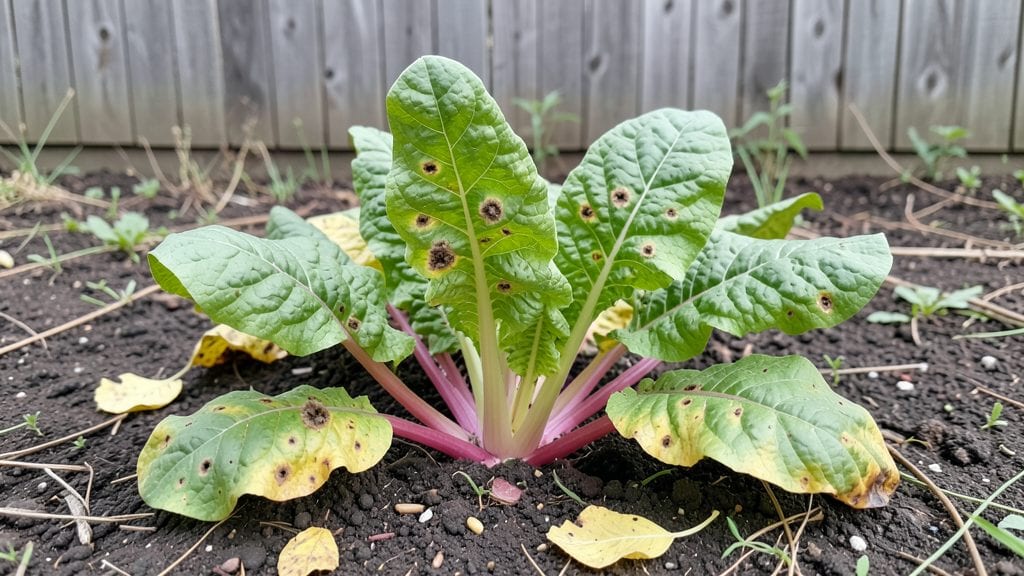
Swiss chard plant diseases can turn vibrant green leaves into sad, spotted rags faster than you’d think. 🌿 I’ve watched my own plants go from lush and colorful to barely recognizable—until I learned to spot the early warning signs.
The key is catching problems before they spread, whether it’s fuzzy gray mold or brown crunchy spots.
Most leaf blights start with too much moisture or crowded plants, but even well-cared-for chard isn’t immune. Downy mildew leaves a powdery white coating on undersides, while bacterial spots create yellow rings with dark edges.
The good news? Pruning infected leaves early and improving airflow keeps these issues from taking over your harvest.
You’ll save more than just your plants—your time and patience too. A quick spray of neem oil or copper fungicide stops the spread, and rotating crops next season cuts future risks. With the right moves, your chard stays crisp, colorful, and ready for the table all season long.
This works for home gardens, raised beds, or even container growing—just adjust spacing and watering. Let’s get those leaves healthy again before the next rainstorm rolls in.
Why it happens
Swiss chard may seem resilient, but its vibrant leaves are vulnerable to a variety of diseases—often due to factors that create the perfect storm for pathogens. Let’s break down the science behind why these issues arise, so you can take proactive steps to protect your crop.
🌱 Poor Air Circulation & Humidity Buildup
Swiss chard thrives in open spaces, but when plants are crowded or grown too closely together, airflow is restricted. This stagnant air traps moisture near the leaves, creating an ideal environment for fungal spores like those causing leaf blights (e.g., Alternaria or Cercospora).
High humidity (above 70%) further accelerates spore germination and infection.
Why it happens:
- Fungal spores (e.g., Alternaria alternata) thrive in damp conditions, germinating within 12–24 hours when moisture lingers on leaf surfaces.
- Overhead watering keeps leaves wet for extended periods, while drip irrigation (applied at soil level) minimizes this risk.
- Thick canopies block sunlight and slow evaporation, prolonging leaf wetness.
Actionable fix:
- Space plants 12–18 inches apart to improve airflow.
- Water early in the day (before 10 AM) to allow foliage to dry quickly.
- Prune lower leaves to enhance ventilation between plants.
💦 Overwatering & Waterlogged Soil
Swiss chard prefers consistent moisture but detests soggy roots. Excessive watering—especially in poorly draining soil—stresses plants and weakens their defenses against pathogens. Waterlogged conditions also promote root rot (Phytophthora species), which indirectly stresses the plant, making it more susceptible to leaf blights.
Why it happens:
- Saturated soil reduces oxygen availability, suffocating roots and triggering stress signals that suppress immune responses.
- Fungal pathogens (e.g., Pythium) multiply rapidly in waterlogged environments, entering through wounded roots or stems.
- Salinity buildup from overwatering can further weaken plants, making them easier targets for secondary infections.
Actionable fix:
- Test soil moisture with your finger—water only when the top 1–2 inches are dry.
- Amend heavy clay soil with compost or perlite to improve drainage.
- Use raised beds or containers if your garden has poor drainage.
🍄 Pathogen Presence & Fungal Spores
Many Swiss chard diseases are opportunistic, meaning they lie dormant in soil, plant debris, or neighboring crops until conditions favor their growth. Fungal spores (e.g., Cercospora beticola) can survive for years in organic matter, while bacterial pathogens (e.g., Xanthomonas) hitchhike on contaminated tools, seeds, or wind.
Why it happens:
- Previous infections leave behind spores in soil or plant residue. If you grew infected crops (like beets or spinach) in the same spot, spores may still be active.
- Wind or rain can splash spores onto healthy leaves, especially during storms.
- Weakened plants (from nutrient deficiencies or pests) are more likely to succumb to latent pathogens.
Actionable fix:
- Rotate crops—avoid planting Swiss chard in the same spot for 3–4 years.
- Solarize soil in late summer by covering it with clear plastic for 4–6 weeks to kill dormant pathogens.
- Disinfect tools with a 10% bleach solution (1 part bleach to 9 parts water) between uses.
🌡️ Extreme Temperature Fluctuations
Swiss chard prefers cool to moderate temperatures (50–75°F), but sudden shifts—especially hot, humid days followed by cool nights—create stress that opens doors for infections. Heat stress weakens cell walls, making them easier targets for fungal penetration.
Why it happens:
- High daytime heat (above 85°F) increases transpiration, causing leaf surfaces to become sticky with sugars—an invitation for fungal spores.
- Nighttime dew on stressed leaves provides the moisture fungi need to infect tissues.
- Cold snaps (below 40°F) can also weaken plants, reducing their ability to fend off pathogens.
Actionable fix:
- Mulch heavily (2–3 inches of straw or wood chips) to regulate soil temperature and retain moisture.
- Provide shade cloth (30–50% coverage) during extreme heat waves.
- Harvest regularly to prevent overcrowding and reduce heat stress on lower leaves.
🍽️ Nutrient Deficiencies & Imbalances
A lack of key nutrients—particularly magnesium, potassium, or nitrogen—compromises Swiss chard’s ability to fight off diseases. For example, magnesium deficiency (often seen as interveinal chlorosis) weakens cell membranes, making them more susceptible to fungal invasion.
Why it happens:
- Soil depletion from repeated harvests or poor fertilization leads to deficiencies.
- Overuse of synthetic fertilizers can disrupt microbial balance, reducing natural disease suppression.
- Improper pH levels (ideal: 6.0–7.0) lock out essential nutrients, even if they’re present in the soil.
Actionable fix:
- Test soil annually and amend with balanced organic fertilizer (e.g., 5-5-5 or compost tea).
- Side-dress with compost mid-season for a slow-release nutrient boost.
- Avoid excessive nitrogen—too much promotes lush, weak growth prone to disease.
🐛 Pest Damage as a Gateway
Pests like aphids, flea beetles, or slugs don’t just eat Swiss chard—they create entry points for pathogens. Chewed leaves and stems provide wounds where bacteria and fungi can invade, leading to secondary infections.
Why it happens:
- Aphids excrete honeydew, which fosters sooty mold and attracts fungal spores.
- Flea beetles create tiny holes that disrupt the leaf’s protective cuticle.
- Slugs leave slime trails that trap moisture, accelerating fungal growth.
Actionable fix:
- Monitor plants daily for early signs of pest activity.
- Use row covers to block flying insects like aphids and flea beetles.
- Handpick slugs at night or use beer traps (bury a container filled with beer—slugs crawl in and drown).
How to solve it
When your Swiss chard’s vibrant leaves start looking more like a crime scene than a salad bar, don’t panic—most issues have simple, effective solutions. Below, we’ve mapped out the best fixes for each common problem, plus prevention tips to keep your plants thriving.
Think of this as your Swiss chard first-aid kit!
###
🌱 Fungal Leaf Spots: Stop the Spread
If your chard leaves are developing target-like brown or yellow spots with fuzzy edges, you’re dealing with a fungal infection (likely Cercospora or Alternaria). Here’s how to tackle it:
- 🔥 Remove Infected Leaves Immediately Snip off any leaves with spots and dispose of them in the trash (not the compost!). Fungi spread via spores, and composting can recycle the problem.
- 🍳 Apply Fungicide Sprays Use a copper-based fungicide (like Copper Soap) or a baking soda spray (1 tsp baking soda + 1 quart water + a drop of dish soap). Spray both sides of the leaves and repeat every 7–10 days until new growth appears.
- 🌡️ Improve Airflow & Light Fungi thrive in humid, shady conditions. Space plants 12–18 inches apart and prune nearby plants to let air circulate. If growing in containers, move them to a sunnier spot.
💡 Prevention Tip: Water at the base (not overhead) and avoid wetting leaves. Early morning watering gives foliage time to dry.
###
🍄 Powdery Mildew: Scrub It Away
White, powdery patches on leaves? That’s powdery mildew, a fungal nuisance that loves warm, dry conditions. Here’s how to clean it up:
- 👨🍳 Neem Oil or Horticultural Oil Spray Mix 1–2 tbsp neem oil with 1 quart water and a dash of soap. Spray directly on the mildew (it’s not water-soluble). Reapply every 5–7 days for 2–3 weeks.
- 🥘 Baking Soda Scrub For mild cases, mix 1 tsp baking soda + 1 quart water + a few drops of soap. Use a soft brush to gently scrub the powder off leaves, then rinse with water.
- ✂️ Prune for Sunlight Powdery mildew hides in shade. Thin out crowded plants and remove any heavily infected leaves to improve airflow.
🎯 Prevention Tip: Plant Swiss chard in full sun (6+ hours daily) and avoid overhead watering. If mildew is recurrent, try resistant varieties like ‘Bright Lights’.
###
🐛 Bacterial Leaf Blight: Isolate & Sanitize
Water-soaked, yellowing leaves with oily spots? Bacterial blight (Xanthomonas) is aggressive and spreads fast. Act immediately:
- 🔪 Remove & Destroy Infected Plants Do not compost! Bag the entire plant (roots and all) and throw it away. Bacteria can survive in soil for years.
- 🧼 Sterilize Tools & Soil Clean pruners with rubbing alcohol between uses. For the soil, mix in copper fungicide or hydrogen peroxide (3%) to kill bacteria.
- 🌱 Plant Resistant Varieties Next Time Some chard types (like ‘Fordhook Giant’) resist bacterial blight better. Rotate crops yearly to prevent soil buildup.
💡 Prevention Tip: Avoid overhead irrigation and water only in the early morning so leaves dry quickly.
###
🌿 General Care: Keep Swiss Chard Healthy
Prevention is the best cure! Follow these year-round tips to keep your chard disease-free:
| Problem | Fix |
|---|---|
| Poor airflow | Space plants 12–18 inches apart and prune nearby foliage. |
| Overwatering | Water deeply 1–2x/week (check soil moisture first). |
| Nutrient deficiency | Fertilize with balanced organic fertilizer (10-10-10) every 4–6 weeks. |
| Pests (aphids, slugs) | Use neem oil or diatomaceous earth as a barrier. |
✨ Pro Tip: Crop rotation is your secret weapon! Avoid planting Swiss chard in the same spot two years in a row to break disease cycles.
Frequently asked questions
Why do my Swiss chard leaves develop brown spots with fuzzy edges?
Those fuzzy brown spots are likely fungal leaf spots caused by Alternaria or Cercospora. These fungi thrive in damp, crowded conditions where airflow is poor. Remove infected leaves immediately, avoid overhead watering, and apply a copper-based fungicide or baking soda spray (1 tsp baking soda + 1 quart water) every 7–10 days.
How can I prevent powdery mildew on my Swiss chard?
Powdery mildew loves warm, dry conditions but spreads quickly when leaves stay wet. Start by spacing plants 12–18 inches apart for better airflow, water at the base early in the day, and avoid overhead irrigation. For existing mildew, mix 1–2 tbsp neem oil with 1 quart water and a drop of dish soap, then spray directly on affected areas every 5–7 days.
What should I do if my Swiss chard has yellow, water-soaked spots?
Water-soaked yellow spots are a red flag for bacterial leaf blight, caused by Xanthomonas. This spreads fast, so remove and destroy the entire infected plant (don’t compost it!). Sterilize your tools with rubbing alcohol and apply copper fungicide to the soil. Next time, choose resistant varieties like ‘Fordhook Giant’ and rotate crops to prevent recurrence.
Can I save my Swiss chard if it’s already infected with a disease?
Yes, but act fast! For fungal issues, prune infected leaves and apply preventive sprays like neem oil or baking soda. For bacterial blight, remove the plant entirely to stop the spread. Healthy new growth will emerge if you improve airflow, adjust watering, and avoid overhead moisture. Regular monitoring and early intervention are key!
How do I keep Swiss chard healthy long-term to avoid diseases?
Prevention is your best defense! Start by spacing plants 12–18 inches apart for airflow, watering at the base in the morning, and avoiding overhead irrigation. Test your soil annually and amend with compost for balanced nutrients. Rotate crops every year to break disease cycles, and consider resistant varieties like ‘Bright Lights’ for mildew-prone areas.