Diseases
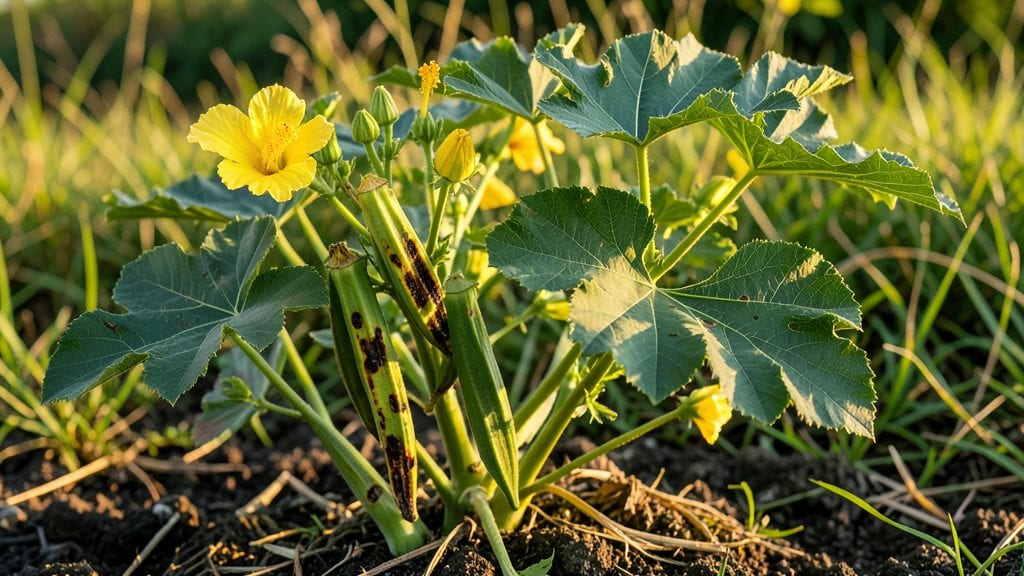
Okra plant diseases can turn your thriving crop into a sad, spotted mess if you don’t catch them early. 🌱 I’ve seen healthy plants wilt overnight from fungal infections—yellowing leaves, blackened stems, and all—but there’s hope if you know what to look for and how to act fast.
The key is spotting those first warning signs before the whole plant throws in the towel.
Most fungal issues start with too much moisture or crowded plants. My biggest mistake was ignoring the spacing recommendations—okra needs room to breathe, and damp leaves create the perfect fungal buffet. Once you recognize the patterns—like powdery mildew’s white dust or anthracnose’s sunken spots—you can treat it before it spreads.
And trust me, the earlier you act, the easier it is to save your plants.
You’ll learn to diagnose the most common fungal problems and stop them in their tracks with organic sprays, proper watering, and a few smart preventive tricks. No more guessing games—just clear steps to keep your okra standing tall and productive all season.
Let’s get your plants back to their best before the next rainstorm hits.
Whether you’re a first-time gardener or a seasoned pro, these solutions work for any climate where okra grows. The difference between a failed crop and a bumper harvest often comes down to timing and knowing what to watch for. Here’s how to keep your plants healthy from seed to harvest.
Why it happens
Okra plants may seem hardy, but they’re not immune to trouble—especially when it comes to fungal diseases. Understanding why these issues flare up is the first step to protecting your crop.
From soggy soil to sneaky spores, several factors turn a thriving okra patch into a battleground. Let’s break down the real culprits behind common fungal infections and what sets them off.
🌧️ Overwatering and Poor Drainage
Fungi thrive in damp, stagnant conditions, and okra plants are particularly vulnerable when their roots sit in waterlogged soil. Why? Excess moisture creates the perfect breeding ground for pathogens like Phytophthora and Pythium, which cause root rot and damping-off.
Poor drainage also prevents soil from drying between waterings, keeping fungal spores active and ready to infect.
- Actionable fix: Test your soil’s drainage by digging a hole, filling it with water, and timing how long it takes to drain. Ideal? Less than 6 hours. If slower, amend with compost or sand.
- Pro tip: 💡 Water deeply but infrequently—okra prefers dry soil between soakings. Use drip irrigation to avoid wetting foliage (which spreads spores).
🍄 Fungal Spores in the Air or Soil
Many okra diseases, such as Cercospora leaf spot or powdery mildew, are caused by airborne spores that land on leaves and stems. But how do they take hold? Spores germinate when conditions are humid (above 75°F/24°C) and leaves stay wet for prolonged periods.
Even old crop residue in the soil can harbor dormant spores, waiting for the right moment to strike.
- Actionable fix: Rotate crops annually to break the fungal lifecycle. Avoid planting okra in the same spot where you’ve grown tomatoes, peppers, or other susceptible plants.
- Pro tip: ✨ Remove and destroy (don’t compost) infected plant debris at season’s end. Solarize soil in late summer by covering it with clear plastic for 4–6 weeks to kill lingering spores.
🌡️ Temperature and Humidity Mismatches
Okra loves heat, but extreme heat combined with high humidity creates a double whammy for fungal growth. Here’s the science: Warm, moist air slows evaporation from leaves, keeping them damp longer—ideal for spores to colonize.
Diseases like target spot (caused by Corynespora cassiicola) explode in these conditions, turning leaves into a patchwork of dead tissue.
- Actionable fix: Space plants for airflow (18–24 inches apart) to reduce humidity around foliage. Use shade cloth (30–50%) in peak summer if your region hits 90°F+ regularly.
- Pro tip: 🌡️ Monitor weather forecasts. If humidity is forecasted to stay above 80% for 24+ hours, apply a preventive fungicide (like copper or neem oil) as a shield.
🌱 Weakened Plants from Stress
Stressed okra plants—whether from nutrient deficiencies, pests, or physical damage—are like open invitations to fungi. Why? Healthy plants have stronger cell walls and natural defenses (like waxy cuticles) that repel pathogens. But when plants are struggling, their barriers weaken, making them easy targets for infections like Alternaria leaf spot.
| Stress Factor | How It Helps Fungi | Quick Solution |
|---|---|---|
| Nitrogen deficiency | Yellowing leaves reduce photosynthesis, weakening the plant. | Side-dress with compost or a balanced fertilizer (10-10-10). |
| Pest damage (e.g., aphids, spider mites) | Open wounds let spores enter; pests also spread diseases. | Spray with neem oil or introduce beneficial insects like ladybugs. |
| Transplant shock | Root disturbance disrupts nutrient uptake, slowing recovery. | Hardening off seedlings for 7–10 days before planting. |
Pro tip: 💪 Keep soil pH between 6.0–6.8 (test with a kit). Okra struggles in acidic soil (<6.0), which stunts growth and invites disease.
Fixing fungal foes in your okra
Okra plants, with their vibrant green pods and hardy nature, can still fall prey to fungal diseases that threaten their health—and your harvest. But don’t worry! With the right approach, you can reverse the damage and prevent future outbreaks.
Below, we’ll break down practical solutions for each common fungal issue, from quick fixes to long-term strategies. Let’s get your okra back to thriving! 🌱💪
Cause: White, powdery patches on leaves (usually in humid or crowded conditions). Fix: 🔥 Remove Infected Leaves – Snip off heavily infected leaves with clean pruners and dispose of them in the trash (not compost). This stops spores from spreading. 🍳 Spray with Baking Soda Solution – Mix 1 tsp baking soda + 1 tbsp vegetable oil + 1 gallon water in a spray bottle. Apply to both sides of leaves every 7–10 days. The oil helps the baking soda stick! 👨🍳 Boost Airflow – Prune nearby plants to improve circulation. Avoid overhead watering—use drip irrigation instead. ⏰ Prevent Recurrence – Apply neem oil spray (1 tbsp neem oil + 1 quart water + a drop of dish soap) weekly during humid months.
Pro Tip: 💡 Plant resistant varieties like ‘Clemson Spineless’ if powdery mildew is a recurring issue.
Cause: Dark, bullseye-shaped spots on leaves (often from Corynespora cassiicola). Fix: 🔥 Prune and Destroy – Remove all infected leaves and sterilize pruners with rubbing alcohol between cuts. 🍳 Copper Fungicide Spray – Use a ready-made copper fungicide (like Bonide Copper Fungicide) every 10–14 days until new growth appears. 👨🍳 Rotate Plant Locations – Avoid planting okra in the same spot for 2–3 years to break the fungus’s life cycle. ⏰ Water at the Base – Never wet the foliage. Use soaker hoses or water early in the morning so leaves dry quickly.
Pro Tip: 🌡️ Mulch with straw to keep soil moist (but not soggy) and reduce spore splash from the ground.
Cause: Sunken, dark lesions on pods and leaves (thrives in wet, warm conditions). Fix: 🔥 Remove and Burn – Cut off all infected pods and leaves and burn them (or bag and trash them). Do not compost! 🍳 Chlorothalonil Spray – Apply a fungicide with chlorothalonil (like Daconil) every 7–10 days until the problem clears. 👨🍳 Improve Drainage – Okra hates soggy soil. Amend clay soil with compost or sand to prevent waterlogging. ⏰ Space Plants Properly – Give okra 2–3 feet of space between plants for airflow.
Pro Tip: ✨ Strengthen plants with compost tea (1 cup compost + 5 gallons water, steep for 24 hours) every 2 weeks to boost natural defenses.
Cause: Yellowing leaves, stunted growth, and mushy stems (from Phytophthora or Pythium). Fix: 🔥 Stop Watering Immediately – Let the soil dry out completely. Do not water again until the top 2 inches are dry. 🍳 Fungicide Soil Drench – Mix 1 tbsp hydrogen peroxide (3%) + 1 gallon water and pour it around the base of the plant. Repeat every 5 days for 2 weeks. 👨🍳 Repot or Relocate – If root rot is severe, dig up the plant, trim mushy roots with a sterilized knife, and replant in fresh, well-draining soil. ⏰ Prevent Future Issues – Use raised beds or containers with drainage holes if your garden has poor drainage.
Pro Tip: 🎯 Add perlite or vermiculite to potting mix (20%) to improve aeration and prevent compaction.
No matter the issue, these habits keep okra healthy year-round:
- Rotate crops – Never plant okra (or other legumes) in the same spot two years in a row.
- Solarize soil – In late summer, cover infected beds with clear plastic for 4–6 weeks to kill fungus spores.
- Use resistant varieties – Look for okra labeled as disease-resistant (e.g., ‘Emerald’ or ‘Jumbo Green’).
- Monitor regularly – Check leaves weekly for early signs of powdery mildew or spots.
Final Thought: 🌟 Fungal diseases don’t have to ruin your okra harvest—act fast, stay consistent, and prioritize prevention. With these fixes, your plants will bounce back stronger than ever! 🚀
Frequently asked questions about okra plant diseases
What’s the first sign of powdery mildew on okra?
Look for white, powdery patches on the upper and lower leaf surfaces, especially in crowded plants or after humid weather. These spots start small but spread quickly if left untreated. The key is catching it early—remove infected leaves immediately and improve airflow around plants.
Can I still eat okra pods if they have fungal spots?
Only if the spots are small and superficial. Remove any pods with sunken lesions, blackened areas, or moldy growth—these indicate deeper infections that can affect safety. When in doubt, toss it! Healthy pods should be firm, green, and free of discoloration beyond minor surface blemishes.
Why does my okra get diseases faster than other plants?
Okra thrives in heat but struggles with high humidity and poor airflow. Crowded plants trap moisture, while overhead watering keeps leaves damp—both perfect conditions for fungal spores. Space plants 2–3 feet apart and water at the base to slash your risk by 70%.
How often should I spray fungicide on my okra?
For prevention, apply a copper or neem oil spray every 10–14 days during humid months. If you’re treating an active infection, use a chlorothalonil-based fungicide every 7–10 days until symptoms disappear. Always spray in the early morning so leaves dry quickly.
Will compost tea really help my okra fight diseases?
Yes! Compost tea strengthens plant immunity by introducing beneficial microbes that outcompete harmful fungi. Brew a 1:5 compost-to-water ratio, steep for 24 hours, and spray on leaves and soil every 2 weeks. It won’t replace fungicides for severe infections, but it’s a great preventive boost.