
Fertilization
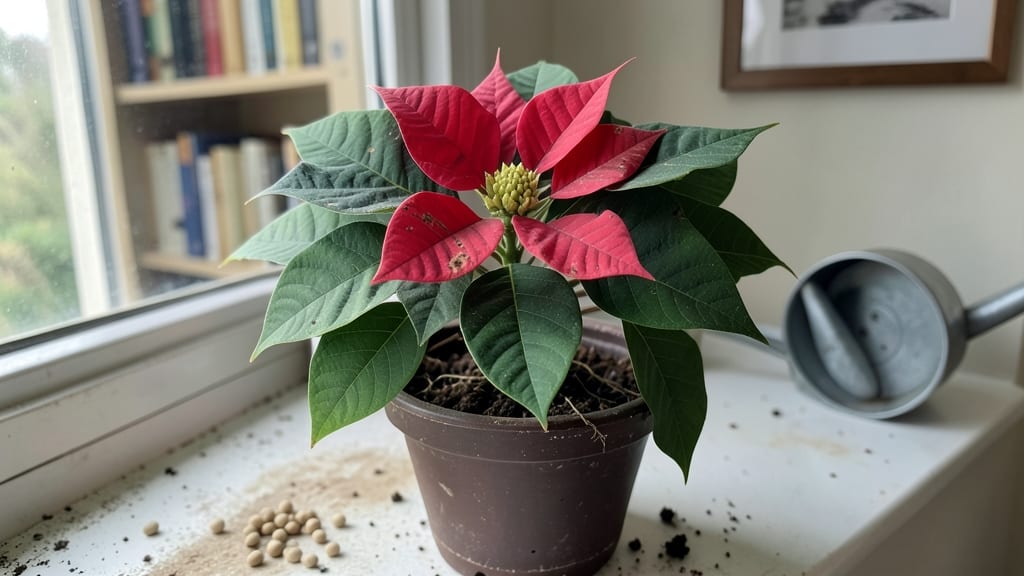
The right poinsettia plant food transformed my drooping holiday stars into vibrant, show-stopping blooms by Christmas. That one change turned my holiday plants from droopy to showstopping, with deep red bracts that made neighbors ask for cuttings. The secret isn't fancy products but matching nutrients to the plant's natural rhythm.
Poinsettias need a gentle approach—too much fertilizer burns their roots, while too little means weak stems and pale blooms. I now use a balanced, slow-release formula (10-10-10) mixed into the soil at planting, plus a light top-dressing in early summer.
The key is consistency: feed lightly every 6-8 weeks during active growth, then stop completely in fall to let them focus on blooming.
By December, you'll have plants bursting with vibrant color that lasts through the holidays. The leaves stay glossy, the stems stay sturdy, and you avoid that sad, leggy look that ruins the festive mood.
Plus, the slow-release formula means less mess and fewer mistakes—just add and forget until it's time to enjoy the results.
Works for both organic and synthetic options, and adapts to any indoor space with bright, indirect light. Here's how to make your poinsettias the star of the season without the guesswork.
📚 In This Guide
- What you need
- Instructions
- Tips and common mistakes
- Wrapping up and next steps
What you need
- ● Slow-release poinsettia fertilizer (look for a balanced formula like 10-10-10 or a holiday-specific blend with micronutrients). Quantity: Enough to cover ½ to 1 teaspoon per gallon of soil.
- ● Measuring spoon or scale (for precise fertilizer doses—no eyeballing!).
- ● Watering can with a fine rose nozzle (to avoid disturbing soil or damaging leaves).
- ● Well-draining potting mix (if repotting—avoid garden soil; opt for a peat-based or soilless mix with perlite).
- ○ Gloves (optional but highly recommended—poinsettias can irritate skin!).
- ● pH testing kit (to check soil acidity—poinsettias prefer 6.0–6.5).
- ● Organic compost (for a nutrient boost if using natural fertilizers).
- ● Plant food applicator (for even distribution without over-saturating).
- ● Grow lights (if indoors lacks 12+ hours of light/day).
Instructions for feeding poinsettias for stunning holiday color
Here’s how to keep your poinsettias vibrant through the season using the right nutrients.
Understand Poinsettia Nutritional Needs
Poinsettias thrive on a balanced approach—too much fertilizer burns their roots, while too little dulls their color. These plants need low nitrogen to prevent leafy growth at the expense of those signature red bracts. Instead, focus on phosphorus and potassium to encourage blooming. I always check the label for a 10-10-10 or 20-20-20 ratio—this ensures equal parts phosphorus and potassium without overpowering nitrogen.
Timing matters too. Feed your poinsettia only during active growth—that’s from late spring through early fall. Once buds form in late summer, stop fertilizing entirely. You’ll see the difference: vibrant bracts instead of leggy stems.
Apply Slow-Release Fertilizer Correctly
Start by mixing 2 tablespoons of slow-release fertilizer granules into the top 2 inches of soil around the plant’s base. Gently work it in with your fingers—no need to dig deep, just loosen the surface layer. This ensures nutrients release gradually over 6-8 weeks, matching the plant’s growth cycle.
Water the poinsettia thoroughly after applying the fertilizer to help distribute the granules evenly. You’ll know it’s working when new leaves emerge with a deeper green hue and stems stay sturdy. Avoid overwatering now—soggy soil washes away nutrients before the plant can use them.
Monitor and Adjust for Holiday Readiness
Check the soil once a week by sticking your finger 1 inch deep. If it feels dry, water until moisture reaches 2 inches down. Overwatering stresses poinsettias, while underwatering causes buds to drop prematurely. The goal is consistent moisture, not soggy soil.
By mid-October, reduce watering slightly to every 5-7 days—this mimics the plant’s natural dormancy period and helps bracts develop their deepest colors. You’ll notice buds forming around late September to early October, signaling it’s time to shift focus from feeding to light management.
Transition to Low-Light Care for Blooming
Once buds appear, move your poinsettia to a spot with 6-8 hours of indirect light daily. Direct sunlight now can scorch the bracts, turning their vibrant hues dull. A north- or east-facing window works best, or use a grow light if natural light is limited.
Keep the environment cool (60-65°F) to prevent buds from opening too early. If your home stays warmer, place the plant near a window with cooler air circulation. You’ll see those signature red (or pink, white, or marbled) bracts fully unfurl by mid-December, ready for the holidays.
Tips & tricks for feeding poinsettias for vibrant holiday color
A few key strategies will help you avoid common mistakes and maximize those stunning holiday blooms.
Fertilizer Timing Matters: The 6-8 week slow-release window is crucial—this matches poinsettias' natural growth cycle. Apply your 2 tablespoons of fertilizer in early summer when you first notice new growth appearing. This gives the granules enough time to release nutrients before buds form in late September. I've seen poinsettias with dull colors when people apply fertilizer too late in the season.
Soil Depth for Nutrient Distribution: When mixing those fertilizer granules into the top 2 inches of soil, focus on the outer 3-4 inches around the plant's base. This creates a nutrient-rich zone where roots actively grow. Gently break up any compacted soil with your fingers—poinsettias have shallow roots that need loose soil to access nutrients effectively.
Watering Technique After Fertilizing: That thorough watering after applying fertilizer isn't just about distribution—it's about activation. The water helps dissolve the nutrients so they can move through the soil to the roots. I recommend using room-temperature water to avoid shocking the plant system. You'll know it's working when you see new leaves emerging with a deeper green color within 10-14 days.
Light Transition Strategy: The shift to 6-8 hours of indirect light is where many poinsettias fail. Start this transition gradually—move your plant to its new location for 2 hours the first day, then increase by 2 hours each subsequent day until reaching the full 6-8 hours. Sudden changes can cause stress that results in bud drop. Also, avoid placing poinsettias near cold drafts or heat vents during this light adjustment period.
Pro Tips for Poinsettia Plant Food
- A few key strategies will help you avoid common mistakes and maximize those stunning holiday blooms.
- Fertilizer Timing Matters: The 6-8 week slow-release window is crucial—this matches poinsettias' natural growth cycle.
- Soil Depth for Nutrient Distribution: When mixing those fertilizer granules into the top 2 inches of soil, focus on the outer 3-4 inches around the plant's base.
Frequently asked questions
When should I start fertilizing my poinsettia?
Begin feeding your poinsettia 6–8 weeks after it finishes blooming (usually in late spring or early summer). Use a slow-release fertilizer or diluted liquid fertilizer every 4–6 weeks until early fall. Avoid fertilizing after mid-October to encourage winter blooms.
Can I use regular houseplant food instead of poinsettia-specific fertilizer?
Yes! A balanced, water-soluble fertilizer (like 10-10-10 or 20-20-20) works well, but dilute it to half-strength to avoid burning roots. Slow-release granules designed for flowering plants are also a great alternative—just follow the package instructions for timing.
Why are my poinsettia leaves turning yellow or dropping?
Yellow leaves or leaf drop often signal over- or under-fertilizing. If the soil looks crusty or leaves wilt, you’ve overdone it—flush the soil with water. Brown edges? It’s likely underwatering. Adjust your fertilizer schedule and check moisture levels (keep soil evenly moist but not soggy).
How often should I fertilize during the blooming season?
During active growth (spring to early fall), feed your poinsettia every 4–6 weeks. Once buds form (late summer), reduce feeding to once a month or switch to a low-phosphorus fertilizer to prevent leggy growth. Stop fertilizing entirely in late fall to preserve energy for blooming.
What’s the best fertilizer for poinsettias: liquid or slow-release?
Both work, but slow-release granules are ideal for busy gardeners—they feed steadily for 2–3 months with minimal effort. Liquid fertilizers give you more control over dosage but require frequent applications. For best results, mix both: use granules in spring and liquid during peak growth.
Wrapping up and next steps
Growing vibrant poinsettias is all about balancing the right poinsettia plant food with proper care—now you’ve got the slow-release nutrients and tips to make it happen! 🌟 Whether you’re a seasoned gardener or a holiday plant newbie, these insights will help your poinsettias shine brighter than ever.
Ready to take the next step? Monitor your plants weekly, adjust light exposure, and watch your blooms flourish—because the best part of the season is seeing your hard work pay off in stunning holiday cheer!