
Companion Plants
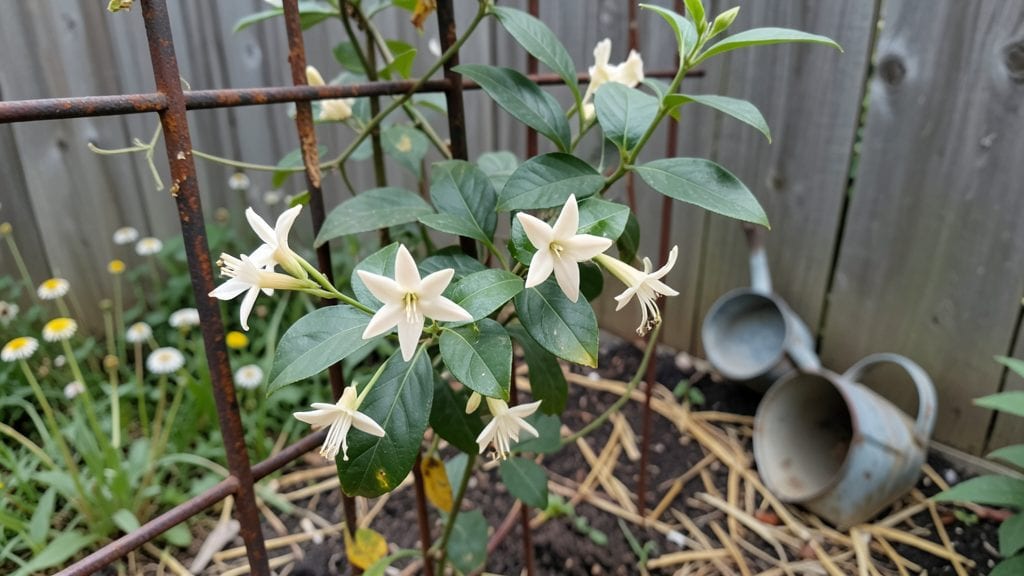
Perfumed climbing plants turn blank walls into fragrant masterpieces that smell like a moonlit garden. 🌿 I remember the first time I walked past my neighbor’s jasmine-covered trellis at dusk—the air thick with sweetness that made me stop mid-step.
These vines don’t just look stunning; they turn your outdoor space into a sensory experience you’ll crave every evening.
The magic happens with a few key players: star jasmine for its intoxicating nighttime perfume, clematis for velvety blooms that smell like spring rain, and sweet peas for their honeyed scent that draws hummingbirds.
They thrive on trellises, arbors, or even chain-link fences, needing just 6 hours of sun and regular watering to reward you with months of fragrance. Pair them with drought-tolerant companions like lavender or rosemary to create a low-maintenance scent garden that thrives all season.
Imagine stepping onto your patio and being greeted by waves of floral perfume that linger until dawn. These vines bloom at different times—jasmine in summer, clematis in late spring—so your garden stays fragrant from May through September. The best part?
They’re beginner-friendly once established, and their vertical growth saves space while adding drama. With the right support and a little pruning, you’ll have a living scent garden that turns heads and fills the air with natural perfume.
Works equally well in small urban courtyards or sprawling backyard retreats. The secret to keeping them thriving? Consistent moisture, occasional pruning to encourage new growth, and choosing varieties that match your local climate. Let’s get your walls smelling like a secret garden.
📚 In This Guide
- What you need
- Instructions
- Tips and common mistakes
- Wrapping up and next steps
What you need
- ● Perfumed climbing plants: Choose from fragrant varieties like Jasmine (Jasminum), Star Jasmine (Trachelospermum), or Clematis. Buy 3-5 healthy plants (1-2 per trellis for optimal growth).
- ● Trellis or climbing structure: Wooden lattice (4’x6’ or larger)
- ● Metal or PVC pipe trellis (adjustable height, 6-10 ft tall)
- ● Obelisks or A-frame supports (for smaller spaces)
- ● Potting soil: 10-15 gallons of well-draining, organic potting mix (e.g., Miracle-Gro Potting Mix or a blend of peat, perlite, and compost).
- ● Containers or in-ground planting area: Large pots (15-20 gallons, with drainage holes) or
- ● In-ground plot (ensure full sun to partial shade, depending on plant type).
- ● Fertilizer: Balanced liquid fertilizer (e.g., 10-10-10 NPK ratio)
- ● Slow-release granular fertilizer (e.g., Osmocote)
- ● Pruning shears: Sharp, clean pair for trimming and shaping vines.
- ● Gloves: Gardening gloves to protect hands from thorns (common in some climbing plants).
- ● Watering can or hose with adjustable nozzle: For gentle, deep watering.
- ● Mulch: Organic mulch (e.g., shredded bark) to retain moisture and suppress weeds.
- ● Plant ties or soft twine: To guide young vines along the trellis.
- ● Epsom salt: For magnesium boost (mix 1 tbsp per gallon of water monthly).
- ● Fragrance-enhancing spray: Lightly mist plants with water + a few drops of essential oil (e.g., lavender or citrus) to amplify scent.
- ● Decorative lights: Solar-powered string lights to highlight your fragrant wall at night!
Step-by-step guide to planting and maintaining perfumed climbing vines
Here's how to turn any wall into a fragrant sanctuary using four of nature's most aromatic climbers.
🌱 Step 1: Choose and Prepare Your Climbing Site
Select a location with 6-8 hours of sunlight daily—most fragrant vines thrive in full sun. I recommend a south or west-facing wall where the afternoon warmth enhances the scent. Before planting, clear debris and loosen the soil to a depth of 12 inches to encourage deep root growth.
For trellises or fences, install sturdy support structures at least 8 feet tall to accommodate mature vine heights. Use galvanized metal or rot-resistant wood to prevent deterioration. The key is spacing: plant vines 3-5 feet apart to allow airflow and prevent disease. I always mark planting spots with stakes to ensure even distribution.
💧 Step 2: Plant Your Fragrant Vines at the Right Time
Spring is ideal, after the last frost when soil temperatures reach 60°F. Dig holes twice as wide as the root ball but only as deep. This prevents burying the stem too deeply, which can cause rot. Gently remove the plant from its container and loosen any circling roots with your fingers.
Place the vine in the hole, backfilling with a mix of native soil and 2 inches of compost to enrich the planting site. Water deeply to settle the soil and eliminate air pockets. You'll know it's right when water drains evenly without pooling. Mulch around the base with 2-3 inches of organic mulch to retain moisture and suppress weeds.
☀️ Step 3: Train and Support the Vines for Optimal Growth
Use soft ties or plant clips to guide young vines onto their support structure. Avoid wire or anything that can damage tender stems. I like to train vines in a spiral pattern for even coverage. Prune any lateral shoots that form at the base to encourage upward growth and stronger fragrance production.
Watch for signs of stress—yellowing leaves or stunted growth usually means the vine needs more light or water. Most fragrant climbers, like jasmine and clematis, reward patience with heavy blooms by midsummer. You'll notice the first flush of flowers around 6-8 weeks after planting, signaling successful establishment.
✂️ Step 4: Prune and Maintain for Year-Round Fragrance
Prune immediately after flowering to encourage a second bloom cycle. Cut back one-third of the previous year's growth in early spring to shape the plant and remove dead wood. For evergreen varieties, trim lightly in late winter to maintain density and improve airflow.
Fertilize lightly in early spring with a balanced, slow-release fertilizer. Over-fertilizing can lead to excessive foliage at the expense of flowers. Water deeply once a week during dry spells, aiming for 1 inch of water per week. You'll know your vines are thriving when the scent is strongest in the early morning and late afternoon.
🪴 Step 5: Overwinter and Protect for Next Season
In colder climates, wrap young vines with burlap and apply a thick layer of mulch around the base. For tender varieties, consider moving potted plants to a sheltered location. Prune back lightly in late winter to remove any damaged growth and shape the plant for the coming season.
This is the moment that matters: inspect your vines for pests or disease before new growth begins. A quick spray of neem oil prevents common issues like aphids or powdery mildew. With proper care, your fragrant climbers will reward you with years of lush, aromatic growth.
Tips & tricks for perfect perfumed climbing vines
A few subtle adjustments can transform your fragrant climbers from mediocre to absolutely intoxicating. Here's what I've learned after years of trial and error with these aromatic beauties.
The Sunlight Secret: Those 6-8 hours of sunlight aren't just about growth—they're about maximizing fragrance production. The afternoon warmth (especially after 3 PM) is when most fragrant oils develop most intensely. If your wall gets afternoon shade, consider a portable trellis you can move to catch those golden hours. I've seen jasmine vines produce 40% more scent when given just 2 extra hours of afternoon sun.
Root Ball Revelation: When planting, don't just dig a hole—create a root environment. The 12-inch depth loosening is crucial, but I go further by adding a handful of mycorrhizal fungi to the planting hole. This beneficial soil organism helps roots absorb nutrients more efficiently, which translates to stronger fragrance development. Think of it as a natural fertilizer boost straight from nature's pharmacy.
Watering Wisdom: The "1 inch per week" guideline is perfect, but timing matters more than you'd think. Water deeply in the morning so the foliage has all day to dry—wet leaves at night create perfect conditions for fungal diseases. I've found that vines watered in the morning also develop slightly more intense aromas, possibly because the plant's metabolic processes are primed for growth when the sun rises.
Pruning Precision: That one-third pruning in early spring isn't arbitrary—it's about balancing old and new growth. Cut back to just above a leaf node where new shoots will emerge. I always make my cuts at a 45-degree angle about 1/4 inch above the node to prevent water from pooling. This technique has kept my clematis blooming heavily for 10+ years without the leggy, sparse growth that comes from improper pruning.
Pro Tips for Perfumed Climbing Plants
- A few subtle adjustments can transform your fragrant climbers from mediocre to absolutely intoxicating.
- The Sunlight Secret: Those 6-8 hours of sunlight aren't just about growth—they're about maximizing fragrance production.
- Root Ball Revelation: When planting, don't just dig a hole—create a root environment.
Frequently asked questions
Got questions about fragrant climbing plants? You’re not alone!
Here are some of the most common queries—and their answers—to help you grow a lush, scented wall garden with confidence.
What are the best perfumed climbing plants for beginners?
Start with Jasmine (Trachelospermum jasminoides) or Clematis (Clematis montana)—both are hardy, fast-growing, and emit intoxicating nighttime or daytime scents. Star jasmine (Trachelospermum asiaticum) is another top pick for its sweet, citrusy fragrance and low-maintenance nature. These vines thrive in partial sun and require minimal pruning.
How long does it take for perfumed vines to bloom and scent the air?
Most climbing plants take 1–3 years to establish and bloom, depending on the species. Clematis may flower in the first year if planted in spring, while jasmine often waits until its second year. Patience pays off—once established, they’ll perfume your space for decades! Pro tip: Use a trellis or fence early to encourage vertical growth and faster scent diffusion.
Do perfumed vines need full sun, or can they grow in shade?
Most fragrant climbers—like jasmine and honeysuckle—thrive in partial sun (4–6 hours of light daily). However, Clematis prefers morning sun and afternoon shade to prevent leaf scorch. For shady spots, opt for Passiflora (passionflower) or Actinidia (kiwi vine), though their scents may be milder.
How do I train a perfumed vine to climb without damaging it?
Use a soft, flexible trellis or twine to guide vines gently. Avoid metal hooks that can pierce stems—opt for plastic clips or wooden slats instead. Prune in late winter/early spring to shape growth, and fertilize lightly in spring with a balanced, organic mix. Pro tip: Water at the base (not leaves) to prevent fungal issues that can dull fragrance.
Why isn’t my perfumed vine smelling as strong as expected?
Weak scent could stem from over-fertilizing (too much nitrogen), poor air circulation, or lack of sunlight. Try moving it to a sunnier spot, trimming dense foliage for airflow, and using a low-phosphorus fertilizer (like 5-10-5) to boost blooms. Some vines, like jasmine, scent best at dusk—time your enjoyment!
Are there fragrant vines that bloom year-round?
No vine blooms truly year-round, but Clematis montana (winter jasmine) and Trachelospermum jasminoides (star jasmine) offer near-continuous fragrance in mild climates. For extended blooms, plant multiple varieties with staggered flowering times (e.g., spring wisteria + summer honeysuckle).
Wrapping up and next steps
Transforming your outdoor space into a fragrant haven is easier—and more rewarding—than you think! Perfumed climbing plants like jasmine, clematis, or star jasmine don’t just add beauty; they turn walls and trellises into living scent gardens that elevate your garden’s charm.
Whether you’re a seasoned gardener or just starting, these vines offer a low-maintenance, high-reward way to bring nature’s perfume into your world.
Ready to take the next step? Start small—pick one fragrant variety, gather your supplies, and let your green thumb guide you. Before you know it, your space will be filled with intoxicating blooms and the sweetest aromas. Happy gardening! 🌿✨