
Plants
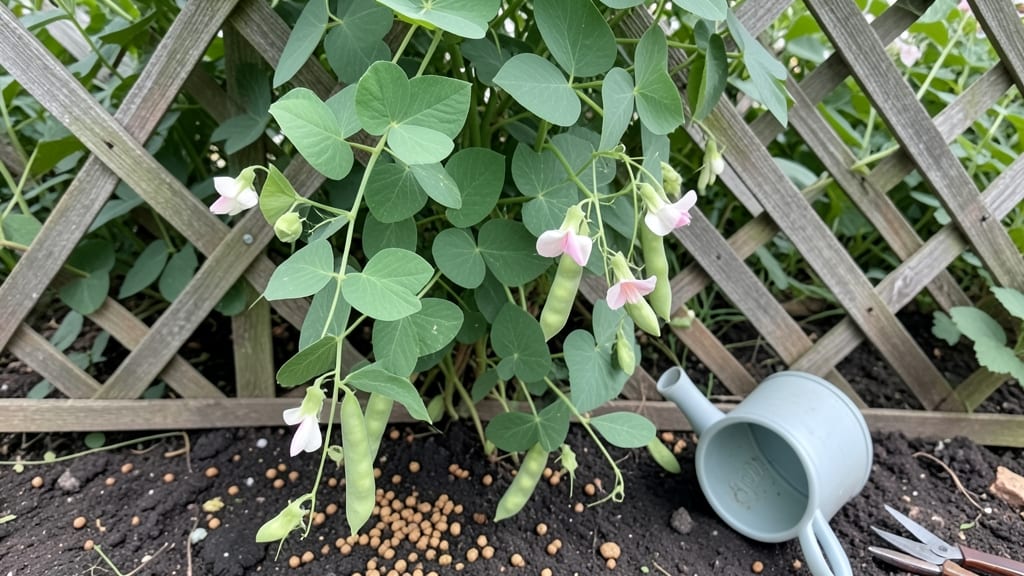
Feeding your pea plants 🌱 the right fertilizer unlocks their fastest growth and sweetest harvests—but most gardeners get it wrong.
Peas are one of the fastest-growing vegetables in your garden, but only if you feed them the right nutrients. The wrong fertilizer can stunt growth, reduce yields, or even kill your plants. Here’s how to master the nitrogen-phosphorus-potassium (NPK) balance for explosive pea plant development.
Too much nitrogen sends vines shooting up but leaves them weak and podless, while too little phosphorus delays flowering. The key is a balanced approach: light feeding at planting, a mid-season boost when flowers appear, and zero fertilizer once pods form.
In this guide, I’ll break down the best organic and synthetic fertilizers for peas, when to apply them, and how to avoid common mistakes that waste your time and money.
Whether you’re a beginner or a seasoned gardener, you’ll learn how to grow peas that climb, flower, and produce like champions.
Understanding pea plant fertilizer needs: the perfect NPK ratio explained
Pea plants thrive on precision—not excess. Unlike heavy feeders like tomatoes, peas need a balanced NPK ratio with low nitrogen to avoid lush foliage at the expense of pods.
Most gardeners overdo it with nitrogen-rich fertilizers, thinking more equals better. In reality, this leads to leafy vines with no peas—a classic mistake I see every spring.
The key to pea success lies in understanding how each nutrient—nitrogen (N), phosphorus (P), and potassium (K)—fuels different growth stages. Too much nitrogen early on will give you a jungle of leaves, while too little phosphorus later will leave your plants struggling to form pods.
Let’s break down the science behind the numbers so you can fertilize like a pro.
🌱 Did You Know? Peas are legumes, meaning they fix their own nitrogen through root nodules. This reduces their need for synthetic nitrogen—another reason why high-N fertilizers backfire.
Here’s the ideal NPK ratio for peas at each growth stage, along with soil pH and organic vs. synthetic options to keep your plants happy and productive.
| Growth Stage | NPK Ratio | Key Nutrient Role | Soil pH | Fertilizer Type |
|---|---|---|---|---|
| Seedling (0-4 weeks) | 5-10-10 | Phosphorus for root development | 6.0-7.0 | Bone meal or compost tea |
| Flowering (4-6 weeks) | 5-20-10 | Phosphorus for blooms & pods | 6.0-7.0 | Fish emulsion or rock phosphate |
| Pod Development (6-10 weeks) | 2-10-10 | Potassium for sweetness & yield | 6.0-7.0 | Wood ash or greensand |
| Harvest Phase (10+ weeks) | 0-5-5 | Potassium for disease resistance | 6.0-7.0 | Banana peel tea or kelp meal |
The seedling stage (0-4 weeks) is all about setting the foundation. Here, a low-nitrogen fertilizer like 5-10-10 encourages root growth without overwhelming the young plant. I’ve seen gardeners use 10-10-10 here, thinking it’s better, but it often leads to leggy seedlings that flop over before they even flower.
During flowering (4-6 weeks), phosphorus becomes critical. This is when your peas decide whether to produce flowers or pods. A ratio of 5-20-10 ensures they prioritize blooms over leaves.
I recommend fish emulsion here—it’s packed with phosphorus and easy for plants to absorb. Just dilute it to half-strength to avoid burning tender roots.
Once pods form (6-10 weeks), the focus shifts to potassium. This nutrient boosts sweetness and helps plants resist diseases like powdery mildew. A 2-10-10 ratio works wonders. I swear by wood ash sprinkled lightly around the base—it’s a natural potassium source and helps balance soil pH too.
At harvest time (10+ weeks), reduce nitrogen entirely. A 0-5-5 ratio keeps plants healthy without encouraging new growth that steals energy from pod production. This is also when I pull out my banana peel tea—it’s a gardener’s secret for a potassium kick without synthetic chemicals.
Peas also demand slightly acidic to neutral soil (pH 6.0-7.0). Test your soil before planting—if it’s too alkaline (pH 7.5+), your plants will struggle to absorb nutrients, no matter how much fertilizer you add.
I’ve fixed this in my garden by mixing in sulfur or pine needles to lower pH gradually.
Organic vs. synthetic? Both work, but organic options like compost, bone meal, and fish emulsion release nutrients slowly, matching the pea’s natural growth rhythm. Synthetics like 10-20-20 blends can work in a pinch, but they require precise timing—apply only when needed and always water thoroughly afterward to prevent root burn.
Remember: less is more with peas. Over-fertilizing is the fastest way to kill your yield. Stick to the NPK ratios above, monitor your plants’ color and growth, and you’ll be harvesting sweet, plump peas in no time. Happy gardening! 🌱
Best organic and synthetic fertilizers for pea plants compared
Choosing the right pea plant fertilizer can mean the difference between a bountiful harvest and struggling vines. Peas need a balanced NPK ratio—typically 5-10-10—to support their three growth stages: leafy growth, flowering, and pod development.
Too much nitrogen can lead to lush foliage but few peas, while phosphorus and potassium are critical for root development and disease resistance. Here’s how to compare the best options for your garden.
Organic fertilizers like compost and fish emulsion improve soil health over time, while synthetic blends offer quick nutrient fixes. The key is timing: apply fertilizers lightly at planting and again when vines start climbing.
Overfeeding can burn roots or attract pests, so slow-release options are ideal. Let’s break down the top choices to help you decide what works best for your pea plants’ needs.
For organic gardeners, compost and bone meal are my top picks. Compost builds soil health over time, while bone meal gives peas the phosphorus they crave for flowering.
Mix 1 cup of compost into the soil at planting and sprinkle 1 tbsp of bone meal around the base when vines reach 6 inches tall. This combo supports both root development and pod production without risking nutrient burn.
Fish emulsion is a great mid-season option if your peas look pale or stunted. Dilute it to 1 tbsp per gallon of water and apply every 2-3 weeks during active growth. The 5-1-1 NPK ratio provides a gentle boost without overwhelming the plant. Just be prepared for the smell—apply it on a windy day or early morning to avoid attracting pests.
If you prefer synthetic fertilizers, a 5-10-10 blend is ideal for peas. Use 1 tbsp per 10 feet of row at planting and repeat when vines start climbing. The key is moderation: synthetic fertilizers release nutrients quickly, so overapplication can lead to salt buildup in the soil.
Always water thoroughly after applying to help nutrients penetrate the root zone.
For slow-release options, consider kelp meal or cottonseed meal. These provide potassium and micronutrients over time, reducing the risk of overfeeding