
Pruning
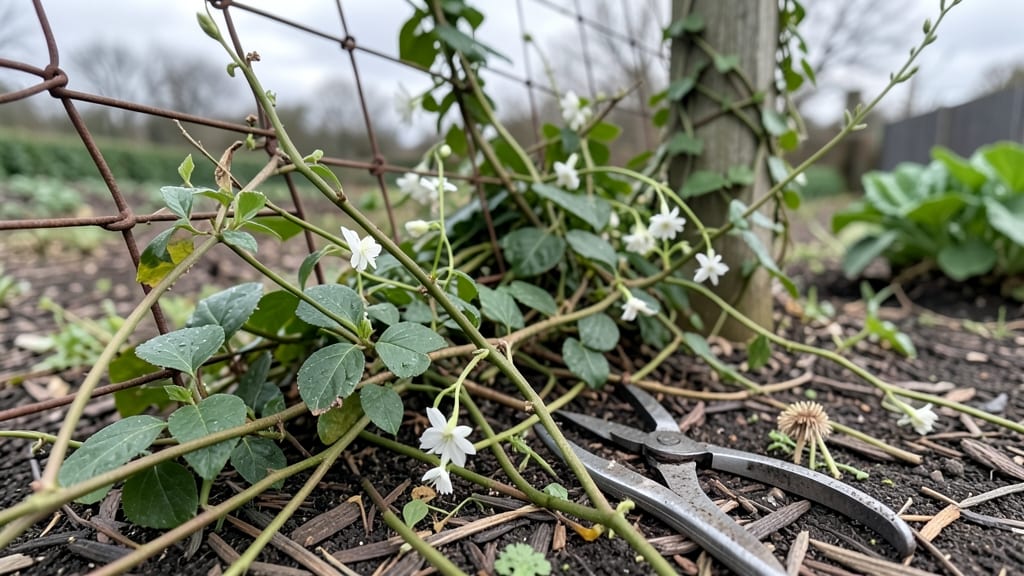
Trimming your jasmine plant isn’t just about keeping it tidy—it’s the secret to those intoxicating blooms showing up year after year. 🌿 I’ve learned the hard way that skipping this step means fewer flowers and leggy stems that flop all over the place.
The key is timing: a little maintenance in early spring, a mid-season shape-up, and a light winter cleanup keeps your plant happy and flowering like crazy.
You’ll need just three things: sharp pruning shears, a clean towel to wipe the blades, and a clear day when the plant’s not stressed. Most people overthink it—jasmine responds best to confident cuts, not hesitant snips.
Focus on removing dead wood first, then thin out crowded stems to let light and air reach the center. Think of it like giving your plant a haircut that lets its best features shine.
After trimming, you’ll notice new growth within weeks, and those fragrant buds will appear faster than ever. The plant stays compact, blooms more abundantly, and even resists pests better.
It’s like hitting the reset button—your jasmine will thank you with lush, fragrant foliage and flowers that last all season. Ready to transform that wild tangle into a showstopper?
This works for both climbing and bush varieties, whether you’re dealing with star jasmine or the classic white blossoms. The same principles apply, so you can use this method no matter which type you’ve got. Let’s get those shears out and turn that jasmine into a flowering machine.
📚 In This Guide
- What you need
- Instructions
- Tips and common mistakes
- Wrapping up and next steps
What you need
- ● Pruning shears – Bypass pruners (sharp, clean blades, 5-7 inch size) for clean cuts on stems up to ½ inch thick.
- ● Hand pruners – Anvil-style (for thicker stems, 7-9 inch size) if your jasmine has woody branches.
- ● Disinfectant (rubbing alcohol or hydrogen peroxide) – 70% isopropyl alcohol to sterilize tools between cuts and prevent disease.
- ● Garden gloves – Nitrile or leather (thick, durable) to protect hands from thorns and sap.
- ● Sharpie or permanent marker – For marking branches if you’re doing a structured pruning plan.
- ● Trash bag or bucket – To collect pruned branches and debris.
- ● Watering can or hose – For post-pruning hydration (1-2 gallons of water).
- ● Loppers – For larger, thicker branches (if your jasmine is mature).
- ● Pruning saw – Bow or folding saw for very thick stems (rare for most jasmine varieties).
- ● Rooting hormone – If you plan to propagate cuttings (gel or powder form).
- ● Plant food or fertilizer – Balanced 10-10-10 or bloom booster to nourish the plant after trimming.
- ● Pruning guide or ruler – To measure branch lengths for uniformity.
- ● Mulch – Organic mulch (like shredded bark) to protect roots post-pruning.
Step-by-Step instructions for trimming your jasmine plant
Here's how I keep my jasmine thriving with just three simple cuts—no pruning anxiety required.
✂️ Step 1: Early Spring Cleanup Cut (Before New Growth)
Start by removing any dead, damaged, or crossing branches in late winter or early spring, just as buds begin to swell. I grab my pruning shears and make clean cuts at a 45-degree angle, about ¼ inch above a leaf node. This encourages new growth in the right direction and prevents disease from entering through jagged cuts.
Look for branches that are brown, brittle, or growing inward—these compete with healthy growth and rob your plant of energy. I also trim any branches that are longer than 12 inches to maintain a balanced shape. The goal here is to open up the center of the plant so light and air can circulate freely.
✂️ Step 2: Post-Bloom Summer Pruning (After Flowers Fade)
Once your jasmine finishes blooming—usually in late spring or early summer—it's time for the second cut. I wait until the flowers have completely dropped before pruning, as this tells me the plant has finished its flowering cycle. Using my pruning shears, I trim back the current season's growth by about ⅓.
Focus on cutting just above a set of leaves where new growth can emerge. This encourages a fresh round of blooms later in the season. I also pinch back any leggy stems to promote bushier growth. The key is to avoid cutting into old wood, which won't produce new flowers.
✂️ Step 3: Light Winter Maintenance (Minimal Trimming)
In late fall or early winter, I do a final light trim to shape the plant and remove any weak or spindly growth. This isn't about heavy pruning—just a gentle touch to keep the plant tidy. I avoid cutting back more than 10% of the plant's overall size during this time, as jasmine needs some foliage to protect it from cold damage.
I also remove any dead or diseased branches that might harbor pests over winter. A quick wipe-down with a damp cloth helps keep the plant clean. This light maintenance ensures your jasmine stays healthy and ready to burst into bloom again in spring.
🌿 Step 4: Year-Round Shape and Health Checks
Between the three main cuts, I do quick monthly checks to spot any branches that need trimming. If I notice any branches growing too long or rubbing against others, I snip them back immediately. I also keep an eye out for any signs of disease or pests—early intervention saves the plant from bigger problems later.
I never let my jasmine get too overgrown, as this can lead to fewer flowers and weaker growth. A little attention throughout the year keeps it lush, fragrant, and full of blooms. The more you prune, the more your jasmine will reward you with those intoxicating flowers.
Tips & tricks for perfect jasmine plant pruning
Here's what I've learned after years of keeping my jasmine blooming beautifully—these little details make all the difference.
The Angle Matters: When making cuts in Step 1, that 45-degree angle isn't just for looks—it creates a larger surface for water to flow away from the cut, preventing rot. I also make sure to cut just above a leaf node (that little bump where leaves grow out) so new growth has a place to emerge. If you're unsure where the node is, look for the tiny brown scar where last year's leaf was attached.
Visual Cues for Pruning: In Step 2, when trimming back by ⅓, look for where the stem starts to get thicker—this is where last year's growth ends and new growth begins. Cutting just above this point gives your jasmine the best chance to produce new flowers. I also pinch back leggy stems to about 3-4 inches from the main stem, which encourages bushier growth and more blooms.
Tool Prep is Key: Before you start any pruning, wipe down your pruning shears with rubbing alcohol to sterilize them. This prevents spreading disease between cuts. I also sharpen my shears annually—dull blades tear plant tissue instead of making clean cuts, which can invite pests and diseases. A quick test: if your shears don't cut cleanly through a piece of paper, it's time to sharpen them.
Seasonal Timing Secret: The exact timing of your cuts matters more than you might think. In Step 1, wait until you see buds starting to swell—this tells you new growth is about to begin. For Step 2, don't prune until flowers have completely dropped and browned, which usually happens about 2-3 weeks after blooming. In Step 3, avoid heavy pruning when nights are consistently below freezing, as this can stress the plant.
Pro Tips for Trim Jasmine Plant
- Here's what I've learned after years of keeping my jasmine blooming beautifully—these little details make all the difference.
- The Angle Matters: When making cuts in Step 1, that 45-degree angle isn't just for looks—it creates a larger surface for water to flow away from the cut, preventing rot.
- Visual Cues for Pruning: In Step 2, when trimming back by ⅓, look for where the stem starts to get thicker—this is where last year's growth ends and new growth begins.
Frequently asked questions
Got questions about keeping your jasmine plant lush and blooming? Here are answers to the most common concerns—so you can trim with confidence!
When is the best time to trim jasmine for maximum flowers?
The ideal times are right after blooming (late spring) and early spring before new growth. A light trim in summer (after 6–8 weeks of growth) can encourage more flowers. Avoid heavy cuts in fall/winter—jasmine needs rest!
How much can I cut back without harming my jasmine?
For woody jasmine (like Jasminum officinale), never remove more than 1/3 of the plant in one go. For trailing or vine types, trim back long stems to 12–18 inches to encourage bushier growth. Always cut just above a leaf node (where new buds form).
My jasmine isn’t flowering after trimming—what went wrong?
If blooms are sparse, check these fixes:
- Light levels: Jasmine needs 6+ hours of sunlight daily—move it if it’s too shady.
- Over-fertilizing: Too much nitrogen = leafy growth, no flowers. Use a balanced 10-10-10 fertilizer lightly in spring.
- Pruning timing: If you cut after flowers fade, you may remove next year’s buds. Trim right after blooming instead.
Can I propagate jasmine from trimmings?
Use 4–6 inch cuttings with 2–3 leaf nodes. Dip in rooting hormone, plant in moist potting mix, and cover with a plastic bag to retain humidity. Keep in bright, indirect light until roots form (4–6 weeks). Perfect for sharing with friends!
What if my jasmine gets leggy or sparse after trimming?
Leggy growth usually means too little light or over-pruning. Try this:
- Move to a sunnier spot (south/west-facing window or outdoor light).
- Trim only the tips of leggy stems to encourage branching.
- For outdoor jasmine, prune after the last frost to avoid cold damage.
How often should I trim jasmine if I want year-round blooms?
A 3-cut schedule works best:
- Early spring: Shape the plant and remove dead wood.
- Mid-summer: Light trim to encourage fall blooms.
- Late fall/winter: Minimal pruning—just tidy up.
Consistency is key! Over-trimming stresses the plant, while under-trimming can lead to woody, unmanageable growth.
Wrapping up and next steps
Trimming your jasmine plant doesn’t have to be intimidating—just follow the three strategic cuts (spring, summer, and post-bloom) to keep it lush and fragrant year-round! 🌿 With the right tools, timing, and technique, you’ll encourage vibrant growth and bountiful blossoms that’ll fill your space with intoxicating scent.
Now that you’re armed with the know-how, roll up your sleeves and give your jasmine the care it deserves. Ready to transform your garden or patio? Start trimming today! 🌸