
How To
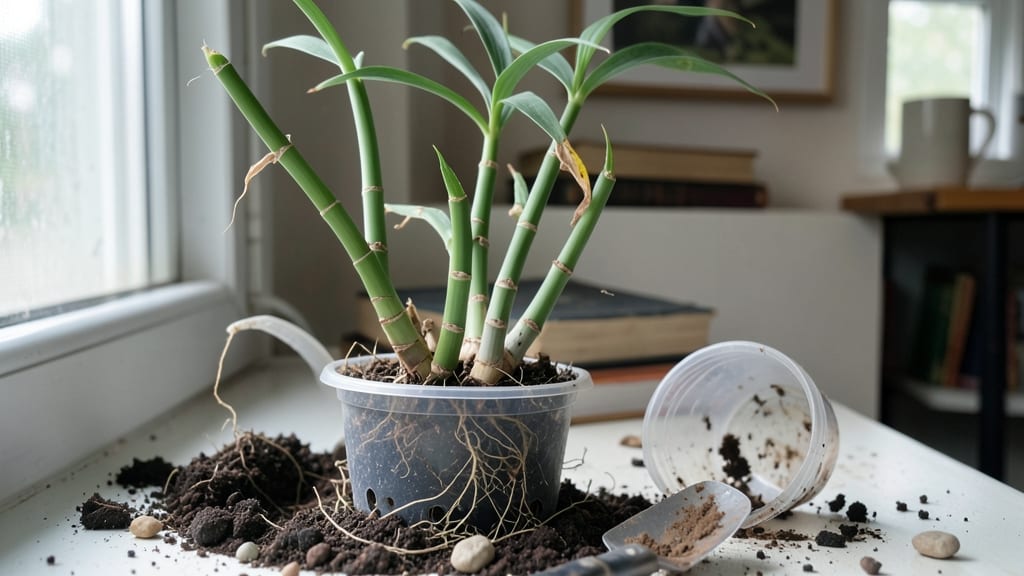
Transplanting your bamboo house plant doesn't have to be a gamble—done right, it'll reward you with lush, healthy growth instead of shock and wilting. 🌱 I've learned the hard way that timing, root care, and the right pot make all the difference between a thriving plant and one that sulks for months.
The secret starts with preparing 3-5 inches of fresh potting mix—bamboo loves well-draining soil that stays slightly moist but never soggy. Choose a container just 1-2 inches larger than the current pot, and handle those fibrous roots like you're untangling a child's headphones: gently, but with confidence.
Most indoor bamboo varieties (like lucky bamboo or Dracaena sanderiana) bounce back beautifully if you follow these steps.
📚 In This Guide
- What you need
- Instructions
- Tips and common mistakes
- Wrapping up and next steps
What you need
- ● New pots or garden bed: 1-2 pots 1-2 inches larger in diameter than the current root ball (for potted bamboo).
- ● Well-draining containers with drainage holes (terracotta or ceramic work great!).
- ○ Optional for outdoor planting: A shallow trench or prepared garden bed with loose, fertile soil.
- ● High-quality potting mix: 2-3 gallons of well-draining, airy soil mix (avoid dense, compacted soil).
- ● Recommended blend: 50% peat moss or coco coir + 30% perlite/pumice + 20% compost or orchid bark.
- ● Pruning tools: 1 pair of sterilized pruning shears or a sharp knife (for cutting runners or dividing clumps).
- ● 1 small hand trowel (for digging and separating roots).
- ○ Rooting hormone (optional but helpful): 1 small bottle of rooting powder or gel (to encourage faster root growth on cuttings).
- ● Watering supplies: 1 watering can with a rose attachment (for gentle, even watering).
- ● 1 spray bottle (for misting leaves post-transplant).
- ● Mulch (for outdoor transplants): 1 bag of organic mulch (e.g., shredded bark or straw) to retain moisture and suppress weeds.
- ● 1 roll of landscape fabric (if planting in the ground to prevent weed competition).
- ● 1 fertilizer (balanced liquid fertilizer, like 10-10-10, for post-transplant care).
- ● 1 plant support stake (if your bamboo is tall and needs stability).
- ● 1 plastic sheet or tarp (to protect the area while digging).
Step-by-step instructions for transplanting bamboo house plants
Here’s how to divide and replant bamboo with minimal stress—your plant will bounce back stronger than ever.
🪴 Step 1: Choose the Right Time and Prepare New Pots
Transplant bamboo in early spring when new growth begins, or during its active growing season (typically spring or summer). This timing ensures the plant recovers quickly. For your 4 divisions, use pots 2-3 inches larger in diameter than the current root ball—bamboo thrives when roots have room to expand without feeling cramped.
Fill the bottom of each new pot with 1-2 inches of fresh potting mix to create a stable base. Avoid garden soil—it compacts and suffocates roots. The extra mix also helps prevent the plant from sitting too low in the pot, which traps excess moisture and risks root rot. Water the new pots lightly before transplanting to settle the soil.
🌱 Step 2: Gently Remove and Divide the Bamboo Clump
Water the original pot 24 hours before dividing to soften the roots and reduce shock. Carefully slide the bamboo out, supporting the base to avoid breaking stems. You’ll see multiple stems connected by a dense root system—this is where you’ll make your cuts. Use sterilized pruning shears to separate the clump into 4 healthy divisions, ensuring each has 3-5 stems and a balanced root structure.
Real talk: If roots look tangled, don’t force them apart. Instead, trim any overly long roots to 4-6 inches—this encourages new growth while keeping the division manageable. Discard any brown or mushy roots immediately; they’ll only invite disease. Keep the divisions in a shaded, humid spot while you prep the final pots.
☀️ Step 3: Plant Each Division with Proper Spacing and Support
Place each division into its new pot, burying the root crown (where stems meet roots) just ½ inch below soil level. Fill around the roots with the remaining potting mix, pressing gently to eliminate air pockets. Bamboo loves stability, so add a small bamboo stake (or a chopstick if you’re feeling creative) to support each division as it re-establishes itself.
Leave 1 inch of space between the soil surface and the pot’s rim—this prevents overflow when watering. After planting, give each division a deep watering until water drains freely from the bottom. Drainage holes are non-negotiable; bamboo roots rot faster than they recover from soggy conditions.
💧 Step 4: Acclimate and Care for Recovery
Keep the newly transplanted divisions in bright, indirect light for the first 2 weeks—direct sun stresses fresh roots. Maintain high humidity (60-70%) by grouping pots together or misting daily. You’ll know they’re settling in when new leaves emerge within 3-4 weeks. Avoid fertilizing for 6 weeks—let the roots focus on recovery, not growth.
Once established, water when the top inch of soil feels dry, and fertilize monthly with a balanced liquid fertilizer during spring and summer. Here’s the thing—bamboo grows fast, so check for overcrowding every 6 months. If stems get too dense, repeat the division process to keep your plants lush and healthy.
Tips & tricks for stress-free bamboo division
Here's what I've learned after dividing dozens of bamboo plants—these tricks keep your divisions thriving from day one.
The 24-Hour Prep Rule: That 24-hour watering before division isn't just about softening roots—it's about giving your plant a hydration boost before the stress of transplanting. I've found that bamboo recovers faster when the soil is uniformly moist, so set a reminder to water exactly 24 hours before you start. This prevents the roots from drying out during the division process, which is when they're most vulnerable.
Root Trimming Technique: When you're trimming those overly long roots to 4-6 inches, think of it as pruning your plant's hair—you're shaping it for healthier growth. I always make clean cuts with sterilized shears at a 45-degree angle about 1/4 inch above a node (that little bump on the root). This encourages new root growth from those nodes while keeping the division neat and manageable.
Support System Secret: That bamboo stake isn't just for show—it's a game-changer for recovery. I've seen divisions without support lean dramatically as they re-establish, which stresses the new roots. Use stakes that are 2-3 inches taller than your plant and secure them gently with soft plant ties. The slight resistance actually helps the plant develop stronger stems as it grows.
Lighting Strategy: During that critical 2-week acclimation period in bright, indirect light, position your new divisions within 3 feet of an east-facing window for optimal conditions. If you don't have natural light, a grow light on a 12-hour cycle works wonders. The key is to avoid direct sun—it burns tender new leaves while they're still establishing their protective wax coating.
Pro Tips for Transplant Bamboo House Plant
- Here's what I've learned after dividing dozens of bamboo plants—these tricks keep your divisions thriving from day one.
- The 24-Hour Prep Rule: That 24-hour watering before division isn't just about softening roots—it's about giving your plant a hydration boost before the stress of transplanting.
- Root Trimming Technique: When you're trimming those overly long roots to 4-6 inches, think of it as pruning your plant's hair—you're shaping it for healthier growth.
Frequently asked questions
Got questions about transplanting your bamboo house plant? You’re not alone! Here are some common concerns and straightforward answers to help you feel confident before diving in.
When is the best time to transplant my bamboo plant?
The ideal time is during the plant’s active growing season—typically spring or early summer. This gives your bamboo time to recover and establish new roots before winter dormancy. Avoid transplanting in extreme heat or cold, as stress can weaken the plant.
How do I know if my bamboo plant needs transplanting?
Watch for these signs:
- Root-bound: Roots circling the pot or growing out of drainage holes.
- Stunted growth: Slow or uneven growth despite proper care.
- Yellowing leaves: Often a sign of overcrowded roots.
Can I transplant bamboo in winter?
Transplanting in winter is not recommended unless it’s a mild climate. Bamboo grows slowly in cold months, and the shock of division can stress the plant. If you must, wait until late winter when new growth begins. For most, spring is the safest bet!
What if my bamboo plant looks sad after transplanting?
Don’t panic! Some wilting or leaf drop is normal. To help it recover:
- Keep it in bright, indirect light (avoid harsh sun).
- Water lightly for the first week to avoid over-saturating roots.
- Hold off on fertilizing until new growth appears (usually 4–6 weeks).
Can I transplant bamboo into a smaller pot?
Generally, no—bamboo thrives when it has room to grow. If you’re dividing, choose a pot 1–2 inches larger in diameter than the root ball. Overcrowding leads to stress, poor drainage, and weaker growth. Think of it like giving your plant a cozy but spacious new home!
Wrapping up and next steps
Transplanting your bamboo house plant doesn’t have to be intimidating—with the right tools, timing, and care, you’ll soon be rewarded with lush, thriving growth. Remember, patience and gentle handling are key to helping your plant recover smoothly.
Now that you’re armed with tips on when, how, and why to divide your bamboo, it’s time to roll up your sleeves and give your green friend a fresh start!
Next steps:
- 🌱 Monitor your transplanted bamboo for the first few weeks—keep an eye out for signs of stress but trust the process!
- 💧 Adjust care as needed (like watering or light exposure) based on your plant’s response.
- 🎉 Celebrate! Share your new greenery with friends or expand your plant collection—you’ve earned it!