
Pruning
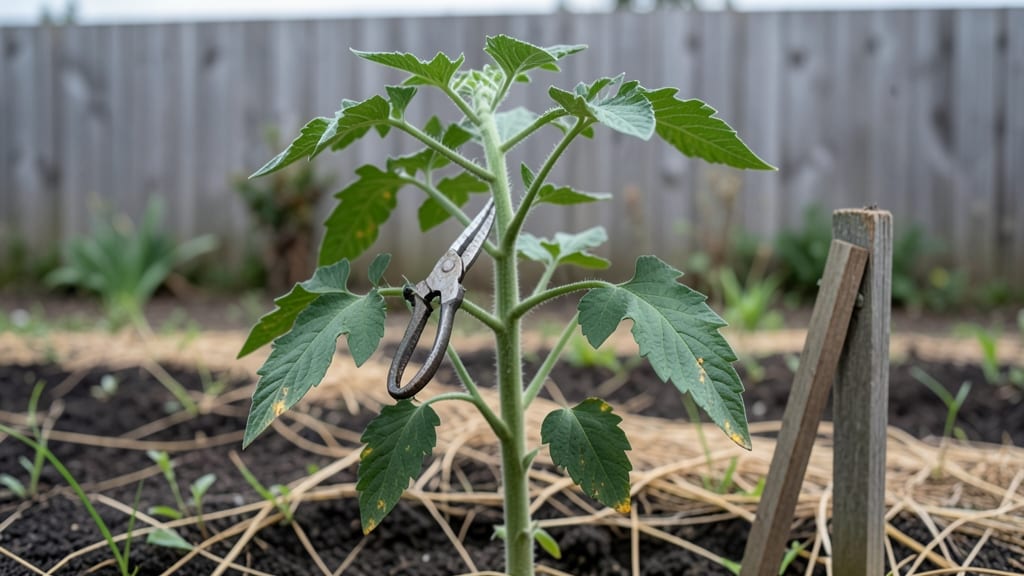
Pruning young tomato plants with just three strategic cuts transforms weak seedlings into sturdy producers. 🌱 I learned the hard way—skipping pruning meant spindly vines and half the fruit, but after mastering these cuts, my plants now stand tall and loaded with tomatoes.
The key is timing: focus on early growth when plants are still small but actively growing.
You’ll only need basic tools: sharp pruning shears, clean scissors, or even your fingers for the first cuts. The goal is to remove suckers—those little shoots growing between the main stem and branches—while keeping the plant’s energy focused on fruit production.
Start when plants hit 12–18 inches tall, and you’ll see stronger stems and better air circulation that prevents disease.
By the time your plants hit 3–4 feet, you’ll notice the difference: thicker stems, more flowers, and heavier fruit. The cuts encourage the plant to grow outward instead of upward, giving you that classic tomato plant shape with abundant harvests.
Just avoid over-pruning—never remove more than a third of the plant at once.
This method works for both determinate (bush) and indeterminate (vining) varieties, though indeterminate plants benefit the most. Once you’ve mastered the basics, you can experiment with shaping for even better yields. Ready to give it a try?
📚 In This Guide
- What you need
- Instructions
- Tips and common mistakes
- Wrapping up and next steps
What you need
- ● Pruning shears or scissors: Choose sharp, clean bypass pruners (avoid anvil-type shears—they can crush stems). A small pair (4-6 inches) works best for young plants.
- ● Gloves: A pair of gardening gloves (nitrile or leather) to protect your hands from thorns and dirt.
- ○ Disinfectant (optional but recommended): A 70% isopropyl alcohol or bleach solution (1 part bleach to 9 parts water) to sterilize tools before and after use.
- ● Garden twine or soft ties: If your plants need support, use 100% natural jute twine or soft plant ties (avoid wire or plastic that can damage stems).
- ● Sturdy stakes or cages: 5-6 foot bamboo stakes or tomato cages (5-6 feet tall) to support growing plants post-pruning.
- ● Trash bag or bucket: A small bag or container to collect pruned branches and prevent disease spread.
- ● Hand lens or magnifying glass: For inspecting stems and spotting pests or diseases early.
- ● Garden spray bottle: Filled with water to rinse tools or dampen soil post-pruning.
- ● Pruning sealant: A natural wax-based sealant (like tree wound dressing) to protect larger cuts (though most tomato plants heal fine without it).
- ● Notebook or app: To track pruning dates, plant growth stages, and notes on your tomato varieties.
Step-by-Step guide for pruning young tomato plants
Here's how to shape your plants for stronger growth and bigger harvests.
✂️ Step 1: Remove Suckers for Stronger Growth
Suckers are the small shoots that grow in the crotch between the main stem and a branch. They drain energy from your plant instead of letting it focus on fruit production. Use your fingers or clean pruning shears to pinch them off when they're about 1-2 inches long—this is the sweet spot before they become too woody to break easily.
Start checking for suckers when your plant reaches about 18-24 inches tall. I like to do this every 5-7 days during the growing season. If you miss a sucker, don't worry—just remove it the next time you check. The key is consistency, not perfection.
🌿 Step 2: Trim Lower Leaves for Better Airflow
Remove the bottom 6-8 inches of leaves once your plant reaches 3 feet tall. This might seem counterintuitive, but those lower leaves block airflow and create damp conditions that invite disease. Use clean pruners to make a sharp cut just above a leaf stem or cluster.
Focus on leaves that touch the soil or are heavily shaded. You'll see new growth sprout from higher up on the stem—this is your plant redirecting energy upward. This step also makes harvesting easier later on and keeps the fruit cleaner.
☀️ Step 3: Prune for Light Exposure and Fruit Production
Once your plant is 4-5 feet tall, prune any branches that grow inward or cross over each other. These compete for sunlight and can lead to weak, diseased growth. Aim to leave only the strongest, outward-facing branches. A good rule of thumb is to keep about 3-4 main stems per plant.
Pay attention to where flowers form. If you see clusters growing on lower branches, prune those off—they'll ripen later and may not get enough light. The goal is to encourage fruit production on the top third of the plant where sunlight is strongest. You'll know you're doing it right when you see more flowers and less leafy growth.
⏰ Step 4: Maintain Pruning Through the Season
Continue removing suckers and trimming as your plant grows. In late summer, when your plant is fully mature, stop pruning to let the remaining energy go into ripening fruit. You'll know it's time to pause when you see tomatoes starting to color up.
Always use clean tools to avoid spreading disease. Wipe your pruners with rubbing alcohol between cuts. Prune in the morning when plants are dry, so wounds have time to heal before evening humidity sets in. This simple routine keeps your plants healthy and productive all season long.
Tips & tricks for pruning young tomato plants
Real talk: Pruning tomato plants might seem intimidating at first, but these simple tricks will help you shape your plants like a pro.
Timing Secret: The 5-7 day interval for checking suckers (Step 1) is ideal because it gives your plant time to grow new suckers while keeping them small enough to pinch off easily. I've found that checking in the morning after a light watering makes suckers easier to spot—they'll stand out against the dew-damp leaves. If you notice suckers growing near the bottom of the plant, remove them completely, as they'll never get enough light to produce fruit anyway.
Tool Tip: Don't have pruning shears? Your fingernails work just fine for small suckers. For tougher growth, use clean scissors or even a sharp knife. The key is to make clean cuts just above a leaf node (where leaves grow out). I keep a small bottle of rubbing alcohol handy to wipe down tools between cuts—this prevents spreading disease from plant to plant.
Visual Cue: When trimming lower leaves (Step 2), look for leaves that are touching the soil or creating a canopy effect. These are the ones to remove. You'll know you've done it right when you see new growth starting about 6-8 inches above where you made your cuts. This upward growth is your plant's way of redirecting energy toward fruit production. Think of it like giving your tomato plant a haircut—you're shaping it to grow stronger and more productive.
Maintenance Strategy: In Step 4, when you see tomatoes starting to color up, that's your cue to stop pruning. The plant will naturally shift its energy from growth to fruit ripening. I like to make one final check around late summer when the days start getting shorter. At this point, focus on removing any diseased leaves and keeping the plant's energy focused on the existing fruit rather than new growth.
Pro Tips for Prune Young Tomato Plants
- Real talk: Pruning tomato plants might seem intimidating at first, but these simple tricks will help you shape your plants like a pro.
- Timing Secret: The 5-7 day interval for checking suckers (Step 1) is ideal because it gives your plant time to grow new suckers while keeping them small enough to pinch off easily.
- Tool Tip: Don't have pruning shears?
Frequently asked questions
Got questions about pruning young tomato plants?
You’re not alone! Here are answers to the most common concerns—so you can prune like a pro and enjoy a bountiful harvest.
When is the best time to start pruning young tomato plants?
Begin pruning once your plants reach 12–18 inches tall and have developed their first few sets of true leaves (not seedlings). Early pruning encourages stronger stems and better airflow, reducing disease risk. Pro tip: Wait until after transplanting to avoid stressing delicate roots!
How do I know which leaves to prune from my tomato plant?
Remove lower leaves touching the soil (they’re prone to rot) and suckers (small shoots growing between the stem and branches). Keep upper leaves for photosynthesis. Rule of thumb: Prune aggressively for determinate varieties, but go lighter with indeterminate types to support growth.
Can I prune tomato plants too much? What are the signs?
Yes! Over-pruning weakens the plant, stunts growth, or exposes it to sunburn. Signs include yellowing leaves, slow growth, or fewer flowers/fruit. If this happens, pause pruning and focus on watering/fertilizing. Balance is key: Never remove more than ⅓ of the foliage at once!
Do I need special tools for pruning tomato plants?
Nope! Basic tools like sharp pruning shears, clean scissors, or even your fingers work. Just ensure tools are sterilized (rubbing alcohol wipe) to prevent disease spread. Bonus: A small spray bottle with water can help clean cuts post-prune.
What should I do with the pruned leaves and suckers?
Toss them in the compost (if disease-free) or dispose of them in yard waste. Never leave pruned debris near the plant—it can harbor pests or fungi. Quick tip: Mulch around the base to deter regrowth of suckers naturally!
How often should I prune my tomato plants?
Prune every 1–2 weeks during the growing season (spring to early summer). Indeterminate varieties may need more frequent checks, while determinate types require minimal pruning. Watch for: New suckers forming—remove them early to avoid competition for nutrients!
Still unsure? Snap a photo of your plant and compare it to pruning guides—visuals help! For tricky cases, ask your local garden center for advice. Happy pruning!
Wrapping up and next steps
Pruning young tomato plants might seem intimidating at first, but with these three strategic cuts, you’re well on your way to a bountiful harvest! 🌱 The key is to focus on removing suckers early, shaping the plant for airflow, and encouraging strong growth—not overcomplicating the process.
Each snip you make today could lead to healthier plants, bigger yields, and fewer pests down the road.
Now that you’re armed with the know-how, grab those shears and get pruning! Start small—even just one plant can make a difference—and soon, you’ll be the proud gardener of a thriving tomato patch. Happy growing! 🍅✨