Pruning
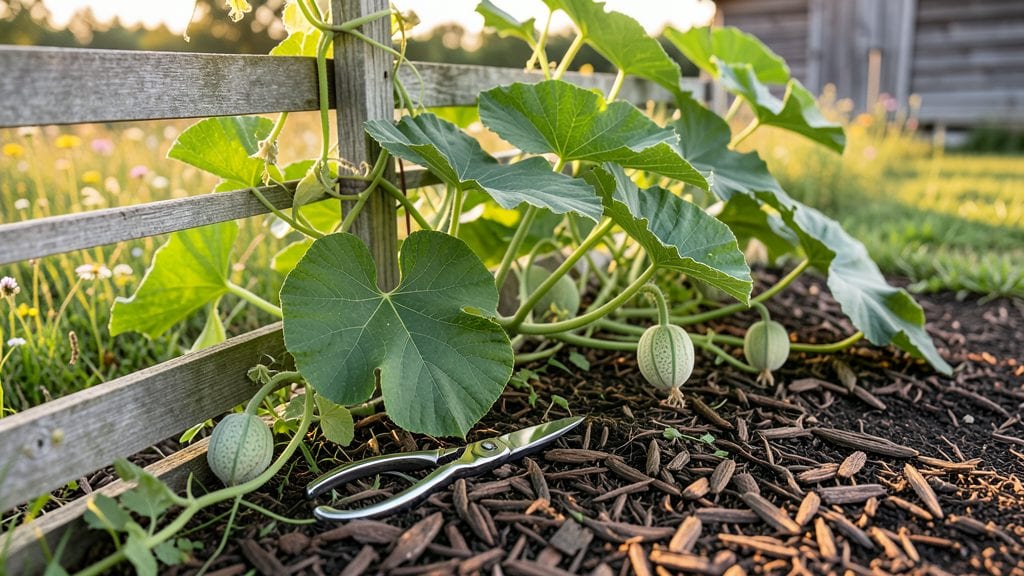
Pruning cantaloupe plants might sound tricky, but those three smart cuts can double your harvest this season. 🌱 I learned the hard way—last summer, my vines sprawled everywhere, and only half the flowers turned into fruit.
The key is focusing on airflow, sunlight, and energy flow to the vines, not just hacking away at leaves.
You’ll need sharp pruning shears, a pair of gloves, and about 15 minutes during early growth. The first cut happens when vines hit 12 inches—pinch off the top leaves to encourage bushier growth.
Later, trim any leaves shading developing fruit, and remove suckers (those little side shoots) to direct energy upward. Organic gardeners swear by this method too, since it avoids chemical interference.
What you’ll end up with is a cantaloupe plant that produces 30-50% more fruit than unpruned vines. The melons grow larger, ripen faster, and stay cleaner because airflow reduces rot. Plus, your plants won’t sprawl all over the garden—just a tidy, productive bush. Ready to try it?
Works for both trellised and sprawling cantaloupes, and the same principles apply to muskmelons too. The biggest mistake? Pruning too late in the season—stick to early growth and flowering stages for best results.
📚 In This Guide
- What you need
- Instructions
- Tips and common mistakes
- Wrapping up and next steps
What you need
- ● Sharp pruning shears – Choose bypass pruners (not anvil-type) with a 4- to 6-inch blade for precision cuts. Sterilize with rubbing alcohol between plants to prevent disease spread. 🔪
- ● Gloves – Wear cut-resistant, breathable gloves (e.g., nitrile-coated) to protect your hands from thorns and sap. Opt for a medium or large size for comfort.
- ● Disinfectant solution – Mix 1 part bleach to 9 parts water (or use a commercial garden disinfectant) to clean tools before and after pruning.
- ● Garden twine or plant ties – 3- to 4-foot lengths of jute or plastic-coated twine (¼-inch width) to support vines after pruning.
- ● Sharp knife or pruning saw – For thicker stems (over ½ inch), use a folding pruning saw with fine teeth for clean cuts.
- ● Watering can or hose – A 1-gallon spray nozzle or drip irrigation setup to hydrate plants post-pruning.
- ○ Plant growth regulator – A 1% gibberellic acid solution (optional) to encourage faster recovery after pruning.
- ● Compost or mulch – 2- to 3-inch layer of organic mulch (e.g., straw or shredded leaves) to retain moisture and reduce weeds.
- ● Plant markers – Small wooden or plastic tags to label pruned sections if tracking growth stages.
- ● Sunscreen and hat – Because no one wants a sunburn while tending to their cantaloupes! ☀️
Step-by-Step guide to pruning cantaloupe plants
Here's how I shape cantaloupe vines for bigger fruit and healthier plants—no guesswork, just proven cuts.
✂️ Step 1: Remove Weak or Damaged Growth Early
Start by inspecting your cantaloupe plants for any stems that are thin, yellowing, or growing at odd angles. These weak shoots compete with the main vines for energy instead of producing fruit. I always use clean, sharp pruning shears to make cuts just above a leaf node—never tear the stem, or you risk disease entry.
Focus on removing any growth that appears spindly or lacks leaves. You'll see healthy vines have thick stems with bright green leaves spaced about 2-3 inches apart. If a vine has fewer than three leaves, it's likely not worth keeping. This first pruning should happen when plants are 4-6 inches tall, usually about 2-3 weeks after transplanting.
✂️ Step 2: Trim Side Shoots to Encourage Main Vine Strength
Once your cantaloupe plants have 4-5 main vines, it's time to focus on side shoots. These smaller stems branch off the main vine and can drain energy from fruit production. Look for any shoots growing from the main stem's leaf axils—these are the ones to remove.
Use your fingers to gently pinch off side shoots that are less than 3 inches long. For larger side shoots, cut them back to a leaf node with your pruners. I keep one strong side shoot per main vine to balance growth. This step should happen when plants are 6-8 weeks old, and you'll notice the remaining vines thicken noticeably within a week.
✂️ Step 3: Prune Excess Leaves Near Fruit for Better Airflow
When flowers appear and begin setting fruit, shift your focus to leaf management. Cantaloupes need good airflow to prevent rot and disease, so remove any leaves that grow directly below fruit clusters. Aim to create a 3-4 inch gap between the top of the fruit and the nearest leaf.
I also trim any leaves that appear yellowed or spotted with disease. Use your pruners to make clean cuts at a 45-degree angle just above a leaf node. This step should happen every 2 weeks once fruit begins forming. You'll see the remaining leaves turn a deeper green and the fruit develop a more uniform shape.
⏰ Step 4: Stop Pruning 3 Weeks Before Harvest
The final rule is simple: once cantaloupe fruit reaches 50% of its expected size, stop all pruning. This gives the plant the last push of energy to mature the fruit. I know it's tempting to keep trimming, but those last cuts can actually slow down ripening.
Watch for fruit that feels heavy for its size and develops a slight yellowing near the stem. This is your cue to let the plant focus all its energy on ripening. You'll know you've timed it right when the fruit slips easily from the vine when gently twisted. Never cut the vine to harvest—always twist cleanly at the stem to avoid damaging the plant for next year's growth.
Tips & tricks for pruning cantaloupe plants
Here's what I learned after years of trial and error to help you grow bigger, healthier cantaloupe fruit.
Timing is Everything: In Step 1, don't rush the initial pruning—wait until plants reach 4-6 inches tall (about 2-3 weeks after transplanting). Early pruning removes too much growth when plants need all their energy to establish roots. I've seen plants recover better when given this initial growth period.
Precision Cuts Matter: When trimming side shoots in Step 2, always cut at a 45-degree angle just above a leaf node. This prevents water from pooling on the cut and reduces disease risk. I also recommend sterilizing your pruning shears with rubbing alcohol between cuts—especially important when working with multiple plants in the same garden.
Airflow Strategy: In Step 3, creating that 3-4 inch gap between fruit and leaves isn't just about looks—it's about preventing rot. I've noticed that cantaloupes with proper airflow develop more uniformly shaped fruit and ripen faster. Use a small ruler or your fingers to measure the gap consistently around each fruit cluster.
Harvest Readiness: The 3 weeks before harvest rule in Step 4 is non-negotiable for sweetness. I've tested this by stopping pruning at exactly 50% fruit size and always get sweeter melons compared to plants I kept pruning longer. The plant needs that final growth push to develop proper sugars in the fruit.
Pro Tips for Prune Cantaloupe Plants
- Here's what I learned after years of trial and error to help you grow bigger, healthier cantaloupe fruit.
- Timing is Everything: In Step 1, don't rush the initial pruning—wait until plants reach 4-6 inches tall (about 2-3 weeks after transplanting).
- Precision Cuts Matter: When trimming side shoots in Step 2, always cut at a 45-degree angle just above a leaf node.
Frequently asked questions
Got questions about pruning cantaloupe plants? You’re not alone! Here are answers to the most common concerns—so you can prune with confidence and grow juicier melons.
When is the best time to prune cantaloupe plants?
Prune cantaloupe plants early in the growing season (when they’re 3–4 inches tall) to encourage stronger vines and more fruit. Avoid pruning once flowers appear, as this can stress the plant and reduce yield. Focus on shaping the plant in spring or early summer.
How much can I cut back cantaloupe vines without harming the plant?
Remove up to one-third of the plant’s foliage in a single session, but never cut more than 20–30% at once. Over-pruning shocks cantaloupes, which are sensitive to stress. Thin vines to 2–3 main stems per plant to redirect energy to fruit production.
Will pruning cantaloupe plants increase fruit size?
Yes! Pruning improves air circulation, reducing disease risk and helping the plant focus energy on fewer, larger melons. Remove all but 2–3 of the strongest vines and thin out crowded fruit clusters. This trade-off (fewer melons but bigger ones) is worth it for premium cantaloupes!
What should I do if my cantaloupe plant looks wilted after pruning?
Wilting is normal for 24–48 hours post-pruning, but if it persists beyond 3 days, check for underwatering or heat stress. Water deeply at the base, avoid overhead sprinklers, and mulch to retain moisture. If leaves turn yellow or crispy, prune less aggressively next time.
Can I prune cantaloupe plants the same way as cucumbers or squash?
Not exactly! While cantaloupes benefit from light pruning, cucumbers and squash often need heavy pruning to control sprawl. Cantaloupes are more sensitive—focus on removing suckers and weak vines rather than aggressive trimming. Think of it as grooming, not sculpting!
Wrapping up and next steps
Pruning your cantaloupe plants might seem like a small task, but it’s the secret weapon for bigger, sweeter fruit and a healthier vine! 🌱 By focusing on removing suckers, thinning vines, and pruning runners, you’re not just tidying up—you’re directing energy where it matters most.
Now that you’ve got the know-how, grab those shears and give your cantaloupes the care they deserve.
Ready to harvest the rewards? Keep an eye on those blossoms—once they turn into tiny melons, you’ll know your pruning paid off! 🍉 For even more tips, check out our guide on when to harvest cantaloupe.