
Pruning
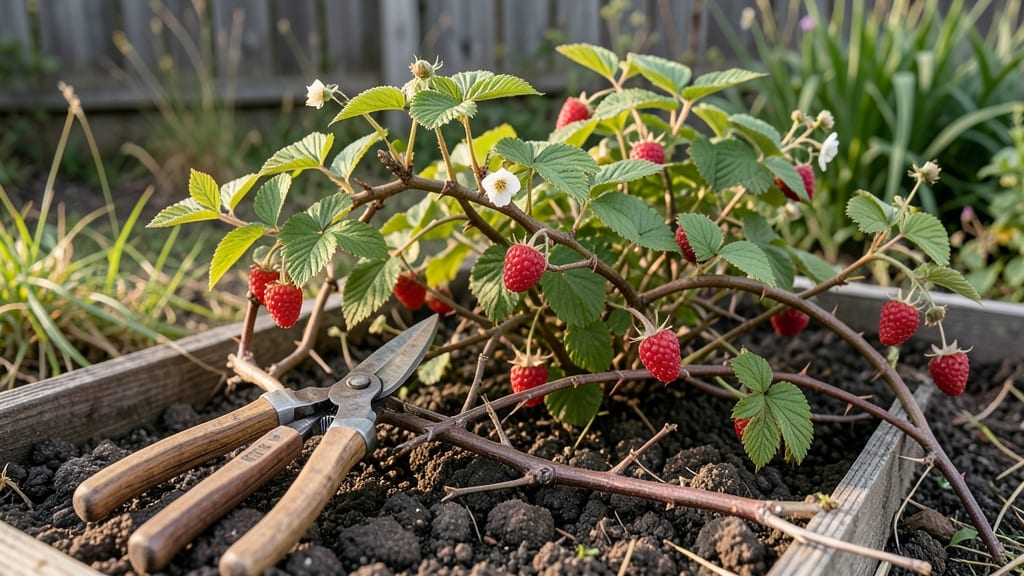
Pruning raspberry plants transforms a tangled mess into a productive, fruiting machine—if you do it right. 🌱 I spent years watching my bushes grow wild, then frustrated when harvests were sparse, until I learned the three strategic cuts that make all the difference.
The key isn’t just cutting; it’s knowing which canes to keep, which to remove, and when to do it for your specific variety.
Summer-bearing and fall-bearing raspberries need different timing, but both thrive when you focus on three simple cuts: removing dead wood, thinning crowded canes, and encouraging new growth.
You’ll need sharp pruners, gloves, and about 30 minutes—plus a clear head to spot the difference between productive canes and those stealing energy from your harvest. The payoff? Bushes that stay healthy, produce more berries, and recover faster after winter.
By summer’s end, you’ll see thick, sturdy canes packed with fruit—no more searching for hidden berries among thorns. The secret is pruning at the right time: summer-bearing types get their main cut in late winter, while fall-bearing varieties need a mid-summer trim to boost next year’s crop.
One wrong move, and you’ll end up with leggy plants and fewer berries. But once you master these cuts, your bushes will reward you with years of effortless harvests.
Works for both backyard patches and commercial plantings, and the same principles apply whether you’re dealing with heritage varieties or modern hybrids. Ready to turn those tangled bushes into a berry-producing powerhouse? Let’s get started with the exact steps that work every season.
📚 In This Guide
- What you need
- Instructions
- Tips and common mistakes
- Wrapping up and next steps
What you need
- ● Pruning shears or loppers – Choose bypass pruners (sharp, clean cuts) or loppers for thicker canes (4–6" blades). Disinfect blades with rubbing alcohol between cuts to prevent disease.
- ● Gloves – Heavy-duty gardening gloves (cut-resistant if thorny varieties like Boyne or Nova are involved).
- ● Garden twine or zip ties – 10–15 feet to secure canes to supports (if needed).
- ○ Support system (optional but recommended) – T-posts, trellis, or wire fencing (3–4 ft tall) for upright varieties like Heritage or Caroline.
- ● Compost or mulch – 2–3 inches of organic matter (e.g., straw, wood chips) to replenish soil after pruning.
- ● Rake or hoe – For clearing debris and prepping the base of plants.
- ● Spray bottle with water – To mist cuts and reduce stress on the plant.
- ○ Labeling tags (optional) – If tracking varieties (e.g., summer-bearing vs. fall-bearing).
- ● Know your raspberry type: Summer-bearing (e.g., Boyne, Nova) – Prune after harvest (late summer/fall).
- ● Fall-bearing (e.g., Heritage, Caroline) – Prune in early spring.
- ● Ever-bearing (e.g., Anne, Seascape) – Two prunings/year (spring + post-harvest).
- ● Choose a dry, calm day – Avoid pruning when plants are wet (increases disease risk).
- ● Work during early morning or late afternoon – Reduces plant stress from sun exposure.
Step-by-Step instructions for pruning raspberry plants
Here's my foolproof method for keeping raspberries productive and healthy year after year.
✂️ Step 1: Identify and Remove Dead or Weak Canes
Start in late winter or early spring before new growth begins. Look for canes that are brown, brittle, or hollow—these won’t produce fruit and should be cut at the base with clean, sharp pruners. I always check for thick, woody canes too; if they’re older than 3 years, they’ve outlived their usefulness and should go.
Don’t skip this step—dead canes harbor pests and diseases that can spread to healthy growth. Cut just above a bud or lateral branch to encourage new shoots. I like to bundle the removed canes and dispose of them in the trash, not the compost, to prevent reinfection.
✂️ Step 2: Thin Out Crowded Canes for Airflow
After removing the dead ones, focus on spacing. Raspberry canes need room to breathe—aim for 5-7 healthy canes per plant for summer-bearing varieties or 10-12 for fall-bearing types. If canes are growing too close, select the thickest, straightest ones and cut the rest at the base.
This might seem harsh, but crowded canes lead to poor fruit quality and increased disease risk. I promise, the plant will reward you with stronger, more productive growth. If you’re unsure which canes to keep, pick the ones with the most vigorous buds near the base.
✂️ Step 3: Prune Summer-Fruiting Canes After Harvest
Once summer-bearing raspberries have finished producing fruit, it’s time for another round of pruning. Cut back all the old canes that bore fruit this year—they’re done for the season. These canes will turn yellow and die back naturally, but trimming them now clears space for next year’s new growth.
Leave the new green canes that emerged this spring—they’ll produce next year’s crop. I like to mark them with a bright ribbon or flag so I don’t accidentally prune them in the spring. This two-year cycle keeps the plant balanced and maximizes yield.
🌱 Step 4: Light Summer Maintenance (Optional but Helpful)
During the growing season, keep an eye out for suckers—those thin, fast-growing shoots that pop up at the base of the plant. These can drain energy from your main canes, so snip them off as soon as you spot them. I also remove any damaged or diseased leaves to prevent further spread.
If your raspberries are getting leggy or overgrown, you can trim back the tips of the canes by about 1/3 to encourage bushier growth. Just avoid heavy pruning in summer—it stresses the plant and can reduce fruit production. A little light maintenance goes a long way.
Tips & tricks for pruning raspberry plants
These simple tricks will help you keep your raspberry plants thriving with minimal effort—and prevent common mistakes that lead to poor harvests.
Timing is Everything: Late winter or early spring is the best time to tackle Step 1, when your plants are still dormant. This timing gives new canes plenty of time to establish before summer's heat. I've learned the hard way—if you prune too early, you risk damaging emerging buds, and if you wait too long, you'll miss the optimal window for encouraging new growth.
Tool Selection Matters: For all pruning steps, use clean, sharp pruners to make precise cuts. I keep a dedicated pair just for raspberries and sterilize them with rubbing alcohol between uses. Dull tools crush canes instead of cutting cleanly, which invites disease. For larger branches, I use loppers with a bypass blade—they create cleaner cuts that heal faster.
Visual Cues for Step 2: When thinning crowded canes, look for the "V" shape where the cane meets the ground. The thickest canes with the most vigorous buds near this junction are your keepers. I like to run my fingers along the base—healthy canes feel firm, while weak ones feel soft or spongy. This simple touch test saves me from making costly mistakes.
Marking System for Step 3: After summer harvest, use bright-colored flags or ribbons to mark the new green canes you're keeping for next year. I've ruined entire seasons by accidentally pruning these canes in spring! You can also use spray paint (just a tiny dot) or even colored tape. The key is visibility—you want to spot these markers from a distance as you work.
Pro Tips for Prune Raspberry Plants
- These simple tricks will help you keep your raspberry plants thriving with minimal effort—and prevent common mistakes that lead to poor harvests.
- Timing is Everything: Late winter or early spring is the best time to tackle Step 1, when your plants are still dormant.
- Tool Selection Matters: For all pruning steps, use clean, sharp pruners to make precise cuts.
Frequently asked questions
Got questions about pruning raspberries? You’re not alone—this step can feel tricky, especially for beginners! Here are answers to the most common questions to help you prune like a pro and keep your plants thriving.
1. When is the best time to prune raspberry plants?
The ideal timing depends on your raspberry type:
- Summer-bearing varieties: Prune immediately after harvest (late summer) to remove old canes. Cut them to the ground to encourage new growth.
- Fall-bearing (everbearing) varieties: Prune twice a year—after the first harvest (summer) and after the second harvest (fall). Leave a few canes uncut for next year’s fruit.
For floricane varieties, prune in late winter or early spring before new growth starts. Always avoid pruning during dormancy (winter) unless dealing with disease.
2. How do I tell the difference between old and new raspberry canes?
This is key for pruning! Here’s how to spot them:
- Old canes: Woody, brown, and thick (about pencil-sized). They’ve already fruited and should be removed.
- New canes: Green, thin, and flexible (like a twig). These will fruit next season—keep them!
Pro tip: Summer-bearing canes fruit on second-year wood, while fall-bearing canes fruit on current-year wood. If unsure, err on the side of caution and save thinner canes.
3. Can I prune raspberries in winter? What if they’re dormant?
Pruning dormant raspberries in winter is risky unless you’re dealing with disease or pests. Here’s why:
- Dormant plants are more vulnerable to frost damage and slow to heal.
- Pruning too early can stimulate new growth, which may get killed by late frosts.
If you must prune in winter, do it after the ground thaws (late winter) and focus on removing dead or diseased canes. Wait for spring to tackle heavy pruning.
4. What should I do if I prune too much or too little?
Oops! Don’t panic—raspberries are resilient. Here’s how to fix common mistakes:
- Pruned too much: You’ve likely removed next year’s fruit canes. Leave 5–7 healthy new canes per plant to recover. Next season, focus on light maintenance.
- Pruned too little: Overcrowding leads to poor air circulation and disease. Thin out canes to 4–6 inches apart and remove weak or crossing canes.
- Missed the season: If you skipped pruning, prioritize removing dead, diseased, or crossing canes now. Next year, stick to the schedule!
Remember: Raspberries bounce back! Even if you mess up, they’ll still produce fruit—just maybe not as abundantly.
5. Are there any pruning alternatives if I hate cutting plants?
If the thought of pruning stresses you out, try these low-maintenance approaches:
- Let them grow wild: Raspberries can fruit without pruning, but yields will drop over time. Expect smaller berries and more pests.
- Spot-prune only: Remove only the dead, diseased, or crossing canes each year. This keeps air flowing without heavy cuts.
- Use a "selective thinning" method: Keep 6–8 of the healthiest canes and cut the rest. This mimics professional pruning with less effort.
For fall-bearing varieties, you can also top the canes after harvest to encourage bushier growth—no full cutting required!
Wrapping up and next steps
Pruning raspberry plants might seem tricky at first, but with the right timing and techniques—summer thinning, fall removal, and spring cleanup—you’ll keep your bushes thriving and productive for years. Remember, consistency is key: a little effort now means bigger harvests and healthier plants later! 🌱
Ready to take your raspberry patch to the next level? Grab your pruners, mark your calendar, and start practicing these cuts. Before you know it, you’ll be enjoying juicy, homegrown berries with confidence—and maybe even teaching a friend or two! 🍓✨