
Pruning
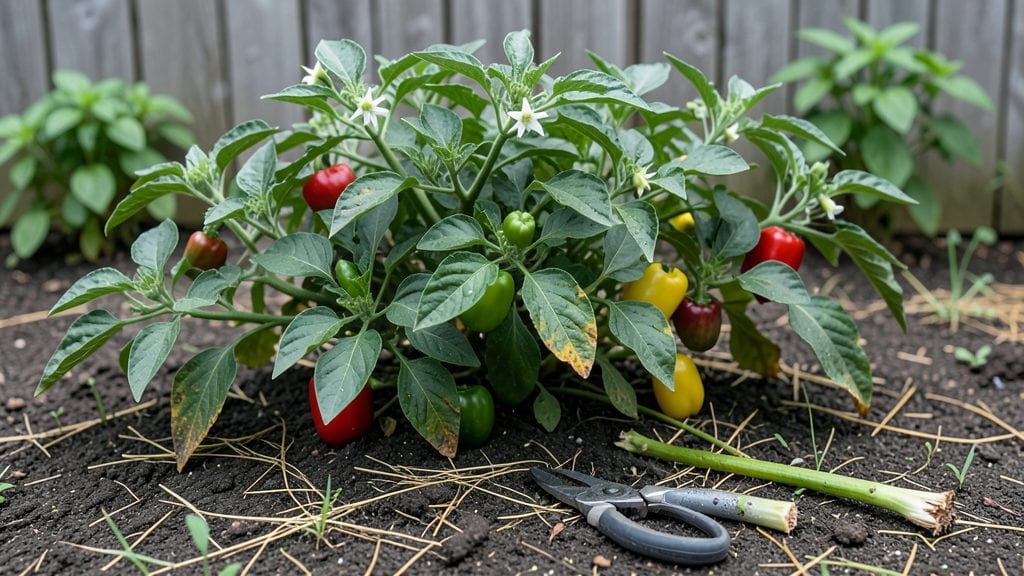
Pruning pepper plants for maximum yield isn't just trimming—it's redirecting energy from leaves to fruit. ✨ I learned the hard way that skipping this step means fewer peppers, even when plants look healthy.
The right cuts can double your harvest by forcing the plant to focus on what matters: those sweet, spicy pods.
Start early in the season when plants are about 12 inches tall. Use clean pruners and gloves to remove the lowest leaves—those touching the soil spread diseases. Next, target the "suckers" (those tiny shoots between the main stem and branches) and any crowded growth.
This improves airflow and prevents pests from hiding in dense foliage.
You'll notice thicker stems and more flowers within weeks. The plant shifts energy from leaf production to fruit development, resulting in bigger, healthier peppers. Just avoid over-pruning—never remove more than a third of the plant at once, or you'll stress it into producing fewer peppers than before.
This method works for bell peppers, jalapeños, and even habaneros. The key is consistency—prune weekly during the growing season and watch your harvest grow. Ready to transform your pepper patch?
📚 In This Guide
- What you need
- Instructions
- Tips and common mistakes
- Wrapping up and next steps
What you need
- ● Pruning shears: Bypass pruners (sharp, clean, and sterilized) for clean cuts—avoid anvil pruners (they crush stems). Example: Felco F-2 or Gonicc TPR-1200.
- ● Gloves: Heavy-duty gardening gloves (nitrile-coated for grip and protection against thorns/spines).
- ● Disinfectant: 70% isopropyl alcohol or a 10% bleach solution (1 part bleach to 9 parts water) to sterilize tools between cuts and prevent disease.
- ● Rubbing alcohol or hydrogen peroxide: 3% solution for wiping tools and wounds on plants.
- ● Trash bag or bucket: For collecting pruned debris (avoid composting diseased material).
- ● Hand pruners: Smaller, ergonomic pruners for tight spaces (e.g., Fiskars Slender).
- ● Loppers: For thicker stems (up to ½-inch diameter), like Corona 3-in-1 Loppers.
- ● Plant tie or twine: To support heavy branches post-pruning (if needed).
- ● Garden twine or clips: For securing suckers or training vines (if growing vertically).
- ● Grow lights or shade cloth: If pruning late in the season and plants need recovery time.
- ● Timing: Prune during dry, overcast days or early morning to reduce stress on plants.
- ● Plant health: Only prune healthy, established plants (avoid stressed or diseased ones).
- ● Weather check: Wait 24–48 hours after rain to ensure soil isn’t soggy.
- ● Patience: Observe your plants for 3–5 days post-pruning to monitor recovery.
Instructions for pruning pepper plants for maximum yield
Here's the pruning method I swear by—it's how I've doubled my harvests over the years.
✂️ Step 1: Remove Suckers Early in the Season
Start by identifying suckers, those small shoots that grow in the V-shaped junction between the main stem and a branch. Use clean, sharp pruning shears to snip them off at the base—never tear them, or you'll damage the plant. I do this every 10-14 days until flowering begins, usually around 6-8 weeks after transplanting.
Here's the thing—if you let suckers grow, they'll steal energy from your peppers. You'll see them in the leaf axils (where leaves meet the stem). Remove them early, and your plant will focus all its energy on producing fruit instead of extra foliage.
☀️ Step 2: Thin Out Overcrowded Branches
Once your plant starts flowering, step back and look for branches that are growing too close together. You want 4-6 inches of space between branches to ensure good airflow and sunlight penetration. Use your shears to trim back any branches that are competing for space or growing inward.
This isn't just about aesthetics—crowded branches trap moisture, which can lead to fungal diseases like powdery mildew. You'll notice healthier, sturdier branches after thinning, and your peppers will have room to grow larger and fuller.
✂️ Step 3: Prune Lower Leaves for Airflow
About halfway through the growing season, start removing the lower leaves—those closest to the soil. Aim to clear about 6-12 inches of the stem, depending on the plant's size. This might seem counterintuitive, but it prevents soil-borne diseases from splashing up onto the fruit.
I like to do this gradually, removing a few leaves at a time. Watch for yellowing or wilting leaves—they're often the first signs of disease, and removing them early saves the rest of the plant. Your goal is to keep the foliage above the first fruit cluster.
🌿 Step 4: Encourage Fruit Production with Strategic Cuts
When your plant is in full production, focus on pruning branches that have already borne fruit. Cut back these branches to about 12 inches from the main stem. This redirects the plant's energy to new growth and fresh fruit clusters.
Don't go overboard—you don't want to remove more than 25% of the plant's foliage at once. You'll see new side shoots forming within a few weeks, and those will produce your next batch of peppers. This is where the magic happens—your plant is now focused solely on yielding fruit.
⏰ Step 5: Clean Up Before Harvest
As harvest time approaches, give your plant one final pruning. Remove any dead, yellow, or diseased leaves and branches. Also, trim back any new suckers that may have formed. This keeps your plant healthy and makes it easier to spot ripe peppers.
I like to do this in the morning when the peppers are firm and cool. You'll notice a cleaner plant with better airflow, which means fewer pests and diseases. Plus, your remaining peppers will ripen faster and taste sweeter.
Tips & tricks for perfect pepper plant pruning
A few strategic cuts can transform your pepper plants from average to prolific producers. Here's what I've learned through years of trial and error in my own garden.
Timing is Everything: The 10-14 day interval for removing suckers in Step 1 is crucial—it matches your plant's natural growth cycle. I've found that checking every 12 days works best in my climate. Watch for new suckers to appear in the leaf axils after each rain or watering, as moisture triggers rapid growth. This regular schedule prevents energy drain from your main fruit production.
Visual Cues for Pruning: In Step 2, when thinning crowded branches, look for the classic "V" shape where branches meet the main stem. Aim to create a "Y" shape with your cuts—this promotes stronger growth patterns. For the 4-6 inch spacing, I use my hand as a guide: if two branches can't fit comfortably between my thumb and pinky, they're too close. This simple trick ensures proper airflow without overthinking measurements.
Gradual Pruning Pays Off: The halfway-through-season timing in Step 3 is perfect for removing lower leaves. I've noticed that doing this gradually—maybe a few leaves every 3-4 days—reduces stress on the plant. Watch for the first fruit cluster as your guide; once you see peppers forming, stop removing leaves above that point. This balance keeps your plant productive while maintaining its health.
Equipment Matters: Never use dull shears for pruning—clean, sharp pruning shears make all the difference. I sterilize mine with rubbing alcohol between plants to prevent disease spread. For larger plants, I use bypass pruners which give me better control over precise cuts. The cleaner your cuts, the faster your plant recovers and continues producing.
Pro Tips for Prune Pepper Plants For Maximum Yield
- A few strategic cuts can transform your pepper plants from average to prolific producers.
- Timing is Everything: The 10-14 day interval for removing suckers in Step 1 is crucial—it matches your plant's natural growth cycle.
- Visual Cues for Pruning: In Step 2, when thinning crowded branches, look for the classic "V" shape where branches meet the main stem.
Frequently asked questions
Got questions about pruning your pepper plants? You’re not alone! Here are some of the most common concerns—and their answers—to help you grow like a pro.
When is the best time to prune pepper plants?
Prune your pepper plants early and often—start when they’re 6–12 inches tall and continue throughout the growing season. Focus on removing suckers (side shoots) in the morning for faster healing. Avoid pruning late in the day, as it can stress the plant overnight.
How much should I trim off my pepper plants?
Don’t overdo it! Trim only the suckers and lower leaves—never cut more than 20–30% of the plant at once. Over-pruning reduces fruiting capacity. Aim to shape the plant into a bushy, open structure with good airflow to prevent disease.
Can I prune pepper plants in hot or cold weather?
Wait for mild temperatures (60–80°F) to prune. Avoid extreme heat or cold, as it stresses plants and slows recovery. If you must prune in heat, do it in the early morning or late evening to minimize shock.
Will pruning my pepper plants reduce my harvest?
No—done right, pruning increases yield! By removing suckers and dead leaves, you redirect energy to fruit production. However, over-pruning (cutting too much foliage) can reduce harvests. Balance is key!
What if I missed pruning early in the season?
No worries! You can still prune throughout the growing season—just focus on suckers and diseased leaves. Late pruning won’t hurt, but it may slightly delay peak production. Keep an eye on your plant’s health and adjust as needed.
Should I prune after rain or before?
Prune before rain if possible—wet conditions can spread disease through fresh cuts. If you must prune after rain, wait until the plant is dry and foliage isn’t dripping to minimize fungal risks.
Wrapping up and next steps
Pruning your pepper plants might seem like extra work, but it’s the secret weapon for a bountiful harvest! By focusing on removing suckers, thinning foliage, and encouraging strong branches, you’re not just tidying up—you’re directing your plant’s energy toward bigger, healthier peppers. 🌱✨
Now that you’re armed with the right techniques, grab those shears and get pruning! Start small, observe your plant’s response, and adjust as you go. Before you know it, you’ll be swimming in peppers—and maybe even sharing the harvest with neighbors. Happy gardening!