
Pests and Diseases
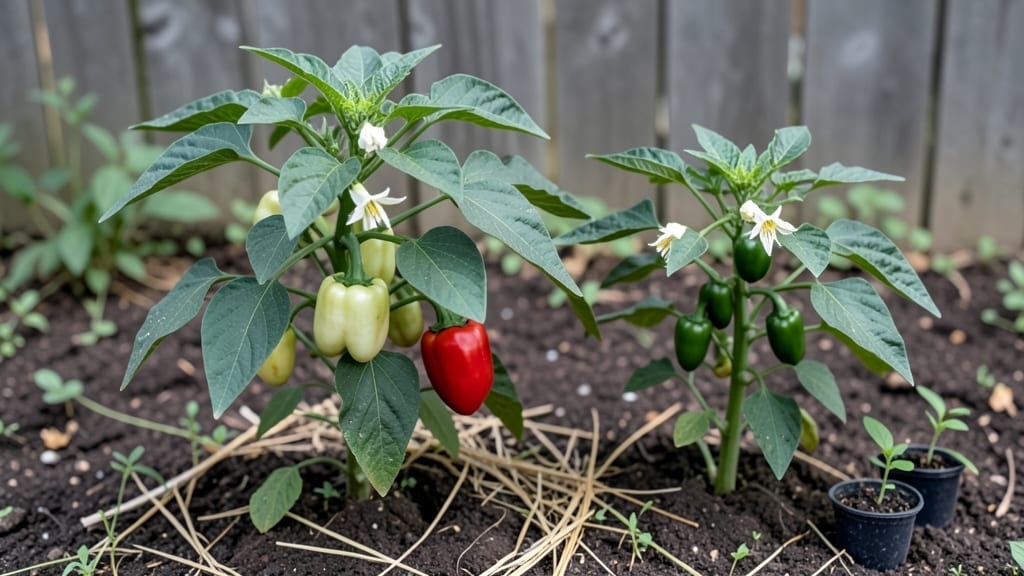
You can plant bell peppers and jalapeños together since they thrive under identical conditions, require full sun exposure, and complement each other when paired with herbs like basil or onions. Space them 12-18 inches apart to avoid nutrient competition and improve airflow.
This pairing works because both varieties demand the same care: 6+ hours of sunlight daily, well-draining soil with a pH of 6.0–6.8, and consistent moisture without waterlogging. 🌱 The key advantage is their shared pest vulnerabilities—planting them together lets you use the same natural deterrents, like marigolds or garlic chives, while maximizing small garden space.
Just watch for overcrowding, as jalapeños mature faster and may outcompete bell peppers for nutrients if spaced too closely.
For best results, interplant them with basil or onions—these companions repel aphids and improve flavor while keeping the soil healthy. I’ve found that rotating pepper varieties yearly prevents disease buildup, which is especially critical in containers or raised beds where space is limited.
💡 In This Article
- Growing Conditions for Bell Peppers and Jalapeños
- Companion Planting Strategies for Peppers
Growing conditions for bell peppers and jalapeños
Both bell peppers and jalapeños belong to the Capsicum annuum family and share nearly identical growing requirements, making them ideal companions. They thrive in full sun exposures of 6-8 hours daily, with optimal temperatures between 70-90°F—anything below 55°F or above 95°F stunts growth.
Their roots prefer well-draining soil with a pH range of 6.0-6.8, where nutrients like nitrogen, phosphorus, and potassium become most bioavailable. 🌿 This shared need means you can use the same soil amendments, fertilizers, and care routines for both varieties.
The key to their success together lies in their shallow root systems, which spread horizontally rather than deeply. This means they compete less for nutrients than deep-rooted plants like tomatoes. However, their rapid growth rates—jalapeños mature in 60-75 days while bells take 70-90 days—require careful spacing.
Planting them 12-18 inches apart prevents overcrowding, which can lead to powdery mildew or bacterial spot from poor airflow. The trade-off? Their proximity allows you to use the same mulch (like straw) to retain moisture and suppress weeds.
Watering consistency is where these peppers reveal their finicky nature. They demand 1-1.5 inches of water weekly, but their tolerance for drought varies by stage: seedlings need moist (not soggy) soil, while fruiting plants benefit from deep watering at the base to prevent blossom-end rot.
Here's the catch: jalapeños often mature faster, so they may need slightly more frequent watering during their peak fruiting phase. 💧 This is why drip irrigation or soaker hoses work best—they deliver water directly to the roots without wetting the foliage, reducing fungal risks.
One potential conflict arises from their nutrient demands. Both are heavy feeders, particularly during fruiting, requiring balanced 10-10-10 fertilizer every 3-4 weeks. The problem? Over-fertilizing can lead to excessive foliage growth at the expense of fruit production.
To mitigate this, alternate with organic matter like composted manure or worm castings, which release nutrients gradually. I've found that side-dressing with banana peels (rich in potassium) near the base boosts fruit development without overloading the soil.
Disease prevention is where their companion planting shines. Both varieties are susceptible to verticillium wilt and phytophthora root rot, but rotating crops annually and avoiding wet foliage reduces risks. The science here is simple: healthy roots = stronger disease resistance.
For example, planting marigolds between rows deters nematodes, while basil nearby repels thrips and improves flavor. The aromatic compounds in these companions create a natural barrier that benefits both pepper types equally. 🌱
For container growers, this pairing works exceptionally well in 5-gallon pots or larger, where you can plant one jalapeño and two bell pepper seedlings. The key is to prune jalapeños lightly to control their size, as they can outgrow bells in confined spaces.
In ground beds, stagger planting times by 2-3 weeks to extend the harvest season—jalapeños first, then bells. This sequential approach prevents nutrient depletion and maximizes your garden's productivity.