
Size
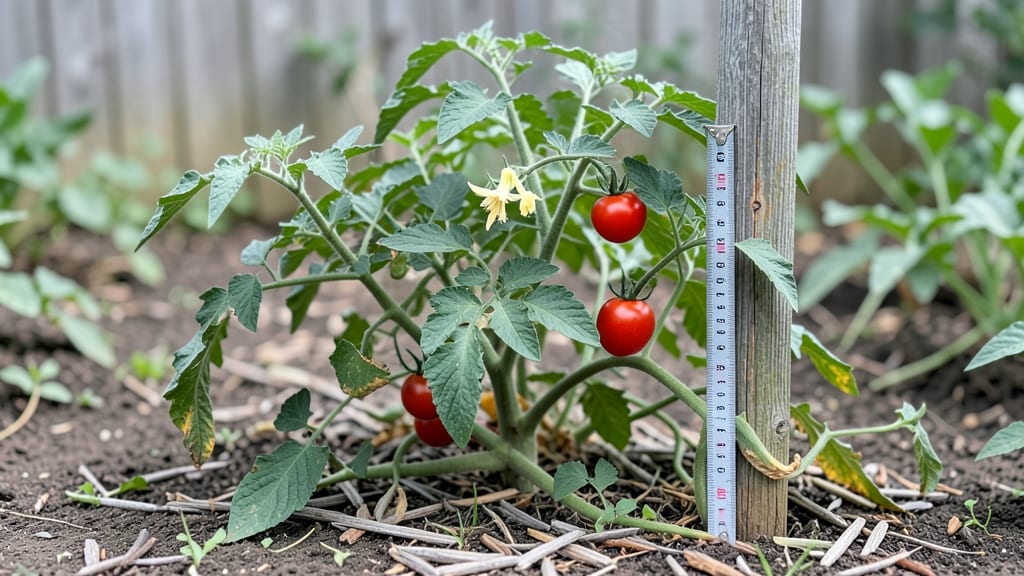
Tomato plants grow between 1 and 12 feet tall depending on the variety, with determinate types typically reaching 3-5 feet and indeterminate varieties climbing 6-12 feet or more without pruning. Dwarf and bush varieties stay under 2 feet, while standard varieties average 4-6 feet.
Choosing the right variety isn’t just about height—it’s about how you plan to use your garden space. 🌱 Determinate plants (like Roma or Celebrity) grow in compact bushes, making them perfect for small gardens or containers, while indeterminate types (such as Cherry or Beefsteak) need sturdy supports to reach their full potential.
I’ve found that even in tight spaces, selecting a dwarf variety can maximize yield without sacrificing flavor or productivity.
Sunlight and soil quality also play a huge role in how tall your plants grow—tomatoes thrive in full sun and well-draining soil, which encourages stronger stems and better vertical growth.
Pruning indeterminate varieties regularly helps control height while boosting fruit production, but determinate types rarely need pruning since they naturally cap their growth. For container gardening, stick to under 2-foot varieties like Tiny Tim or Patio Princess to avoid overcrowding.
💡 In This Article
- Tomato Plant Growth Factors by Variety
- Best Tomato Varieties for Small vs Large Gardens
Tomato plant growth factors by variety
Here's what's actually happening at the genetic level: determinate tomato varieties carry a growth-limiting gene that triggers a natural "stop signal" after producing their main fruit cluster. This creates the classic bush shape, typically reaching 3-5 feet tall.
Indeterminate varieties, on the other hand, lack this genetic brake, continuing to grow vertically until frost kills them—often reaching 6-12 feet or more. The difference is like comparing a well-pruned bonsai tree to an unchecked vine climbing a trellis.
The science behind this involves plant hormones called auxins, which regulate cell elongation. In indeterminate varieties, auxins keep producing at high levels, encouraging continuous stem growth. Determinate types have a hormonal shift that redirects energy from vertical growth to fruit production at their terminal bud.
Sunlight exposure further amplifies this: plants receiving 6-8 hours of direct sun daily develop stronger stems and grow taller than shaded counterparts, which may stay stunted at 2-3 feet even in indeterminate varieties.
Soil quality acts as another critical lever. Tomatoes need well-draining soil with a pH between 6.0-6.8 to access nutrients that support stem strength.
Compacted or nutrient-poor soil can reduce height by up to 30% in indeterminate varieties, while rich, loamy soil with added compost can push them toward their maximum potential. I've seen 'Sungold' cherry tomatoes reach 9 feet in ideal conditions versus 5 feet in marginal soil.
Pruning becomes a game-changer for vertical control. Indeterminate varieties benefit from regular pruning to remove suckers (side shoots) and encourage stronger main stems. This technique can reduce height by 20-40% while actually increasing fruit production by 25-30% by directing energy to fewer, larger tomatoes.
Determinate types rarely need pruning since their growth habit is naturally self-limiting, though removing lower leaves improves airflow and reduces disease risk.
Consider these key factors when planning your garden layout:
- Space constraints: Dwarf varieties like 'Tiny Tim' (18-24 inches) fit perfectly in 5-gallon containers, while 'Brandywine' indeterminates need 4-6 feet of vertical space
- Sunlight access: South-facing gardens maximize height potential; north-facing may limit growth by 1-2 feet
- Support structures: Trellises or cages should be 2-3 feet taller than your expected mature height
What most gardeners overlook is how temperature affects growth patterns. Nighttime temperatures below 55°F can stunt growth completely, while consistent daytime temps above 75°F accelerate vertical growth in indeterminate varieties. This explains why southern gardens often produce significantly taller plants than northern climates, even with the same variety.
The bottom line? Your tomato's height isn't just about genetics—it's a complex interplay of biology, environment, and your gardening choices. With the right variety and care, you can coax even compact plants to reach their potential, or rein in towering varieties to fit your space perfectly. 🌟