
How To
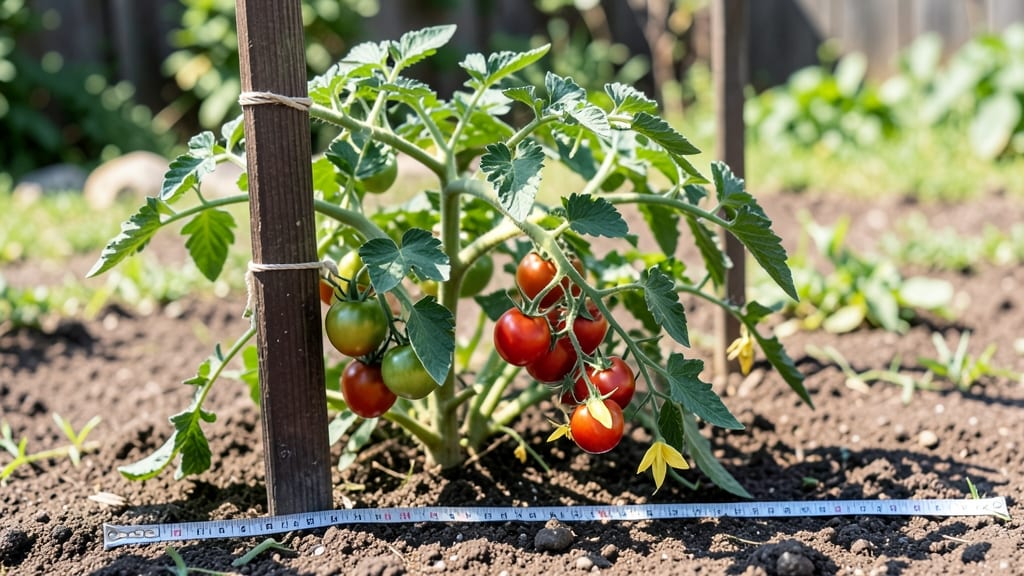
Tomato plants grow anywhere from 1 foot to over 10 feet tall, depending on the variety and how you train them 🍅—and that difference can change how you garden entirely.
Wondering why your tomato plants are towering over your fence—or struggling to climb any support at all? The height of your tomato plants can make or break your garden's success, and it all depends on the variety you're growing.
Determinate varieties like 'Roma' stay compact at 3-4 feet, while indeterminate types like 'Sungold' can climb to 6 feet or more if left unchecked. Without the right support, you might end up with sprawling vines or stunted growth—neither of which is ideal for a bountiful harvest.
In this guide, I’ll break down the height ranges for different varieties, how to choose the right support, and the simple tricks to keep your plants healthy—no matter how tall they grow.


Tomato plant height by variety: determinate vs indeterminate growth explained
If you've ever wondered why your tomato plants seem to grow at wildly different rates—or why some varieties need tall cages while others barely reach your waist—you're not alone. The height of your tomato plants is directly tied to whether they're determinate or indeterminate varieties.
These growth habits aren't just about aesthetics; they impact everything from yield potential to support needs and even harvest timing. Understanding the difference can transform your garden's productivity and save you from buying the wrong supplies.
Determinate tomatoes are the bush-type varieties that grow to a specific height and then stop, producing fruit all at once. Indeterminate tomatoes, on the other hand, keep growing throughout the season, requiring constant support and producing fruit continuously.
This distinction is crucial for planning your garden layout, choosing the right support structures, and even deciding which varieties to grow based on your space and goals.
🌱 Comparison Table: Determinate vs Indeterminate Tomato Heights
| Type | Height Range | Growth Habit | Fruiting Pattern | Popular Varieties |
|---|---|---|---|---|
| Determinate | 1–5 ft | Bushy, compact | All at once (1–2 weeks) | Roma, Celebrity, Bush Early Girl, Patio |
| Indeterminate | 6–12+ ft | Vining, sprawling | Continuous (all season) | Sungold, Beefsteak, Cherry (Sweet 100), Brandywine |
| Semi-Determinate | 3–6 ft | Semi-bushy, moderate vining | Extended (3–4 weeks) | Super Sweet 100, Early Girl, Stupice |
For example, if you're growing Roma tomatoes, a popular determinate variety, you can expect them to max out around 3–4 feet tall. This makes them perfect for container gardening or small spaces, as they don’t require extensive support.
On the other hand, indeterminate varieties like Sungold cherry tomatoes can easily reach 8–10 feet if left unpruned, which means you'll need a tall trellis or sturdy cage to keep them upright and manageable.
One of the biggest misconceptions is that taller tomato plants always produce more fruit. While indeterminate varieties can yield continuously throughout the season, their fruit size and quality often depend on proper support and pruning.
Without adequate structural support, vining tomatoes can become top-heavy, leading to broken stems and lost harvests. Meanwhile, determinate varieties might produce a heavy load of fruit all at once, which can stress the plant if it isn’t properly supported or spaced.
If you're working with limited space, dwarf or semi-dwarf varieties like 'Tiny Tim' or 'Patio' are excellent choices, typically staying under 2–3 feet tall. These are ideal for balcony gardens, windowsills, or small raised beds.
However, if you're aiming for large, beefy tomatoes like 'Beefsteak,' you'll need to plan for 6+ feet of vertical growth and invest in a robust support system to avoid damage during storms or heavy fruiting.
Another factor to consider is your climate zone. In warmer regions with longer growing seasons, indeterminate varieties can thrive and produce fruit well into fall. In cooler climates, you might prefer determinate varieties that ripen all at once, allowing you to harvest before the first frost.
For instance, in Zone 6a, where frost-free days average around 165 days, indeterminate varieties might not have enough time to fully mature, while determinate types can produce a bumper crop before the season ends.
To visualize height differences, think of a determinate tomato plant as roughly the height of a standard kitchen counter (3.5 feet), while an indeterminate variety can tower like a small tree (8–10 feet).
This comparison helps when shopping for garden cages or trellises—you wouldn’t want to buy a 3-foot cage for a 10-foot vine, nor would you need a tall trellis for a bushy determinate plant.
Pro tip: If you're unsure about a variety's height, check the seed packet or plant tag for mature height estimates. Many reputable seed companies, like Burpee or Johnny's Selected Seeds, provide detailed growth charts.
Also, consider pruning habits—indeterminate varieties often benefit from regular pruning to control height and improve air circulation, while determinate types usually require minimal pruning.
Understanding these height differences isn’t just about aesthetics—it’s about maximizing your harvest potential and making your gardening life easier.
Whether you're a beginner gardener with limited space or a seasoned pro aiming for record-breaking yields, choosing the right tomato varieties for your height needs is the first step to a successful season. 🌿
How to support tall tomato plants: cages, stakes, and trellises compared
Tall tomato plants need proper support to thrive, but choosing the right system can feel overwhelming. Indeterminate varieties like 'Sungold' can reach 6+ feet, while determinate types like 'Roma' max out around 3-4 feet.
Without support, your plants will sprawl, risking disease and poor fruit production. Let’s compare the best options—cages, stakes, and trellises—to help you pick the perfect fit for your garden.
Your choice depends on space constraints, budget, and plant type. Cages are the easiest for beginners, stakes save space, and trellises maximize vertical growth.
I’ll break down the pros and cons of each so you can make an informed decision that keeps your tomatoes healthy and productive all season long.
🌱
Support System Comparison
- Pros: Easy to install, good airflow, works for most varieties
- Cons: Can collapse under heavy fruit, limited height for tall varieties
- Pros: Space-saving, allows pruning for better air circulation, durable
- Cons: Requires tying stems, not ideal for heavy fruit loads
- Pros: Maximizes vertical growth, great for indeterminate varieties, saves space
- Cons: More complex to set up, may need frequent tying
For determinate tomatoes, 5-foot cages are ideal—they’re sturdy enough to hold compact plants without bending. I’ve used heavy-duty wire cages for 'Celebrity' tomatoes, and they’ve never failed to support the weight of ripe fruit. Just ensure the cage is buried 6 inches deep for stability.
If you’re growing indeterminate varieties like 'Brandywine', 8-foot trellises or bamboo stakes are better. Trellises let you train vines upward, which improves air circulation and reduces disease risk. I tie stems with soft plant ties every 12 inches to prevent breakage during heavy winds or fruit loads.
Space-saving gardens benefit most from DIY trellis systems. Use PVC pipes or wooden lattice panels to create a vertical garden. This method works well for cherry tomatoes like 'Sweet 100' and keeps the harvest off the ground, reducing soil-borne diseases.
Just avoid overcrowding—leave 18 inches between plants for optimal airflow.
🪴
Don’t forget about pruning! Whether you use cages, stakes, or trellises, regular pruning encourages stronger stems and better fruit production. Remove suckers (the small shoots between the stem and branches) weekly to redirect energy to fruit growth.
For indeterminate varieties, prune lower leaves to improve airflow and reduce disease risk.
For a budget-friendly option, DIY tomato stakes made from wooden dowels or metal rods work great. Drive them 12 inches deep and tie the main stem loosely with soft fabric strips. This method is perfect for small-space gardens or container growing, where cages or trellises might not fit.