
Plants
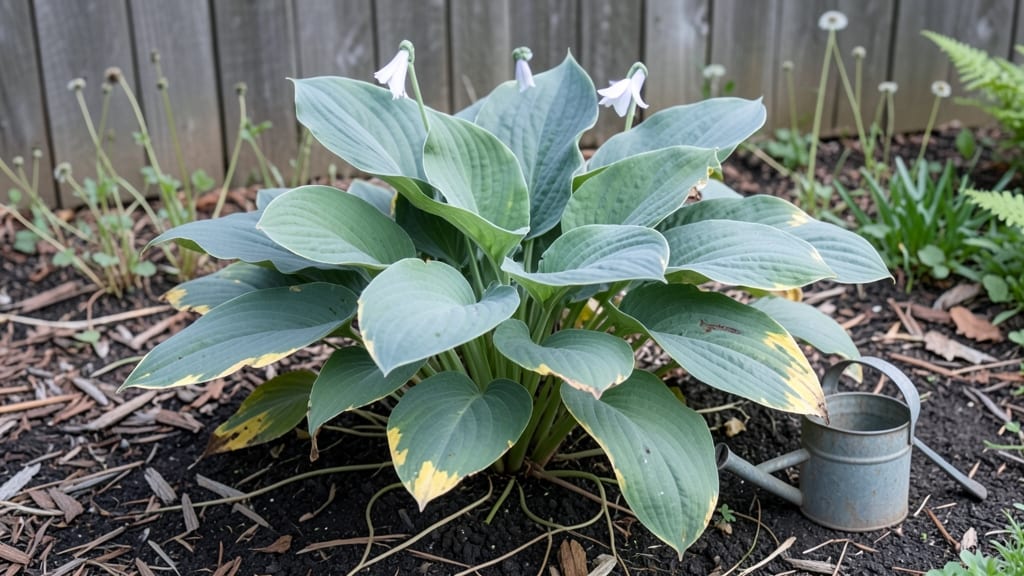
Your hosta plant’s leaves turning yellow might seem like a mystery, but the culprit is often lurking just beneath the soil—here’s how to fix it in three easy steps. recovery time from weeks to days.
Overwatering and root rot are the top culprits, but nutrient deficiencies and fungal infections sneak up too. I learned the hard way that soggy soil and compacted roots create the perfect storm.
The good news? You can reverse it by adjusting your watering schedule, improving drainage, and giving those roots some breathing room.
Within just two weeks, you'll see fresh green growth pushing through if you act fast. The key is catching it early—check for slimy leaves or a foul smell, which means it's time for emergency action. I'll walk you through the exact steps to revive your hostas without losing them.
Even the most stubborn cases can bounce back with the right care, and I'll show you how to keep them thriving long after the yellowing stops. Let's get those hostas back to their lush, shade-loving best.
Root Causes Behind Yellowing Leaves
When your hosta plant’s leaves start turning yellow, it’s often a cry for help from its roots—or something else lurking beneath the soil. Understanding the why behind the discoloration is the first step to saving your plant.
Below, we break down the most common culprits, backed by science, so you can diagnose the issue like a pro.
Hostas thrive in moist—but not soggy—soil. When roots sit in waterlogged conditions, they suffocate, leading to anaerobic respiration, which produces toxic byproducts like ethanol and acetaldehyde. This stress triggers yellowing, often starting at the leaf margins and spreading inward.
🔍 How to spot it:
- Leaves yellow and feel mushy or limp.
- Soil smells sour or rotten.
- Yellowing occurs after heavy rain or overzealous watering.
💡 Pro tip: Hostas need well-draining soil—amend heavy clay with compost or perlite. Water only when the top 1–2 inches of soil are dry, and ensure pots have drainage holes.
Fungal pathogens like Phytophthora or Pythium love damp, poorly aerated soil. They attack roots, blocking nutrient uptake and causing leaves to yellow while the plant wilts. Root rot (often brown, mushy roots) is a classic sign—if you see it, act fast.
🔍 How to spot it:
- Yellowing paired with stunted growth or leaf drop.
- Black, slimy roots when inspected.
- Symptoms worsen in humid, shaded conditions.
💡 Pro tip: Improve air circulation with mulch (but keep it away from the crown). Fungicides like copper-based sprays can help, but prevention (drainage + spacing) is key.
Yellowing leaves can signal a nitrogen deficiency, where the plant can’t produce enough chlorophyll. This often starts on older leaves (a classic sign) because the plant prioritizes new growth. Other nutrients like magnesium (yellow between veins) or iron (interveinal chlorosis) can also cause issues.
🔍 How to spot it:
- Uniform yellowing across older leaves.
- Slow growth despite regular watering.
- Pale green or yellow veins (magnesium deficiency).
💡 Pro tip: Test your soil (pH 6.5–7.5 is ideal for hostas). Amend with balanced fertilizer (10-10-10) in spring or a slow-release nitrogen source like composted manure.
Hostas are shade-loving plants, and too much direct sun—especially in hot climates—can scorch leaves. This causes oxidative stress, where chlorophyll breaks down, leading to yellowing or brown patches. Heat stress often hits younger leaves first.
🔍 How to spot it:
- Yellowing or crispy edges on leaves exposed to sun.
- Symptoms appear midday or after a heatwave.
- Leaves may feel dry or papery to the touch.
💡 Pro tip: Provide afternoon shade, especially in hot zones. Mulch helps retain moisture and regulate soil temperature.
While pests like slugs and snails chew holes in leaves, their larvae (grubs) can damage roots, disrupting nutrient flow and causing yellowing. Look for irregular yellow patches or ragged edges—often paired with silvery slime trails at night.
🔍 How to spot it:
- Holes or notches in leaves (adult pests).
- Yellowing near the soil line (larvae feeding).
- Active at night (check with a flashlight!).
💡 Pro tip: Use organic barriers like copper tape or diatomaceous earth. Beer traps (yes, really!) or handpicking pests at dusk can help.
Hostas are sensitive to root disruption. After repotting or dividing, roots may struggle to re-establish, leading to temporary yellowing as the plant adjusts. This is not a disease—just a sign of stress.
🔍 How to spot it:
- Yellowing occurs after moving or dividing the plant.
- Leaves wilt briefly before recovering.
- No other symptoms (like spots or rot).
💡 Pro tip: Water deeply after transplanting and avoid fertilizing for 2–3 weeks. Keep the plant in partial shade to reduce stress.
Quick Fixes for Yellowing Hosta Leaves
Yellowing hosta leaves can be a sign of stress, disease, or environmental factors—but the good news is, most issues are fixable with the right approach. Below, we’ve mapped out practical solutions for common causes, along with prevention tips to keep your hostas lush and green.
Let’s turn those sad, yellowing leaves around!
Fix: The #1 enemy of hostas is soggy soil, which leads to root rot—a silent killer that turns leaves yellow and mushy. Here’s how to revive your plant:
- 🔥 Stop Watering Immediately
- Let the soil dry out completely before watering again. Stick your finger 2 inches deep—if it’s damp, wait.
- 👨🍳 Improve Drainage
- Mix perlite, sand, or compost into the soil (20-30%) to break up clay or compacted earth.
- If potted, replant in a container with drainage holes and fresh, well-draining potting mix.
- 🥘 Fungal Treatment (If Needed)
- Sprinkle copper fungicide or hydrogen peroxide (3%) on the soil to combat root rot.
- Avoid chemical fertilizers—they can stress weakened roots.
💡 Prevention Tip:
- Water deeply but infrequently—hostas prefer 1 inch of water per week (adjust for rain).
- Plant in raised beds if your garden has heavy clay soil.
Fix: Hostas are shade-lovers, and scorching sun causes yellowing edges (called "sunburn"). Move your plant to a cooler spot:
- 🔪 Trim Damaged Leaves
- Snip off crispy, yellowed edges with clean scissors to encourage new growth.
- 🌡️ Provide Afternoon Shade
- Use shade cloth (30-50%) or relocate to a spot with dappled sunlight (e.g., under trees).
- 🎯 Mulch to Retain Moisture
- Apply 2-3 inches of organic mulch (shredded bark or straw) to protect roots from heat.
💡 Prevention Tip:
- Avoid full-sun locations—even variegated hostas can get stressed.
- Water in the morning to reduce evaporation.
Fix: Fungal spores thrive in humid, crowded conditions, causing yellow spots or white powder. Act fast:
- ⏰ Prune Infected Leaves
- Remove yellow or spotted leaves and sterilize tools with rubbing alcohol.
- 🌿 Apply Fungicide
- Spray with neem oil, baking soda mix (1 tsp baking soda + 1 quart water + a drop of soap), or sulfur-based fungicide.
- 🌡️ Improve Airflow
- Space plants 12-18 inches apart and avoid overhead watering.
💡 Prevention Tip:
- Water at soil level (use a drip irrigation or soaker hose).
- Choose resistant varieties like ‘Halcyon’ or ‘Francee’ if fungi are recurrent.
Fix: Yellowing leaves can signal lack of key nutrients. Test your soil and feed accordingly:
| Symptom | Likely Cause | Solution |
|---|---|---|
| Entire leaf yellows | Nitrogen deficiency | Apply balanced fertilizer (10-10-10) or compost tea. |
| Yellow veins, green edges | Iron/chlorosis | Sprinkle chelated iron or Epsom salt (1 tbsp/gallon water). |
| Purple stems | Phosphorus deficiency | Use bone meal or rock phosphate. |
💡 Prevention Tip:
- Test soil every 2-3 years (pH 6.5-7.5 is ideal for hostas).
- Top-dress with compost annually for slow-release nutrients.
- 🌿 Check Roots – Gently lift the plant to inspect for rot or pests.
- 💧 Adjust Watering – Most hostas prefer moist but not soggy soil.
- 🍃 Monitor & Repeat – Yellowing may take 2-4 weeks to improve.
✨ Pro Tip: If your hosta is severely rotted, propagate healthy shoots in fresh soil—they’ll bounce back faster!
With these fixes, your hostas should regain their vibrant green in no time. 🌿💚 Which issue matches your plant’s symptoms? Try the corresponding solution and watch them thrive!
Frequently asked questions
Why do hosta leaves turn yellow in the center first?
Yellowing starting at the leaf center typically signals a nutrient deficiency, often nitrogen or magnesium. The plant prioritizes new growth, so older leaves show symptoms first. Test your soil (ideal pH: 6.5-7.5) and amend with compost or a balanced fertilizer to restore chlorophyll production.
Can overwatering cause hosta leaves to turn yellow and mushy?
Overwatering creates anaerobic conditions that suffocate roots, leading to root rot. Check for mushy, black roots and foul-smelling soil. Stop watering immediately, improve drainage with perlite, and repot if needed. Yellowing paired with limp leaves is a classic sign of waterlogged stress.
How do I tell if yellow hosta leaves are from sunburn or nutrient issues?
Sunburn causes crispy, brown-edged yellowing on leaves exposed to direct sun, often in hot afternoons. Nutrient deficiencies create uniform yellowing (nitrogen) or yellow between veins (magnesium). Move plants to shade for sunburn, while soil testing and fertilizer (like Epsom salt) fix deficiencies.
Will pruning yellow hosta leaves help them recover?
Yes! Pruning removes diseased or stressed leaves, redirecting the plant’s energy to healthy growth. Cut off yellowed leaves at the base with clean scissors, and sterilize tools between cuts. For severe cases, remove 20-30% of foliage to reduce stress, but avoid over-pruning—hostas regenerate best with some leaves intact.
How long does it take for hosta leaves to turn green again after fixing the issue?
With proper care, you’ll see improvement in 2-4 weeks. New growth emerges from the center, while existing leaves may take longer. Monitor soil moisture, sunlight, and nutrient levels—consistency is key. If yellowing persists after 6 weeks, reconsider root health or soil conditions.