
Diseases
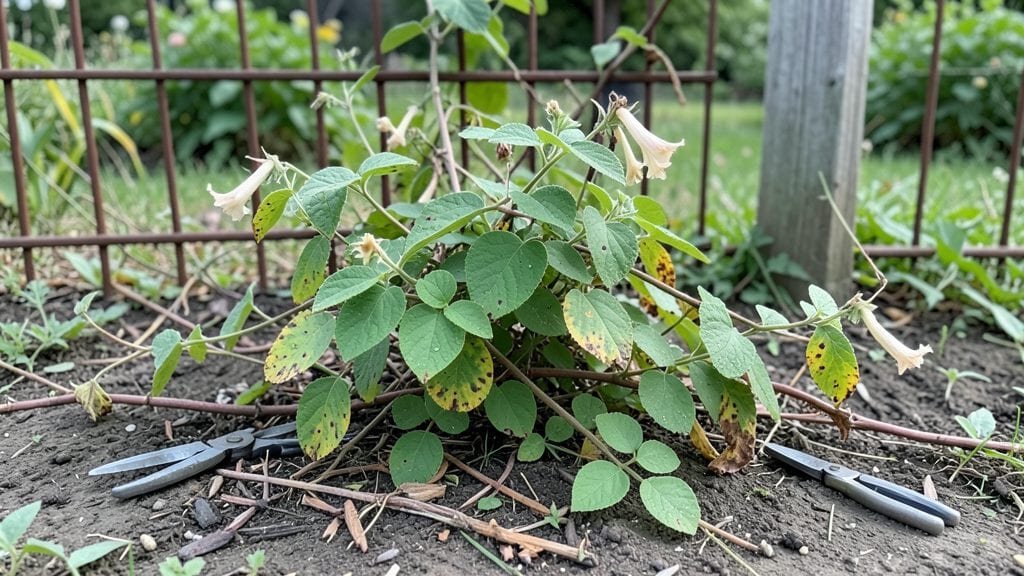
These honeysuckle plant diseases pictures show how powdery mildew turns vibrant green leaves into ghostly white webs, while rust spores create orange blisters that look like someone spray-painted the foliage. The key to saving your plant is spotting these issues fast—and that starts with knowing exactly what to look for.
The most common offenders are fungal infections like powdery mildew and leaf spot, which thrive in humid conditions. Then there are the pest-related problems: aphids that curl leaves, spider mites that create fine webbing, and scale insects that leave sticky residue.
My honeysuckles have battled all three, and the good news is that once you recognize the symptoms, you can act before the plant declines.
You'll learn to identify each disease by its unique visual signature—from the fuzzy white coating of mildew to the dark, circular spots of anthracnose.
With the right treatment, whether it's neem oil for pests or a homemade baking soda spray for fungi, you can restore your honeysuckle to its healthy, blooming self. The secret is acting within 7-10 days of noticing symptoms.
This guide covers the most destructive diseases in your region, with clear descriptions and solutions that work for both organic gardeners and those willing to use targeted fungicides. Let's get your honeysuckle back to its fragrant, vine-covered glory.
Root Causes of Honeysuckle Ailments
Understanding why honeysuckle plants fall prey to diseases and pests starts with recognizing the environmental, biological, and cultural factors at play. These plants, while hardy, are not immune to stress—whether from nature, human interference, or their own biology.
Below, we break down the key triggers that weaken honeysuckle and invite trouble.
Honeysuckle thrives in specific conditions, and when these are disrupted, the plant’s defenses drop, making it vulnerable to infections and infestations.
- Poor Drainage & Waterlogging Honeysuckle roots need well-draining soil to avoid sitting in soggy conditions.
When excess moisture lingers: - Fungal spores (like Phytophthora or Botrytis) thrive in damp, oxygen-poor soil. - Root rot sets in, cutting off nutrient uptake and weakening the plant’s ability to fight off pests. - Actionable fix: Amend heavy clay soil with compost or sand, and ensure raised beds or containers have drainage holes.
- Extreme Temperature Fluctuations ❄️☀️ Sudden shifts—whether frost damage in winter or heat stress in summer—compromise cell integrity.
- Cold snaps can kill new growth, leaving entry points for bacteria (Pseudomonas syringae).
- Heatwaves + drought cause wilting, stressing the plant and making it susceptible to spider mites or aphids.
- Pro tip: Mulch with 3–4 inches of organic matter (straw or wood chips) to regulate soil temperature and retain moisture.
- High Humidity & Poor Airflow Honeysuckle foliage left crowded or watered overhead creates a fungal paradise.
- Diseases like powdery mildew (Erysiphe cichoracearum) spread rapidly in 70–80% humidity.
- Stagnant air traps spores and pests (e.g., Japanese beetles or scale insects).
- Solution: Space plants 3–5 feet apart, prune for airflow, and water at the base (not leaves).
Honeysuckle’s natural enemies—fungi, bacteria, viruses, and insects—exploit weaknesses in the plant’s immune system.
- Fungal Pathogens 🍄 Fungi like anthracnose (Colletotrichum) or rust (Puccinia) latch onto:
- Wounded tissue (from pruning cuts or hail damage).
- Old, decaying leaves that harbor spores.
- Red flag: Dark, sunken lesions or orange pustules on undersides of leaves.
- Prevention: Remove fallen leaves promptly and sterilize pruners with 70% isopropyl alcohol.
- Bacterial Infections 🦠 Bacteria such as Xanthomonas or Pseudomonas enter through:
- Rain splashes (especially on young shoots).
- Contaminated tools or sap-sucking insects (e.g., aphids).
- Symptoms: Water-soaked spots that ooze yellow fluid or cause leaf curling.
- Fix: Use copper-based bactericides early and avoid overhead irrigation.
- Viral Threats 🦠🔄 Viruses (like tomato ringspot virus) spread via:
- Sap-sucking insects (aphids, leafhoppers).
- Grafting or propagation from infected stock.
- Challenge: No cure exists—prevention is key. Inspect new plants for mosaic patterns or stunted growth before adding to your garden.
- Pest Infestations 🐜🐛 Insects like Japanese beetles, spider mites, or scale target stressed honeysuckle.
- Aphids excrete honeydew, fostering sooty mold (a black fungal growth).
- Caterpillars (e.g., honeysuckle webworm) skeletonize leaves, reducing photosynthesis.
- Defense: Introduce beneficial insects (ladybugs, lacewings) or apply neem oil as a preventive spray.
Even well-meaning gardeners unknowingly create conditions that invite disease. Common oversights include:
- Over-Fertilizing with Nitrogen Too much quick-release nitrogen promotes soft, succulent growth—a buffet for pests and fungi.
- Balance it: Use a slow-release, balanced fertilizer (10-10-10) and avoid late-season feeding.
- Improper Pruning 🌿✂️
- Cutting too late in the season leaves wounds open to infection.
- Not sanitizing tools spreads pathogens between cuts.
- Best practice: Prune in early spring (before new growth) and sterilize blades between plants.
- Ignoring Soil Health 🌱💀 Compacted or nutrient-depleted soil weakens roots, making honeysuckle more susceptible to root-knot nematodes or damping-off in seedlings.
- Boost defenses: Test soil pH (ideal: 6.0–7.0) and amend with compost or mycorrhizal fungi.
💡 Key Takeaway: Most honeysuckle diseases and pests are opportunistic—they attack when the plant is already struggling. By addressing drainage, airflow, pest pressure, and cultural practices, you can dramatically reduce risks and keep your honeysuckle lush and resilient. 🌿🛡️
Quick Fixes for Honeysuckle Ailments
Revitalizing your honeysuckle starts with identifying the problem—but once you’ve spotted the issue, action is key! Below are practical, step-by-step solutions tailored to the most common honeysuckle diseases and pests. Follow these fixes to nurse your plant back to health, plus prevention tips to keep future outbreaks at bay.
1.
Powdery Mildew: Scrub & Spray 🔥 Cause: White, powdery coating on leaves (thrives in humid, shaded conditions). 👨🍳 Fix It: - Remove infected foliage 🔪: Snip off heavily affected leaves with clean pruners and dispose of them in the trash (not compost). - Neem oil spray 🌿: Mix 1 tsp neem oil + 1 tsp mild soap + 1 quart water.
Spray under and on top of leaves every 5–7 days until symptoms fade. - Improve airflow ⚡: Prune dense branches to let sunlight and air circulate.
Space plants 3–4 feet apart if possible. - Baking soda remedy ✨ (for mild cases): Combine 1 tbsp baking soda + 1 tsp oil + 1 gallon water. Spray leaves weekly.
💡 Prevention Tip:
- Water at the base 💦 (avoid wetting leaves).
- Space plants to reduce humidity buildup.
- Apply fungicide (like sulfur-based sprays) preventively in spring if your area is prone to mildew.
2.
Leaf Spot: Sterilize & Isolate 🍳 Cause: Dark spots with yellow halos (often from Alternaria or Septoria fungi). 👨🍳 Fix It: - Prune infected leaves 🌿: Cut off all spotted leaves and sterilize pruners with rubbing alcohol between cuts. - Fungicidal spray 💊: Use copper fungicide or chlorothalonil (follow label rates).
Apply every 10–14 days until new growth is spot-free. - Clean up debris 🧹: Remove fallen leaves and mulch around the base to eliminate fungal spores. - Avoid overhead watering 🚫💦: Water early in the morning so leaves dry quickly.
💡 Prevention Tip:
- Rotate fungicides yearly to prevent resistance.
- Plant in full sun ☀️ (fungi love shade).
- Dispose of infected plants if the disease spreads beyond control.
3.
Root Rot: Drain & Revive ⏰ Cause: Yellowing leaves, mushy stems, foul smell (from overwatering or poor drainage). 👨🍳 Fix It: - Stop watering immediately 🚰: Let the soil dry out completely for 3–5 days. - Improve drainage 🏗️: - Amend soil with perlite or sand (20% mix). - Elevate the plant with a grow bag or raised bed if in containers. - Trim rotted roots 🔪: Gently remove the plant, prune black/mushy roots, and replant in fresh, sterile potting mix. - Fungicide drench 💊: Apply mycorrhizal fungi or hydrogen peroxide (3%) to the soil to combat pathogens.
💡 Prevention Tip:
- Use pots with drainage holes 🕳️.
- Water only when top 1–2 inches of soil are dry 🌱.
- Avoid soggy mulch near the stem.
1.
Aphids & Spider Mites: Blast & Trap 🔥 Cause: Sticky residue (honeydew), curled leaves, or tiny webs. 👨🍳 Fix It: - Blast with water 💦: Spray forceful water from a hose to knock off pests (repeat 2–3 times). - Insecticidal soap 🧼: Mix 2 tbsp castile soap + 1 quart water.
Spray directly on pests (avoid hot sun—soap burns leaves). - Neem oil 🌿: Apply neem oil spray (as above) to smother eggs and adults. - Introduce predators 🐞: Ladybugs or lacewings devour aphids—buy them online or attract them with dill or fennel plants.
💡 Prevention Tip:
- Inspect new plants before bringing them home.
- Use reflective mulch (like aluminum foil) to confuse mites.
2.
Japanese Beetles: Handpick & Trap 🍳 Cause: Skeletons of leaves, chewed flowers (adult beetles strip foliage). 👨🍳 Fix It: - Handpick beetles 🪰: Drop them into soapy water (they drown instantly). - Milky spore treatment 🌱: Apply milky spore powder to the soil (takes 2–3 years to fully work but is long-term). - Neem oil or pyrethrin spray 💊: Spray early morning/evening to avoid harming bees. - Traps (use with caution!) ⚠️: Commercial traps attract more beetles—place them far from your honeysuckle.
💡 Prevention Tip:*
- Plant beetle-repelling flowers nearby (e.g., rosemary, garlic, or marigolds).
- Prune in late fall to remove egg-laying sites.
- Fertilize lightly 📊: Use a balanced 10-10-10 fertilizer in early spring (over-fertilizing stresses plants).
- Mulch properly 🌿: Apply 2–3 inches of organic mulch (keep it 6 inches away from the stem).
- Prune for sunlight ☀️: Thin out overcrowded branches to boost airflow and light penetration.
- Quarantine new plants 🏷️: Keep them separate for 2 weeks to spot early signs of disease.
✨ Pro Tip: If your honeysuckle is severely diseased, don’t hesitate to replace it—some infections (like bacterial wilt) are untreatable. Start fresh with a healthy cutting from a trusted source!
Frequently asked questions about honeysuckle plant diseases
How can I tell if my honeysuckle has powdery mildew vs. leaf spot?
Powdery mildew appears as a white, powdery coating on leaves, often on the upper surfaces, while leaf spot shows up as dark brown or black spots with yellow halos. Mildew thrives in humid conditions and looks fuzzy, while spots usually appear after rain or poor airflow. Check the undersides of leaves—mildew often starts there first.
What’s the fastest way to identify honeysuckle diseases without pictures?
Focus on leaf texture and color changes: Crispy white patches = powdery mildew; dark, sunken spots = anthracnose; orange pustules = rust. Sticky residue on leaves signals aphids or honeydew. For root rot, look for yellowing leaves and mushy stems—gently tug the plant to check for loose roots. Always examine both leaf surfaces and stems.
Can I use the same treatment for fungal diseases and pests?
No—fungicides like copper-based sprays or neem oil target fungi, while insecticidal soap or pyrethrin work on pests. Neem oil is the exception—it’s effective against both mild fungal infections and soft-bodied insects like aphids. For severe cases, combine treatments: spray with fungicide first, then insecticide after 48 hours to avoid chemical conflicts.
Why does my honeysuckle keep getting diseases even after treatment?
Recurring issues usually stem from underlying conditions: poor drainage, overcrowding, or overwatering. Fungal spores linger in soil or debris, so clean up fallen leaves and sterilize tools. Check your watering habits—overhead watering spreads diseases. For persistent problems, test your soil for pH (6.0–7.0 is ideal) and amend with compost to boost plant resilience.
Are there any organic solutions for honeysuckle diseases?
For fungi, try a baking soda spray (1 tbsp baking soda + 1 tsp oil + 1 gallon water) or milk spray (1 part milk to 9 parts water). Neem oil works for both fungi and pests. For pests, introduce beneficial insects like ladybugs or use kaolin clay as a protective barrier. Always test organic remedies on a small area first to avoid leaf burn.