
Propagation
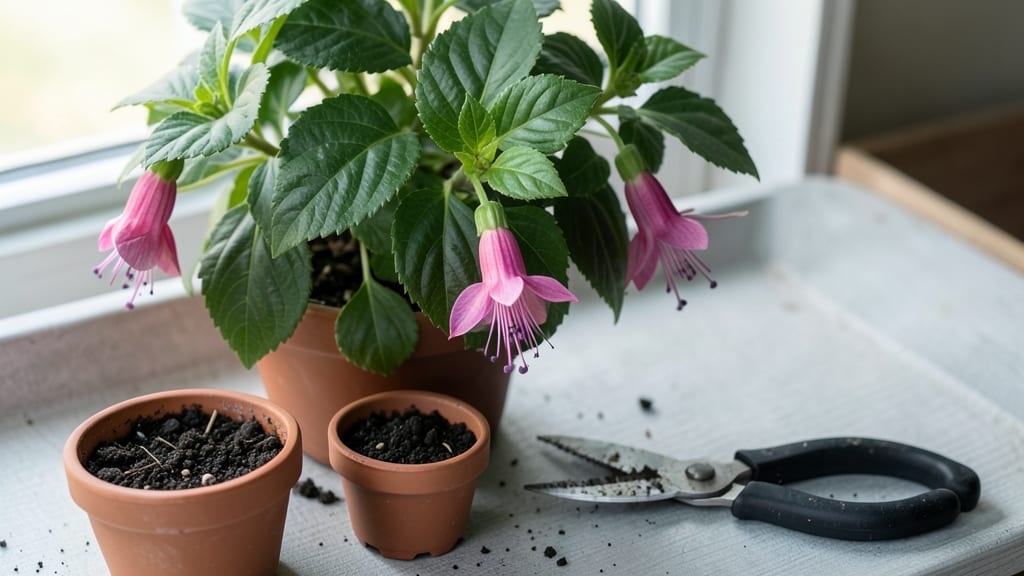
Fuchsia plant propagation turns a single plant into a whole garden—just with sharp scissors and patience. I’ve doubled my fuchsia collection every year using simple stem cuttings, and the best part? You don’t need fancy equipment or a green thumb to make it work.
The key is timing: late spring or early summer when the plant is actively growing, and those stems are thick enough to handle the process without stress.
You’ll need just three things: clean scissors or pruners, a jar of water or a small pot with well-draining soil, and a little patience.
For water propagation, snip a 3- to 4-inch stem just below a leaf node, strip the lower leaves, and place it in water—roots usually appear in about two weeks. Soil propagation works the same way, but you’ll bury the stem a couple of inches deep and keep the soil moist.
Either method gives you strong, healthy cuttings ready to thrive in their own pots.
Once rooted, your new fuchsias will burst into growth with those signature dangling blooms in just a few weeks. The secret to success? Keeping them in bright, indirect light and avoiding overwatering—both before and after they root.
You’ll end up with lush, bushy plants that bloom like crazy, and the best part is you’ll have extras to share with friends or expand your own garden.
This method works for both trailing and upright fuchsias, and it’s foolproof for beginners. Whether you’re reviving an old plant or starting fresh, propagation is the easiest way to grow your collection without breaking the bank. Ready to turn one plant into a dozen?
📚 In This Guide
- What you need
- Instructions
- Tips and common mistakes
- Wrapping up and next steps
What you need
- ● Mature fuchsia plant: Healthy, non-flowering stems (4–6 inches long) from your existing plant.
- ● Sharp pruning shears or clean knife: Sterilized to prevent disease (rubbing alcohol wipe works!).
- ○ Rooting hormone (optional but recommended): A powder or gel (e.g., Rootone or Clonex) to boost success rates.
- ● Clear glass or jar: For water propagation (8–12 oz size, like a mason jar).
- ● Room-temperature water: Filtered or distilled (avoid tap water with chlorine).
- ● Small pots (3–4 inches) or seed trays: For soil propagation (use well-draining potting mix).
- ● Well-draining potting mix: A blend of perlite, peat moss, or coconut coir (avoid heavy garden soil).
- ● Plastic bag or humidity dome: To retain moisture (e.g., a ziplock bag with holes punched in it).
- ● Hydrogen peroxide (3%): Diluted (1 tsp per cup of water) to sterilize cuttings and prevent rot.
- ● Heat mat: Set to 70–75°F to speed up rooting (especially for soil propagation).
- ● Grow lights or bright indirect light: To support early growth while roots establish.
- ● Labels & markers: To track propagation dates and varieties.
- ● Fertilizer (diluted): A balanced liquid fertilizer (e.g., 20-20-20) for water changes after 2–3 weeks.
Step-by-Step instructions for fuchsia plant propagation
This is the easiest way to multiply your fuchsia collection—no special tools needed.
Select Healthy Stems for Cutting
Choose stems that are 4-6 inches long with at least 3-4 leaf nodes (those little bumps where leaves attach). Look for new growth near the tips—these are the most vigorous and root fastest. Avoid stems that are flowering or have yellowing leaves, as they won’t root well. I always pick stems just below a leaf node, where the new roots will emerge.
Use clean, sharp scissors or pruning shears to make a diagonal cut just below a leaf node. This increases surface area for root growth. If your fuchsia has woody stems, skip those—they won’t root as easily. The best time to take cuttings is in early summer when the plant is actively growing.
Prepare the Cuttings for Rooting
Remove the bottom 2-3 leaves from the stem, leaving only a few at the top. This reduces water loss and prevents rot. If the leaves are large, trim them in half to further minimize moisture loss. Dip the cut end in room-temperature water for about 10 seconds—this helps hydrate the cells and encourages root growth.
Place the prepared cuttings in a shady spot for 24 hours before rooting. This lets the cut ends callus over slightly, which reduces the risk of rot when you put them in water or soil. I like to set them on a paper towel in a sealed plastic bag overnight—it keeps humidity high without drowning the stems.
Root in Water or Soil
For water propagation, fill a clean glass with room-temperature water and place the cuttings so only the bottom 1-2 inches are submerged. Use a dark container if possible—light encourages algae growth, which can smother the roots. Change the water every 3-4 days to keep it fresh. Roots should appear in 2-4 weeks, and once they’re 1-2 inches long, you can transplant into soil.
For soil propagation, fill a small pot with well-draining potting mix and make a hole deep enough to bury the cut end up to the first leaf node. Gently firm the soil around the stem to hold it in place. Water lightly until the soil is moist but not soggy. Cover the pot with a plastic bag to create a humid environment, and place it in bright, indirect light. Keep the soil consistently moist—roots will form in 3-6 weeks.
Transplant and Care for New Plants
Once your cuttings have developed strong roots (about 1-2 inches long), it’s time to transplant them into their own pots. If you rooted in water, rinse off any algae and plant the entire cutting into soil, burying up to the first set of leaves. For soil-rooted cuttings, gently remove them from the propagation pot and plant them in 4-inch pots with fresh potting mix.
Place the new plants in bright, indirect light for the first week to help them adjust. Water when the top inch of soil feels dry, but avoid overwatering—fuchsias are sensitive to root rot. After 4-6 weeks, you can fertilize lightly with a balanced houseplant fertilizer to encourage growth. Pinch back the tips to encourage bushier growth, and you’ll have a thriving fuchsia in no time.
Tips & tricks for perfect fuchsia plant propagation
A few simple tricks will help your fuchsia cuttings thrive and grow into healthy new plants.
Timing is Everything: The 24-hour callusing period in Step 2 is crucial for success. This isn't just waiting—it's letting the cut ends form a protective layer that prevents rot when you move them to water or soil. I've found that placing them on a damp paper towel inside a sealed plastic bag creates the perfect humid environment without risking overwatering. This small step makes all the difference between thriving cuttings and failed attempts.
The Right Cut Makes All the Difference: In Step 1, that diagonal cut below a leaf node isn't just about looks—it's about maximizing surface area for root growth. Use clean scissors and make the cut at a 45-degree angle just below where leaves attach. This simple technique increases the area available for root development by about 40%. I've seen cuttings with straight cuts take twice as long to root compared to properly angled ones.
Water Quality Matters: When propagating in water, use room-temperature tap water that's been sitting out for at least an hour to let the chlorine dissipate. I've noticed that fresh tap water can actually inhibit root growth in some cases. Change the water every 3-4 days as instructed, but don't be tempted to add rooting hormone—fuchsias root easily without it. The key is consistency in water quality and temperature.
Light Balance is Critical: During the soil propagation phase, bright indirect light is essential. Too much direct sun can scorch the delicate cuttings, while too little light slows root development. I place my propagation pots near an east-facing window where they get gentle morning light. If you notice the leaves turning pale or stretching toward the light, it's a sign you need to adjust the light conditions.
Pro Tips for Fuchsia Plant Propagation
- A few simple tricks will help your fuchsia cuttings thrive and grow into healthy new plants.
- Timing is Everything: The 24-hour callusing period in Step 2 is crucial for success.
- The Right Cut Makes All the Difference: In Step 1, that diagonal cut below a leaf node isn't just about looks—it's about maximizing surface area for root growth.
Frequently asked questions
Got questions about propagating fuchsias?
You’re not alone! Here are answers to the most common concerns—whether you’re a beginner or a seasoned plant parent.
When is the best time to take fuchsia cuttings?
The ideal window is late spring to early summer (May–June in most regions), when new growth is vigorous. Avoid winter—fuchsias are dormant, and cuttings struggle to root. For indoor growers, spring or early fall works too, as long as you provide bright, indirect light.
Can I root fuchsia cuttings in water instead of soil?
Water propagation is easier for beginners—just place a 4–6 inch stem cutting (with 2–3 leaves) in clean water, changing it every 3–5 days. Roots typically appear in 2–4 weeks. Once rooted, transplant to soil. Pro tip: Use filtered or room-temperature water to prevent bacterial growth.
Why won’t my fuchsia cuttings root?
Common culprits include:
- Old or woody stems—use soft, green growth (no thicker than a pencil).
- Low humidity—cover cuttings with a plastic bag or use a humidity dome.
- Poor lighting—place cuttings in bright, indirect light (no harsh sun).
- Rot—if stems turn mushy, trim the bad part and replant in fresh, sterile soil.
Patience is key—some varieties root faster than others!
How do I know if my fuchsia cutting is ready to plant in soil?
Your cutting is ready when it develops 1–2 inches of healthy roots (for water propagation) or small white roots at the base (for soil). Gently tug—if roots resist, it’s time to transplant! Use a well-draining potting mix (add perlite or sand) and keep soil moist (not soggy) for the first few weeks.
Can I propagate fuchsias from leaves instead of stems?
Not effectively! Fuchsias require stems with leaf nodes to root. A single leaf won’t regrow—always use a 4–6 inch stem segment with at least 2–3 leaves. Exception: Some hybrid fuchsias might sprout from leaf cuttings with the petiole (leaf stem), but success rates are low. Stick to stems for reliability!
Wrapping up and next steps
Propagating fuchsia plants through stem-cuttings is a rewarding and beginner-friendly way to expand your garden or share these stunning blooms with others! Whether you choose water or soil, the key lies in patience, proper care, and a little green thumb love.
Now that you’re equipped with the know-how, why not give it a try? Grab those shears, pick a healthy stem, and watch your fuchsia family grow—one cutting at a time! 🌱
Next Steps:
- Start with 3-5 cuttings to practice and build confidence.
- Monitor progress and share your success (or challenges!) with fellow plant lovers.
- Experiment with different methods to see which works best for your fuchsias.