Fertilization
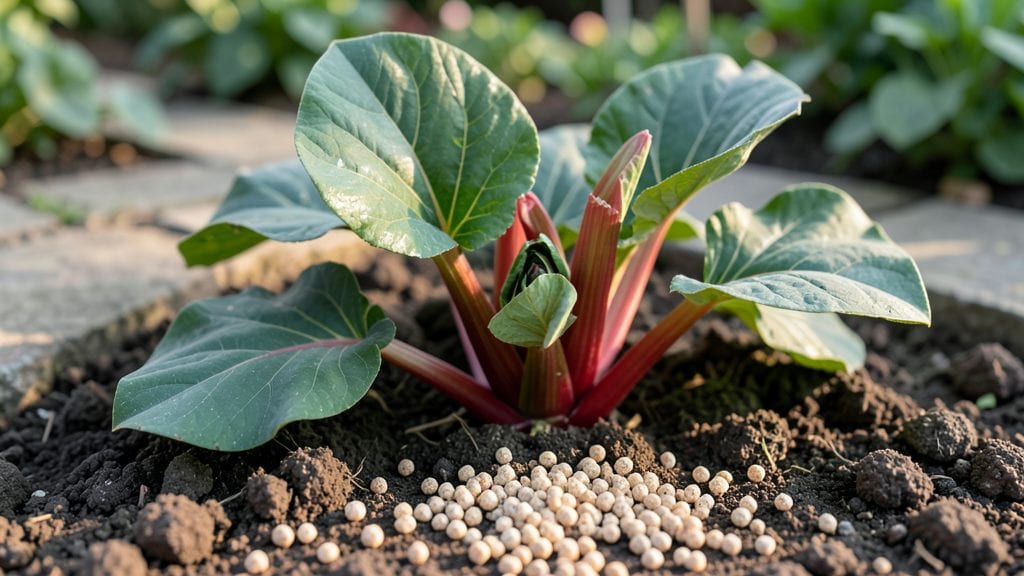
Fertilizing rhubarb plants 🌱 is all about balancing nutrients with soil acidity to unlock those sweet, tender stalks you crave.
Struggling to get sweet, tender rhubarb stalks? The secret might not be in what you fertilize with—but what your soil’s pH level is. Rhubarb thrives in acidic conditions, yet most gardeners overlook this critical detail, leading to bitter harvests and stunted growth.
When your soil’s pH drifts too high, rhubarb plants waste energy fighting imbalance instead of growing. A simple soil test and a few organic tweaks can transform your harvest—no fancy fertilizers required.
Here’s how to feed your rhubarb the right way: when to fertilize, which nutrients to prioritize, and how to keep your stalks sweet from May through June.
Optimal soil pH for rhubarb: why acidic soil boosts sweetness
If your rhubarb stalks taste bitter or grow slowly, your soil pH might be the culprit. Rhubarb is a pH-sensitive plant that thrives in acidic soil between 5.5 and 6.5. Outside this range, nutrient uptake suffers, leading to poor flavor and stunted growth.
I’ve seen gardens with perfect sunlight and watering routines fail because the soil was too alkaline—don’t let that happen to yours!
Testing your soil’s pH is easier than you think. Grab a soil pH test kit (digital or liquid) from your local garden center. Simply collect samples from 4-6 inches deep, mix with distilled water, and wait for the results.
Most kits include color charts or digital readings. For a deeper dive, send a sample to a lab—it’s worth the investment for precise results.
A pH of 5.5-6.5 isn’t just a suggestion—it’s a game-changer for rhubarb. In this range, your plants absorb essential nutrients like nitrogen, phosphorus, and potassium efficiently. This translates to sweeter stalks, faster growth, and better resistance to diseases like crown rot or rust.
If your soil is too alkaline (above 7.0), rhubarb struggles to access iron and manganese, causing yellowing leaves and weak stalks.
Here’s how pH affects your rhubarb’s performance:
🔹 pH 5.5-6.5: Ideal for rhubarb—nutrients are available, stalks are sweet, and growth is robust.
🔹 pH 6.6-7.0: Mildly alkaline—growth slows, stalks may taste bitter, and disease risk increases.
🔹 pH 7.1+: Too alkaline—nutrient deficiencies cause yellowing leaves, weak stalks, and poor harvests.
🌱
| Factor | Ideal Range | Impact on Rhubarb | Solution |
|---|---|---|---|
| Soil pH | 5.5–6.5 | Optimal nutrient uptake, sweet stalks, strong growth | Test with kit; amend with sulfur or peat moss if needed |
| Nitrogen (N) | Moderate (10-20 ppm) | Encourages leafy growth and stalk development | Use compost or balanced fertilizer (5-10-10) |
| Phosphorus (P) | Low to moderate | Supports root and stalk strength | Bone meal or rock phosphate for deficiency |
| Potassium (K) | Moderate (100-200 ppm) | Improves disease resistance and sweetness | Wood ash (sparingly) or greensand |
| Iron (Fe) | Available in acidic soil | Prevents yellowing leaves (chlorosis) | Lower pH with sulfur or use chelated iron |
If your soil tests above 6.5, don’t panic—you can adjust it naturally. For alkaline soil, mix in elemental sulfur or peat moss to lower the pH gradually. Work 1-2 pounds of sulfur per 100 square feet into the top 6 inches of soil, then retest in 2-3 months.
Avoid quick fixes like vinegar, as they can harm beneficial soil microbes.
For acidic soil (below 5.5), add lime or wood ash to raise the pH slowly. Sprinkle 1-2 pounds of garden lime per 100 square feet and till it in.
Monitor the pH every few months until you hit that sweet spot of 5.5-6.5. Patience is key—soil pH changes take time, but the results are worth it!
Once your soil is balanced, maintain it with organic matter. Compost or well-rotted manure adds nutrients and helps stabilize pH over time. Mulch with straw or leaves to retain moisture and prevent pH swings.
With the right pH, your rhubarb will reward you with juicy, sweet stalks year after year.
🌿
Best organic fertilizers for rhubarb: pH-balanced feeding schedule
Rhubarb plants thrive when fed with the right balance of nutrients, but their unique soil preferences often get overlooked. Unlike many vegetables, rhubarb demands acidic soil (pH 5.5-6.5) and responds best to nitrogen-rich fertilizers in early growth stages.
The wrong fertilizer can lead to bitter stalks or poor yield, so choosing wisely is key. Organic options like compost and fish emulsion are excellent, but timing matters just as much as the product itself.
Spring is the prime time to fertilize rhubarb, but a fall application can also prep your soil for next year. If your soil tests too alkaline, you’ll need to adjust the pH naturally using elemental sulfur or peat moss before adding fertilizer.
This ensures your rhubarb absorbs nutrients efficiently, leading to sweeter, more tender stalks. Let’s break down the best organic fertilizers and when to use them.
Fertilizer Type
Best For
Application Time
How to Apply
pH Adjustment
Compost
New plantings, soil enrichment
Spring (March-April)
Work 2-3 inches into soil around roots
None (neutral pH)
Fish Emulsion
Leafy growth, nitrogen boost
Early spring & mid-summer
Dilute 1:10, apply to soil (not leaves)
None (use after pH adjustment)
5-10-10 (Balanced)
Established plants, all-season
Spring & early summer
1/2 cup per 10 sq ft, water in
None (use if pH already ideal)
Elemental Sulfur
Lowering pH (alkaline soil)
Fall (3-4 months before planting)
1 lb per 100 sq ft, mix into soil
Reduces pH by 1-2 points
Peat Moss
Acid-loving plants, soil structure
Fall or spring
Mix 2-3 inches into topsoil
Lowers pH slightly (3.0-4.5)
For new rhubarb plants, I recommend starting with compost to enrich the soil before applying any synthetic or nitrogen-heavy fertilizers. Compost provides a slow-release nutrient base that won’t burn young roots.
Once established, switch to a fish emulsion in early spring to kickstart growth—this is especially helpful if your rhubarb looks leggy or pale. Apply it every 4-6 weeks during the growing season, but always dilute it properly to avoid over-fertilizing.
If your soil is too alkaline (pH above 6.5), you’ll need to adjust it before fertilizing. Elemental sulfur is my go-to for lowering pH naturally—just mix it into the soil in fall and let it work over winter.
For a quicker fix, peat moss can be worked into the top 6 inches of soil in spring. Test your soil’s pH again in 2-3 months to confirm the change.
Once your soil is in the ideal range, you can safely apply a balanced 5-10-10 fertilizer to support overall plant health.
Avoid fertilizing rhubarb in late summer or fall, as this can encourage tender new growth that won’t survive winter frosts. Instead, focus on mulching with straw or leaves to protect roots and retain moisture.
By following this schedule, your rhubarb will reward you with sweeter stalks and fewer pests, making your gardening efforts truly pay off. 🌱
Pro tip: Always water your rhubarb thoroughly after fertilizing to help nutrients penetrate the soil and reach the roots. This simple step can double the effectiveness of your fertilizer and prevent leaf burn. Happy gardening! ✂️