Diseases
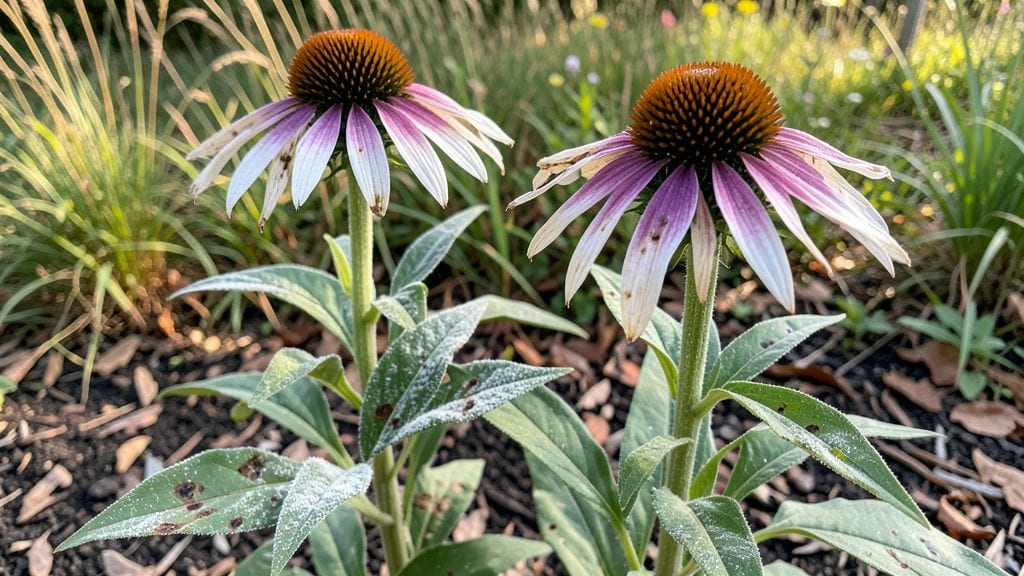
Echinacea plant diseases often include powdery mildew, rust, leaf blight, and root rot, each causing wilting, discoloration, or stunted growth. Early detection and proper care—like pruning, fungicides, and improved drainage—can restore health and prevent spread.
Echinacea plants are tough, but they're not immune to fungal and bacterial infections that can turn vibrant blooms into sad, wilted messes. 🌿 The key to keeping your plants thriving lies in understanding how these diseases develop—whether it's from crowded foliage trapping moisture, overwatered soil inviting root rot, or fungal spores hitching rides on wind or garden tools.
For example, powdery mildew thrives in humid conditions, while rust diseases often show up as orange-brown spots on leaves, spreading faster when plants are stressed from poor nutrition or drought.
Once you spot symptoms like yellowing leaves or strange spots, act fast. Pruning infected parts immediately stops the spread, and improving airflow with proper spacing or trellises can make a huge difference.
I've found that a mix of preventive measures—like copper fungicides in early spring and neem oil sprays during humid months—keeps most issues at bay. The goal is to create an environment where your echinacea feels too healthy to get sick!
💡 In This Article
- Identifying Common Echinacea Fungal and Bacterial Infections
- Preventative Care and Organic Treatment Options for Echinacea
Identifying common echinacea fungal and bacterial infections
Here's what's actually happening when your echinacea shows signs of trouble: fungal infections like powdery mildew appear as white, powdery patches on leaves, caused by Erysiphe or Sphaerotheca spores that germinate in 70-80°F temperatures with high humidity.
These spores thrive in crowded plants where airflow is restricted, creating the perfect microclimate for rapid spread. The mildew starts as small white specks but can cover entire leaves within 7-10 days if left untreated, eventually turning leaves yellow and crispy.
Rust diseases present differently—look for orange-brown pustules on leaf undersides caused by Puccinia fungi. These spores release clouds of rust-colored dust when disturbed, which can travel up to 100 feet on wind currents. The infection weakens plant tissue, leading to premature leaf drop and stunted flower production.
What most people don't realize is that rust spores can overwinter in garden debris, meaning last year's infected leaves become this year's trouble. Bacterial leaf spot, caused by Xanthomonas, shows as water-soaked brown spots with yellow halos, often appearing after heavy rain when bacteria splash from soil to foliage.
The key factor in all these infections is moisture—whether from overhead watering, poor drainage, or morning dew lingering on leaves. Fungal spores need 12+ hours of leaf wetness to germinate, while bacterial infections thrive in 70-85°F temperatures with high humidity.
That's why you often see outbreaks after prolonged rainy periods or when plants are watered late in the day. Root rot, caused by Phytophthora or Pythium, starts in waterlogged soil where roots can't get oxygen, turning black and mushy within 3-5 days of prolonged saturation.
The plant may show above-ground symptoms first—wilting despite moist soil or leaves turning yellow from the bottom up.
Visual clues can help you distinguish between issues. Powdery mildew feels like dust when you rub your fingers across leaves, while rust pustules leave a rust-colored residue. Bacterial spots often have a greasy texture, and root rot may produce a foul smell from decaying roots.
The science behind this involves how each pathogen exploits plant weaknesses: fungal spores release enzymes that break down leaf cuticles, while bacteria inject toxins that disrupt cell function. 🌱 Understanding these mechanisms helps you target treatments—fungicides work on spores, while copper sprays kill bacteria on contact.
Consider these environmental triggers that accelerate infections:
- Humidity: Levels above 75% for more than 6 hours create ideal conditions for powdery mildew
- Poor airflow: Plants spaced less than 12 inches apart trap moisture and spores
- Overwatering: Keeping soil consistently wet for more than 2 days promotes root rot
- Nutrient stress: Nitrogen-deficient plants show 30% more susceptibility to infections
What most gardeners miss is how quickly these infections can escalate. A single infected plant can release thousands of spores per day, which is why removing diseased foliage immediately is critical.
The spores can remain viable in soil for up to 2 years, so sterilizing tools between cuts and practicing crop rotation every 3 years breaks the infection cycle. Early intervention isn't just about saving individual plants—it's about protecting your entire garden ecosystem from becoming a disease hotspot.
Here's a quick visual checklist for diagnosis: if you see white powder, it's mildew; orange spots mean rust; greasy brown spots indicate bacterial infection; and if leaves wilt despite wet soil, check for root rot.
The sooner you identify the problem, the easier it is to treat—some infections can be controlled with simple cultural changes, while others may require targeted fungicides or bacterial sprays. 💫