
Pruning
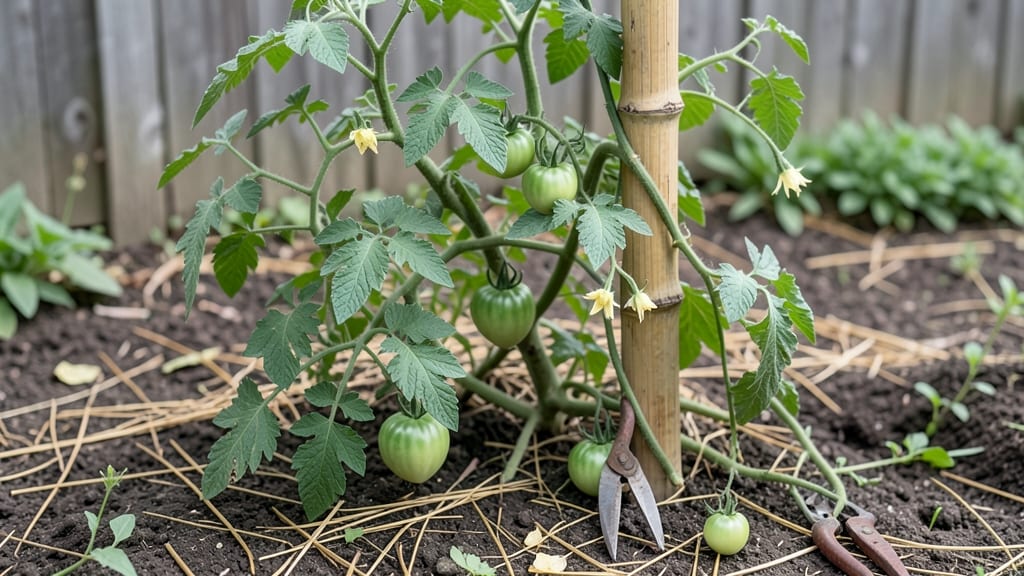
Do you need to trim tomato plants—it’s not just optional, but the secret to bigger harvests and healthier vines. ✨ I’ve watched my indeterminate tomatoes go from tangled messes to bushy, productive powerhouses just by making three simple cuts each season.
The key is knowing when and where to snip, because pruning wrong can actually reduce your yield.
You’ll need sharp pruners (or clean scissors) and about 10 minutes per plant during the growing season. For indeterminate varieties, focus on removing suckers—the little shoots that grow between the main stem and branches—while determinate types rarely need pruning at all.
Most gardeners overlook the top leaves when the plant hits the trellis, but removing them improves airflow and prevents disease.
The payoff is worth it: pruned plants produce 20-30% more fruit, ripen faster, and stay disease-resistant all season. You’ll end up with fewer cracked tomatoes and more sun exposure for the lower branches where the best fruit forms.
Plus, your plants will look like they belong in a catalog instead of a tangled jungle.
This works for both backyard gardens and container-grown tomatoes—just adjust for space. Here’s exactly how to do it without guessing, plus what to watch for when the first blooms appear. Let’s get those vines in shape!
📚 In This Guide
- What you need
- Instructions
- Tips and common mistakes
- Wrapping up and next steps
What you need
- ● Bypass pruners or sharp scissors – Choose clean, sterilized tools (alcohol wipes work great) to prevent disease spread. Size: 5–7 inches for precision.
- ● Garden gloves – Protect your hands from thorns and sap. Opt for nitrile-coated gloves for durability.
- ● Disinfectant (70% isopropyl alcohol or bleach solution) – Sterilize tools before and after each use to avoid fungal/bacterial contamination.
- ○ Pruning shears (optional but helpful) – For larger stems or branches (if your tomato plant is tall or bushy).
- ● Garden twine or plant ties – 2–3 rolls (if staking or trellising your plants).
- ● Stakes or trellis (if not already installed) – 5–6 feet tall for indeterminate varieties; 3–4 feet for determinate.
- ● Wait until plants are 12–18 inches tall – Pruning too early can stunt growth. Best time: Morning (when plants are hydrated).
- ● Identify your tomato type – Indeterminate (needs heavy pruning) vs. determinate (minimal trimming).
- ● Check for pests/disease – Remove yellow leaves, wilting stems, or spots before pruning.
- ● Water plants 1–2 hours before trimming – Reduces stress and makes cuts cleaner.
- ● Growth hormone powder – Speeds up healing of pruning wounds (apply to cut stems).
- ● Mulch (straw or grass clippings) – 2–3 inches thick to retain moisture and suppress weeds.
- ● Plant food (balanced fertilizer, 10-10-10) – Feed 1–2 weeks after pruning to boost recovery.
- ● Camera or notebook – Document pruning cuts for future reference!
Step-by-Step guide to pruning tomato plants for maximum yield
Here's the method I use to keep tomato plants productive and healthy—no guesswork, just proven cuts.
✂️ Step 1: Remove Suckers for Stronger Growth
Suckers are the small shoots that grow in the V-shaped crotch between the main stem and a branch. Pinch them off when they're about 2-3 inches long—this redirects the plant's energy to fruit production instead of leaf growth. I do this every 7-10 days during the growing season, always working from the bottom up.
Use clean pruning shears or your fingers to avoid tearing the stem. If you miss a sucker, it'll grow into a weak branch that steals nutrients from your tomatoes. Watch for new suckers forming after each rain or when the plant flushes with new growth.
🌿 Step 2: Prune Lower Leaves for Airflow
Remove any leaves that touch the soil or hang below the first fruit cluster. These leaves trap moisture and invite disease. I strip them off with my fingers, starting from the base of the plant and working upward. This also helps sunlight reach the lower fruit, which ripens faster.
Don't prune more than 1/3 of the plant's foliage at once—this can shock the tomato. Focus on leaves that are yellowing, diseased, or blocking airflow. Healthy green leaves should remain to keep the plant photosynthesizing efficiently.
☀️ Step 3: Trim Damaged or Diseased Foliage Immediately
If you spot leaves with spots, yellowing, or wilting, snip them off below the damage with clean shears. Diseased leaves spread pathogens quickly, so remove them and discard them far from the plant. I always sterilize my pruners with rubbing alcohol between cuts to prevent cross-contamination.
This step is critical during humid weather. Even a single infected leaf can reduce your harvest by 30% or more. Check your plants weekly, especially after rain or when temperatures climb above 80°F. Healthy plants bounce back fast when you act early.
⏰ Step 4: Stop Pruning 4-6 Weeks Before First Frost
Once temperatures drop below 50°F at night, your tomato plant will focus on survival, not fruit. I stop all pruning 4-6 weeks before the first frost date in my area to let the plant harden off naturally. This gives remaining leaves time to ripen existing fruit before winter.
Leave all healthy foliage intact during this time. The extra leaves help the plant store energy for next season. If you prune too late, you'll end up with green tomatoes that never ripen—trust me, I've learned this the hard way.
Tips & tricks for pruning tomato plants like a pro
Here's what I've learned after years of gardening—these tricks will help you maximize your tomato harvest without stressing your plants.
Timing is Everything: In Step 1, when you're removing those 2-3 inch suckers every 7-10 days, I've found the best time is on a dry morning after dew has evaporated. This prevents introducing moisture to fresh cuts, which can invite fungal diseases. The plant's natural sap flow is also at its peak in the morning, making the cuts heal faster.
The 1/3 Rule: When pruning lower leaves in Step 2, remember that 1/3 foliage limit is non-negotiable. I learned this the hard way when I over-pruned and my plant took weeks to recover. Think of it like giving your tomato a haircut—you want to look stylish, not like you've shaved its head! Start conservatively, especially with young plants.
Disease Prevention: For Step 3, I can't stress enough how critical it is to sterilize your pruners between cuts. I keep a small bottle of rubbing alcohol in my gardening shed and wipe down my shears after every diseased leaf. This single habit has cut my plant losses by nearly half during humid seasons. Also, always remove diseased leaves completely—don't leave any stems attached, as they can harbor pathogens.
Seasonal Awareness: In Step 4, when you're planning your 4-6 week pruning cutoff before frost, check your local frost dates but also consider your specific tomato variety. Determinate tomatoes (like Roma) can handle cooler weather better than indeterminate types (like Beefsteak), so you might need to adjust that window. I always mark my calendar with both the frost date and my last expected harvest date to time things perfectly.
Pro Tips for Do You Need To Trim Tomato Plants
- Here's what I've learned after years of gardening—these tricks will help you maximize your tomato harvest without stressing your plants.
- Timing is Everything: In Step 1, when you're removing those 2-3 inch suckers every 7-10 days, I've found the best time is on a dry morning after dew has evaporated.
- The 1/3 Rule: When pruning lower leaves in Step 2, remember that 1/3 foliage limit is non-negotiable.
Frequently asked questions
Got questions about trimming your tomato plants? You’re not alone! Here are some of the most common concerns—and straightforward answers—to help you prune like a pro.
Why do tomato plants need trimming if they’re already producing fruit?
Trimming isn’t just about aesthetics—it’s about optimizing your harvest! Overgrown tomato plants waste energy on excess leaves and branches instead of focusing on fruit production. Pruning improves airflow, reduces disease risk, and directs nutrients to the main stem and fruit clusters. Think of it like giving your plant a spa day—less clutter, more flavor!
When is the best time to trim tomato plants?
Timing matters! For determinate tomatoes (bush varieties), minimal pruning is needed—just remove suckers early in the season. For indeterminate tomatoes (vining types), start pruning when the plant is 3–4 feet tall and continue throughout the growing season. Morning is ideal—tools stay sharper, and plants recover faster in daylight.
What if I skip pruning entirely—will my tomatoes still grow?
Yes, but you might sacrifice size, quality, and yield. Unpruned plants can become overcrowded, leading to more diseases (like blight) and smaller, less flavorful tomatoes. That said, if you’re short on time, focus on removing only diseased or damaged leaves—better late than never!
Can I prune tomato plants too much? How do I know I’ve gone overboard?
Over-pruning stresses plants and can stunt growth. Stop when:
- You’ve left only 3–4 main stems (for indeterminate varieties).
- More than 30% of the foliage is gone.
- You see yellowing leaves or stunted new growth.
Does pruning work the same for tomatoes grown in containers vs. gardens?
Not exactly! Container tomatoes need more aggressive pruning because space is limited—focus on keeping the plant compact and well-ventilated. In gardens, you have more room to let vines sprawl (especially for indeterminate types), but still remove suckers and diseased leaves. Pro tip: Use smaller containers for determinate varieties—they handle pruning poorly.
Wrapping up and next steps
Trimming your tomato plants isn’t just about aesthetics—it’s a game-changer for healthier growth and bigger, juicier harvests! 🌱 Whether you’re pruning suckers, pinching back foliage, or removing diseased leaves, each strategic cut helps redirect energy to where it matters most: your fruit.
Don’t let hesitation hold you back—grab those shears and get growing!
Ready to level up your garden? Start by observing your plants weekly, and soon, you’ll spot the perfect moments to trim. Happy pruning—and here’s to a bounty of tomatoes this season! 🍅✨