
Pruning
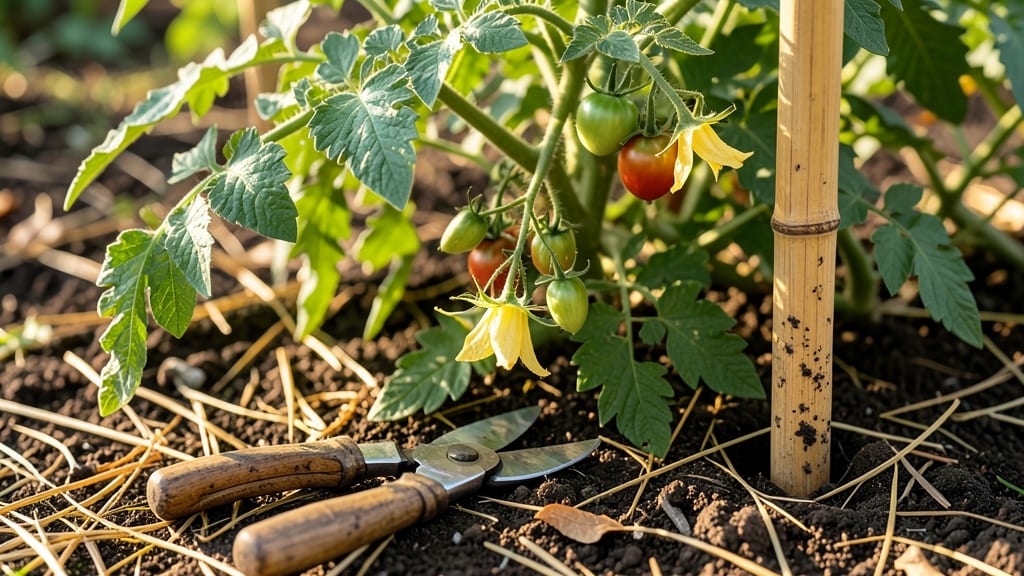
Trimming overgrown tomato plants isn't just about cleaning up—it's how you unlock heavier fruit and healthier vines. 🌱 I learned the hard way that snipping too late or too aggressively can backfire, but the right cuts transform a tangled mess into a productive powerhouse.
The key is timing: indeterminate varieties need regular pruning all season, while determinate types barely need it at all.
You'll need sharp pruners, a clean cloth for wiping tools between cuts, and a sunny morning when plants are dry. Focus on removing suckers—those little shoots in the joint between stems and branches—while leaving the main stem and lower leaves intact.
This boosts airflow and directs energy to fruit production instead of leaf growth.
After just a few strategic cuts, you'll notice sturdier stems and fewer sprawling vines. The plants channel their energy into larger, riper tomatoes instead of endless foliage, and disease risks drop because sunlight reaches all parts of the plant.
Think of it as giving your tomatoes a spa day—less fluff, more flavor.
Even experienced gardeners hesitate before pruning, but the payoff is worth it. Start small with one plant to see the difference, and soon you'll be trimming like a pro. The best part? You'll harvest 20-30% more tomatoes than you would have without pruning at all.
📚 In This Guide
- What you need
- Instructions
- Tips and common mistakes
- Wrapping up and next steps
What you need
- ● Pruning shears or scissors: Sharp, sterilized bypass pruners (avoid dull tools—they crush stems!). Choose 5-inch blades for thick stems or 3-4 inch for delicate trimming.
- ● Gloves: Heavy-duty gardening gloves (protect against thorns and blisters). Opt for nitrile-coated for grip and durability.
- ● Disinfectant: 70% isopropyl alcohol or a 10% bleach solution (1 part bleach to 9 parts water) to sterilize tools between cuts and prevent disease.
- ● Trimming rope or twine: 3/16-inch diameter jute or plastic-coated twine (20–30 feet, depending on plant size) to support stems post-pruning.
- ● Stakes or cages: 5–6 foot tall tomato cages or wooden/bamboo stakes (if not already in place) to secure the plant after trimming.
- ● Bucket or bag: A 5-gallon bucket or mesh bag to collect pruned foliage (for compost or disposal).
- ● Hand pruners: For smaller cuts or hard-to-reach spots.
- ● Garden kneeler: To reduce back strain during long sessions.
- ● Plant growth regulator: Like seaweed extract or hydrogen peroxide (3%) to spray pruned areas and encourage faster healing.
- ● Label markers: If you’re saving cuttings for propagation (e.g., tomato suckers).
Step-by-step guide to pruning overgrown tomato plants
Here's how to revitalize your sprawling tomato plants with clean, strategic cuts that boost fruit production.
✂️ Step 1: Identify and Remove Suckers Early
Suckers are the small shoots growing between the main stem and branches. Pinch them off when they're no bigger than a pencil—this redirects energy to fruit production instead of leaf growth. Start at the base of the plant and work upward, checking every leaf junction.
Use your thumb and forefinger to gently squeeze the sucker's stem until it snaps cleanly. Avoid tearing the stem, which can damage the plant. I like to do this in the morning when the plant is turgid and easier to handle. Watch for new suckers forming every few days—consistency is key.
✂️ Step 2: Prune Lower Leaves for Airflow
Remove any leaves touching the soil or lower branches up to 12 inches from the ground. These leaves create a damp, shaded environment that invites disease. Use clean, sharp pruning shears to make clean cuts just above a leaf node or branch fork.
Focus on removing yellowed or diseased leaves first—they're already draining the plant. Prune in stages over a week to avoid shocking the plant. You'll see improved airflow and sunlight penetration within days, which helps prevent fungal issues like blight.
☀️ Step 3: Balance Growth with Strategic Trimming
For indeterminate varieties, trim back the top 1-2 inches of the main stem once the plant reaches your trellis height. This encourages bushier growth and more flower clusters. For determinate varieties, skip this step—they naturally stop growing and produce fruit in clusters.
Always prune just above a leaf node where new growth can emerge. Avoid cutting into the main stem unless absolutely necessary. You'll notice new side shoots forming within a week, which will develop into more productive branches with fruit.
🌿 Step 4: Maintain the Plant Through the Season
Continue removing suckers and lower leaves every 7-10 days throughout the growing season. Focus on keeping the plant's center open to maximize airflow and sunlight. Remove any leaves that show signs of disease immediately to prevent spread.
After heavy pruning, give the plant a light watering to help it recover. You'll see new growth emerging within a few days, and your plant will look fuller and more vigorous. This ongoing maintenance keeps your tomato plants productive and healthy until the first frost.
Tips & tricks for pruning overgrown tomato plants
Revitalizing your tomato plants with precision cuts isn't just about trimming—it's about redirecting energy where it matters most. Here's what I've learned to keep my plants thriving.
Timing is Everything: Early morning is the best time to prune because the plants are fully hydrated and easier to handle. The cool temperatures also reduce stress on the plant, and you'll avoid the midday heat that can shock your tomatoes. I've found that pruning in the morning gives my plants the whole day to recover before evening.
Tool Selection Matters: Use clean, sharp pruning shears for making precise cuts—dull tools can crush stems and invite disease. For suckers, your fingers work just fine, but for larger branches, invest in a good pair of bypass pruners. I keep a small bottle of rubbing alcohol handy to wipe down my tools between cuts, which helps prevent spreading any potential pathogens.
Prune Strategically for Airflow: In Step 2, when you're removing leaves up to 12 inches from the ground, focus on creating an open center. This isn't just about aesthetics—it's about maximizing airflow and sunlight penetration. I've noticed that plants with good airflow produce fruit that ripens more evenly and have fewer issues with fungal diseases like early blight.
Watch for New Growth: After pruning, keep an eye out for new suckers forming every few days. I've made the mistake of thinking I'd finished pruning only to find a forest of new suckers later. Consistency is key—check your plants regularly, especially after heavy rain or when they're actively growing. You'll see new side shoots forming within a week, which is a good sign your plant is redirecting energy to productive growth.
Pro Tips for Trim Overgrown Tomato Plants
- Revitalizing your tomato plants with precision cuts isn't just about trimming—it's about redirecting energy where it matters most.
- Timing is Everything: Early morning is the best time to prune because the plants are fully hydrated and easier to handle.
- Tool Selection Matters: Use clean, sharp pruning shears for making precise cuts—dull tools can crush stems and invite disease.
Frequently asked questions
Got questions about trimming your tomato plants? You're not alone! Here are some common concerns and quick answers to keep your tomatoes thriving.
When is the best time to trim tomato plants?
Trim indeterminate tomato plants (like cherry or vine tomatoes) throughout the growing season—especially after they reach 12–18 inches tall. For determinate varieties (bush tomatoes), prune lightly only to remove diseased leaves. Avoid heavy pruning during flowering or fruiting unless necessary.
Do I need special tools to trim tomato plants?
Nope! While sharp pruning shears or scissors are ideal, you can use clean, sterilized scissors or even your fingers for small jobs. Just ensure tools are disinfected with rubbing alcohol to prevent spreading disease. Avoid dull blades—they tear plant tissue, inviting pests.
Will trimming reduce my tomato harvest?
Not if done right! Pruning indeterminate tomatoes actually boosts yields by directing energy to fruit production. Focus on removing suckers (side shoots) and diseased leaves. Determinate tomatoes need minimal pruning—just clear dead or crowded foliage. Think of it as redirecting traffic for bigger, healthier tomatoes!
What if I see yellow or black leaves after trimming?
Yellow leaves = over-pruning or nutrient deficiency; black spots = disease (like early blight). If you see these, pause trimming and check for pests or fungal issues. For yellow leaves, fertilize with compost tea or a balanced fertilizer. Remove affected leaves immediately to stop spread.
Can I use pruned tomato stems for anything else?
Dry and crumble pruned stems into compost or use them as mulch around your plants. They’ll break down quickly, returning nutrients to the soil. You can also propagate new plants from healthy cuttings—just dip in rooting hormone and place in water or soil!
Wrapping up and next steps
Trimming your overgrown tomato plants isn’t just about tidying up—it’s your secret weapon for a bigger, healthier harvest! 🌱 By mastering the art of pruning, you’ll boost airflow, prevent disease, and direct energy to fruit production.
Remember, less is more: focus on strategic cuts, avoid over-pruning, and always use clean tools.
Now that you’re armed with the know-how, roll up your sleeves and get pruning! Keep an eye on your plants weekly, and soon you’ll be reaping the rewards of your efforts—juicy, vine-ripened tomatoes straight from your garden. Happy growing! 🍅✨