
Pests
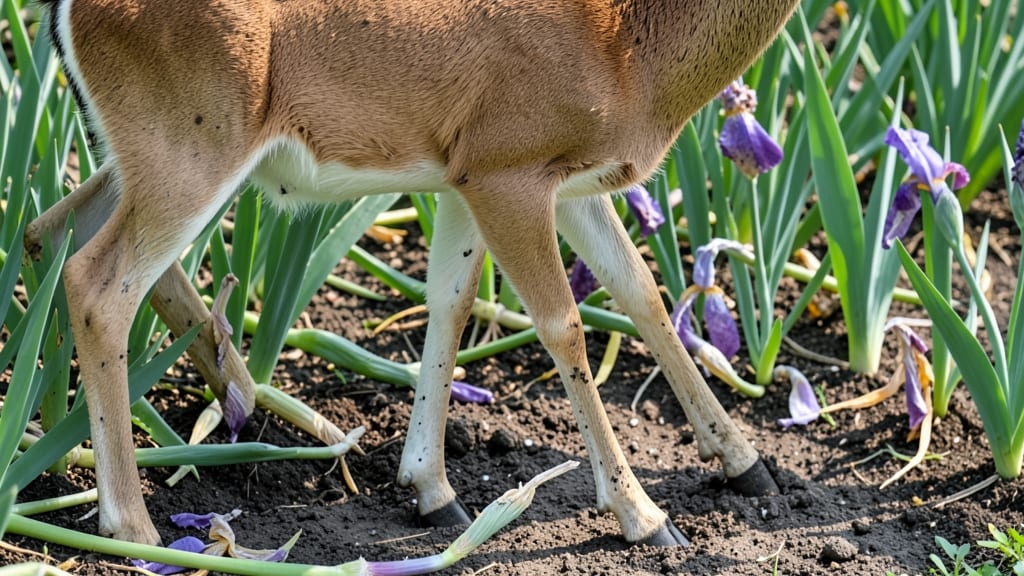
Deer do eat iris plants, especially the leaves and flowers, as they find them palatable and nutritious. Young shoots are particularly vulnerable, and mature irises may suffer damage if deer browse heavily.
Deer are drawn to irises because the leaves and blooms offer a mix of fiber and moisture that fits their dietary needs, especially during late winter and early spring when fresh greens are scarce. 🌿 Unlike some tougher perennials, irises lack strong chemical defenses that would deter browsing, making them an easy snack.
I’ve noticed deer often start with the youngest shoots, which are the most tender and nutrient-rich, before moving on to mature foliage if left unchecked.
This selective feeding can weaken plants over time, leaving them less able to rebound after winter. The real risk isn’t just lost blooms—it’s the cumulative stress on the rhizomes, which may struggle to establish new growth if deer consistently target the same areas.
Understanding this pattern helps gardeners plan proactive defenses before damage becomes visible.
💡 In This Article
- Why Deer Target Iris Plants in Gardens
- Protecting Irises from Deer Damage: Effective Methods
Why deer target iris plants in gardens
Deer have an innate preference for plants with high moisture and moderate fiber content—qualities that make iris leaves and flowers particularly appealing.
The leaves contain roughly 12-15% protein and 10-12% fiber, which aligns perfectly with a deer's dietary needs, especially during late winter and early spring when fresh forage is limited.
This nutritional balance is what draws them in, much like how humans might gravitate toward a balanced meal of lean protein and complex carbs.
The tender new shoots emerging in spring are especially vulnerable because they contain higher concentrations of sugars and amino acids, making them taste sweeter and more palatable.
Deer can detect these nutritional differences through both scent and texture—young shoots feel softer and emit a different aroma compared to mature leaves. 🌱 What’s fascinating is how deer use their Jacobson’s organ (a specialized sensory organ in their mouth) to taste the air and identify plants with high nutritional value, even before physically touching them.
Seasonal patterns play a huge role in deer browsing habits. In late winter, when deer have depleted their fat reserves from the previous year, they become more aggressive in searching for high-energy plants. Irises, which often emerge early in the season, become prime targets.
This is why gardeners in regions with mild winters (like the Pacific Northwest or the Southeast) often see more damage—deer have longer access to fresh growth.
Deer also avoid plants with strong chemical defenses, like those containing high levels of alkaloids or tannins. Irises lack these natural deterrents, which is why they’re so susceptible. For comparison, deer might nibble on iris leaves but leave nearby daffodils (which contain lycorine, a toxic alkaloid) completely untouched.
This selective behavior is a survival mechanism—deer learn which plants are safe to eat based on trial and error, and once they discover irises, they’ll return repeatedly.
Another key factor is the height and accessibility of iris plants. Deer typically browse at heights between 1-3 feet off the ground, which is where iris foliage often grows. This makes them easy targets, especially in gardens where other taller plants might block their view of less appealing options.
The visual and physical accessibility of irises turns them into a convenient meal for passing deer herds.
What most people don’t realize is how deer’s feeding habits can actually shape plant communities over time. When deer consistently target irises, they can reduce the plant’s ability to spread and reproduce, leading to fewer blooms in subsequent years.
This is particularly problematic for gardeners who rely on irises for their signature spring color—once the plants weaken, they become even more susceptible to other pests and diseases.