
Pests
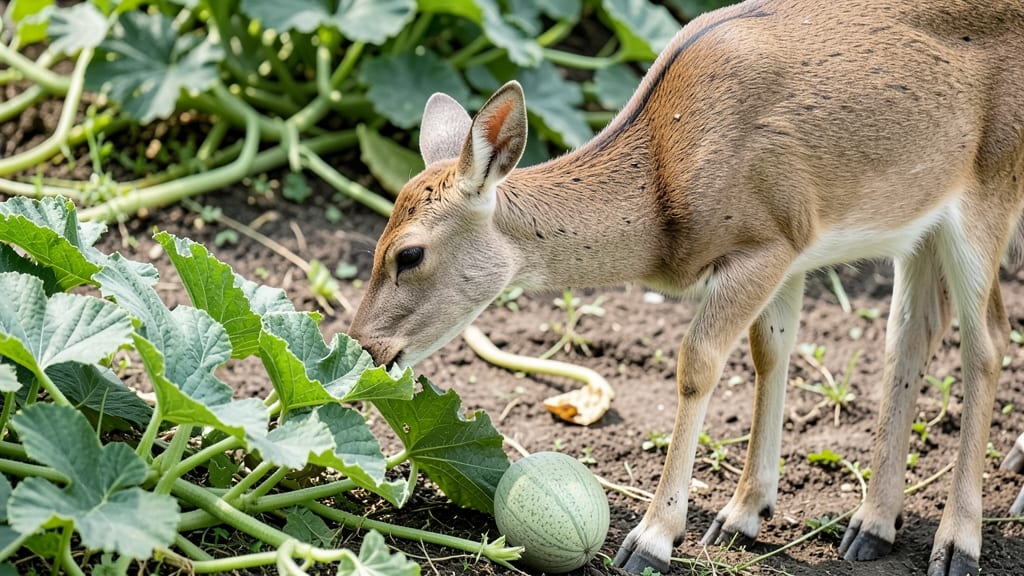
Deer do eat cantaloupe plants, targeting young seedlings, leaves, and vines for their tender growth, though they typically avoid mature fruit unless desperate. Protecting plants with fencing or repellents is often necessary in deer-prone areas.
Deer are particularly drawn to cantaloupe plants because the young growth is packed with moisture and nitrogen—key nutrients for their diet. 🌱 During spring and summer, when deer are most active, they'll browse seedlings and leaves, often leaving behind ragged edges that give away their presence.
The good news? Once the fruit matures, deer usually lose interest unless food is scarce, making early protection critical for gardeners in high-traffic areas.
If you're growing cantaloupes in a region with heavy deer activity, I recommend combining physical barriers like 8-foot fencing with natural repellents such as garlic-based sprays or deer-resistant companion plants like marigolds.
Timing also plays a role—harvesting early can sometimes deter deer before they notice your crop. The key is acting fast, as deer can strip a garden bare in just a few nights.
💡 In This Article
- Why Deer Target Cantaloupe Plants in Gardens
- Effective Deer-Protection Strategies for Cantaloupe Gardens
Why deer target cantaloupe plants in gardens
Deer zero in on cantaloupe plants because their young growth contains 85-90% moisture and high nitrogen levels—ideal for their browsing diet. The tender leaves and vines provide the perfect balance of hydration and protein, making them a prime target during spring and summer when deer are most active.
Here's what's actually happening: cantaloupe's rapid growth in warm weather creates lush, nutrient-rich foliage that deer can't resist, much like how they prefer tender corn shoots over mature ears. 🌱
The science behind this preference lies in deer digestion. Their four-chambered stomachs require fibrous roughage, but they still crave high-moisture, soft vegetation to aid digestion. Cantaloupe's young growth fits this perfectly, while mature fruit contains more sugar and less water—making it less appealing.
What most people don't realize is that deer have a 30-foot visual range and can detect movement from 100 yards away, which is why sudden garden activity (like planting) can trigger their interest.
Seasonal patterns play a huge role too. During late spring through early summer, when cantaloupe seedlings emerge, deer are in their peak feeding phase after winter. They'll browse continuously, often leaving behind jagged, irregular edges on leaves rather than clean cuts from insects.
This is a dead giveaway that deer are the culprits. Interestingly, cantaloupe ranks higher on deer's preference list than many other garden crops—even more than tomatoes or peppers—because its young growth is particularly tender and succulent.
There's also a chemical component at play. Cantaloupe plants release volatile organic compounds when damaged, which can actually attract more deer through a process called "trap-lining." This is why a single deer visit can quickly escalate into a full-blown garden raid.
The good news is that once the fruit begins to mature and develop its characteristic hard rind, deer typically lose interest unless they're experiencing severe food shortages during drought conditions or late winter.
Comparing cantaloupe to other garden crops helps put this behavior into perspective. While deer might nibble on mature zucchini or squash, they rarely devastate entire plants like they do with cantaloupe seedlings. The key difference is that cantaloupe's young growth remains tender for a longer period compared to other cucurbits.
Even when cantaloupe vines start to harden, deer will often target the new growth at the tips, creating a "flagging" effect where only the top leaves are eaten while the rest remains intact. 🌿
What makes this particularly frustrating for gardeners is that deer have a preference hierarchy that often puts cantaloupe at the top during its vulnerable growth stages. They'll typically avoid mature cantaloupe fruit unless other food sources are completely depleted, which is why early protection measures are so critical.
The window between planting and when the fruit becomes less appealing is usually just 4-6 weeks, making this a race against time for gardeners in deer-heavy areas.