
Pests
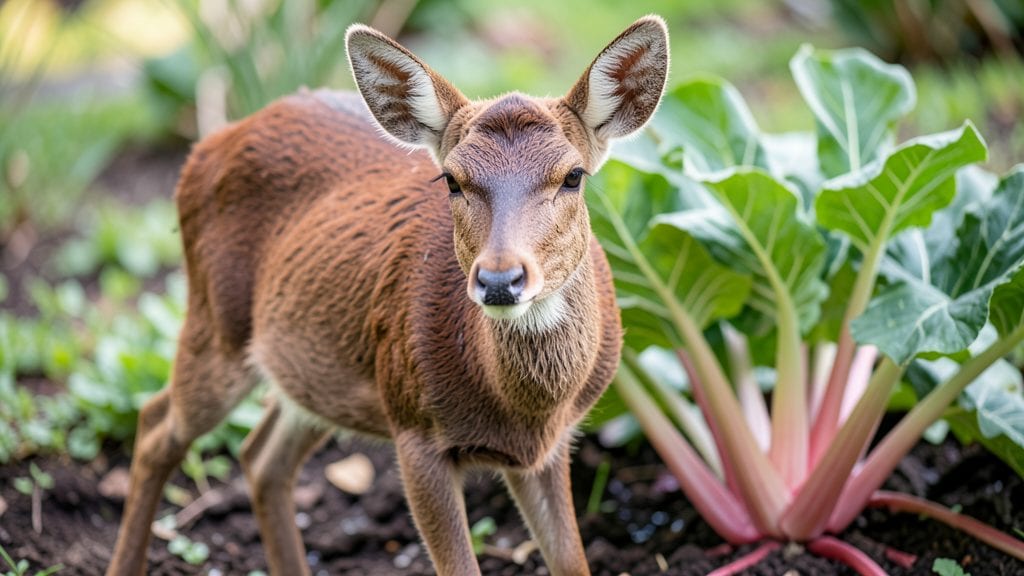
Rhubarb plants and deer clash because deer crave the tender stems and leaves, often stripping gardens bare without protection. These hungry browsers can destroy young shoots and damage mature plants, slashing harvests dramatically.
Deer target rhubarb because its high moisture content and mild, slightly tart flavor make it irresistible—especially during spring and summer when new growth is most tender. 🌿 Unlike many plants, rhubarb contains calcium and oxalates that deer actively seek out, making it a prime snack.
This attraction explains why gardens without protection often see rapid destruction of both young and established plants.
What makes this worse is that deer don't just nibble—they can completely defoliate plants in a single night, leaving your harvest in ruins. The damage isn't just cosmetic; it weakens the plant's ability to produce strong stalks for future harvests. Without intervention, you might lose an entire season's growth.
💡 In This Article
- Why Deer Love Rhubarb Plants
- 3 Proven Deer Deterrents for Rhubarb Gardens
Why deer love rhubarb plants
Deer are drawn to rhubarb primarily because of its high moisture content—around 90% in fresh stalks—which provides essential hydration during dry seasons. This water-rich composition makes rhubarb stems especially appealing, particularly when other vegetation is scarce.
The plant's mild, slightly tart flavor profile also aligns perfectly with deer's natural preference for palatable greens, unlike bitter or toxic alternatives they avoid.
Beyond hydration, rhubarb contains nutrients deer actively seek: calcium (up to 200mg per 100g) and oxalates, which support their digestive systems. These compounds are absent in many deer-resistant plants like daffodils or lavender, which contain toxic alkaloids or strong aromatics.
The combination of moisture, mild taste, and essential minerals creates a nutritional powerhouse for browsing deer—especially during spring when new growth emerges.
Seasonal vulnerability peaks in spring and early summer, when rhubarb's tender shoots first appear. Deer prioritize these young shoots because they're less fibrous and easier to digest. Mature leaves become less appealing as they develop tougher textures and stronger oxalate concentrations.
This seasonal pattern explains why gardeners often see damage during these periods, while fall harvests may escape notice.
Comparing rhubarb to other deer-targeted plants reveals its unique appeal. While deer also favor hostas or roses, rhubarb's high water content and nutrient density make it a preferred snack. For example, hostas contain toxic saponins that deter deer when consumed in large quantities, whereas rhubarb's palatability remains consistent.
This nutritional contrast explains why rhubarb gardens require more aggressive protection measures.
The plant's growth habit also contributes to its appeal. Rhubarb's broad leaves and upright stalks create an accessible buffet for deer, unlike low-growing ground covers that require more effort to access.
This vertical structure makes it particularly vulnerable to browsing damage, especially when plants are spaced closely together in garden beds.
What most gardeners don't realize is that deer don't just target rhubarb for food—they're also drawn to its scent profile. While not strongly aromatic like herbs, rhubarb emits subtle volatile compounds that signal fresh, edible vegetation.
This olfactory cue triggers deer's natural foraging instincts, making protected gardens particularly tempting during nighttime browsing sessions.