
Companion Plants
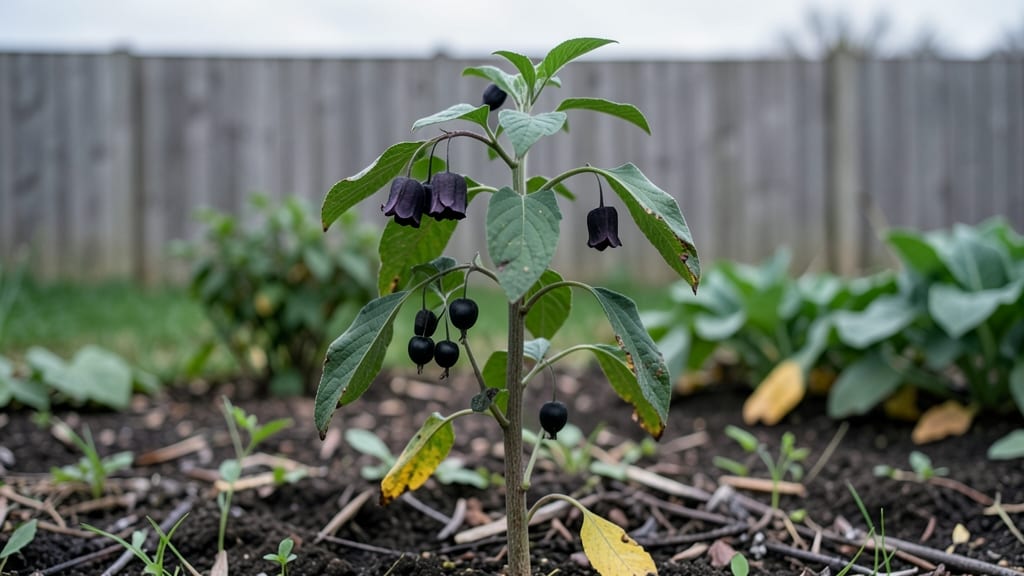
Finding glossy, dark green leaves paired with clusters of purple-black berries in your garden should send up red flags—this isn’t a decorative plant, it’s deadly nightshade (Atropa belladonna), a highly toxic lookalike for edible berries.
I’ve pulled up patches of it myself after mistaking its bell-shaped flowers for harmless garden blooms, and the experience taught me how critical proper identification is before touching anything unfamiliar.
The plant’s danger lies in every part—leaves, stems, berries, and even roots—but the berries are especially tempting to pets and children. Ingestion causes symptoms like dilated pupils, hallucinations, and slowed heart rate within hours, and there’s no antidote.
If you suspect exposure, call poison control immediately and keep the plant away from kids and animals until removal. The key to spotting it is remembering its trio of telltale features: purple-black berries, bell-shaped flowers, and leaves that feel waxy to the touch.
Removing it safely means wearing gloves, a long-sleeved shirt, and a mask to avoid skin contact or inhalation of crushed leaves. Bag the plant whole, seal it tightly, and dispose of it in outdoor trash—not compost—where curious animals can’t access it.
Some states classify it as invasive, so check local regulations before disposal, and consider reporting sightings to your extension office. The last thing you want is this plant taking root near play areas or vegetable patches.
Once it’s gone, replace the soil where it grew to prevent regrowth, and keep an eye out for volunteers—those berries can sprout new plants for years. The lesson here isn’t just about removal, but about learning to recognize plants that don’t belong in a safe, edible garden.
Stay sharp, and your yard stays a place for growing food, not handling emergencies.
📚 In This Guide
- What you need
- Instructions
- Tips and common mistakes
- Wrapping up and next steps
What you need
- ● Nitrile or rubber gloves – Two pairs (one for handling plants, one for disposal). Choose 18-gauge or thicker to prevent punctures.
- ● Safety goggles – ANSI Z87.1-rated to protect against sap splashes.
- ● Long-sleeved shirt and pants – Made of thick, tightly woven fabric (e.g., denim or canvas).
- ● Dust mask (N95 or higher) – To avoid inhaling spores or crushed plant particles.
- ● Heavy-duty gardening shears or loppers – Bypass pruners with 6–8" blades for clean cuts.
- ● Shovel or garden fork – Stainless steel or aluminum (avoid carbon steel to prevent rust from plant acids).
- ● Plastic or metal trash bags – 20–30 gallon capacity, heavy-duty (double-bag for extra protection).
- ● Disposable plastic tarp – 4’x6’ minimum, to contain debris during removal.
- ● Vinegar (5% acetic acid) – For neutralizing soil around roots (mix 1 part vinegar : 1 part water).
- ● Soil test kit – To check for lingering toxins post-removal.
- ● Petroleum jelly – Apply to skin edges under gloves to seal gaps.
- ● First-aid kit – Include activated charcoal (for accidental ingestion) and antihistamines.
Step-by-Step instructions for identifying and removing deadly nightshade plants
Here’s how to safely locate, confirm, and eliminate these toxic plants from your property.
Identify the Plant Using Key Visual Cues
Deadly nightshade (Atropa belladonna) grows as an upright shrub reaching 3-5 feet tall, with glossy, oval leaves measuring 2-6 inches long. The leaves are dark green, smooth-edged, and arranged alternately along the stem. This plant thrives in partial shade and moist soil, often found in wooded areas, garden edges, or even cultivated ground.
Look for its distinctive bell-shaped, purple flowers that bloom in late spring to summer. These flowers develop into shiny black berries in late summer, which are highly toxic if ingested. The roots are thick and woody, often spreading underground. If you see any of these features, assume caution—this plant is deadly.
Confirm Identification with a Field Guide or Expert
Before taking action, verify your identification using a reputable field guide or consult a local botanist or extension service. Deadly nightshade can be confused with non-toxic plants like henbane or bittersweet nightshade, so accuracy is critical. Take clear photos of the leaves, flowers, and berries for comparison.
If you’re unsure, avoid handling the plant directly. Wear gloves and long sleeves to minimize skin contact, as even sap exposure can cause irritation. Keep children and pets away from the area until confirmation is complete.
Remove the Plant Safely Using Protective Gear
Once confirmed, put on thick gardening gloves, long sleeves, and safety goggles to protect your skin and eyes. Use a shovel or trowel to dig around the base of the plant, ensuring you remove the entire root system. Deadly nightshade spreads via underground rhizomes, so even small fragments left in the soil can regrow.
Place the uprooted plant in a heavy-duty plastic bag and seal it tightly. Do not compost the plant material—it must be disposed of in a secure trash bin or taken to a hazardous waste facility, depending on local regulations. Avoid burning it, as toxic fumes can be released.
Monitor the Area for Regrowth and Prevent Reinfestation
After removal, inspect the soil for any remaining roots or shoots. Deadly nightshade can resprout from even small root fragments, so thoroughness is key. If you find any regrowth, repeat the removal process immediately. Consider mulching the area with thick cardboard or landscape fabric to suppress future growth.
To prevent new plants from establishing, improve soil drainage and avoid overwatering, as deadly nightshade thrives in damp conditions. If the infestation is widespread, consider applying vinegar-based herbicide (a mix of 1 gallon white vinegar, 1 cup salt, and 1 tablespoon dish soap) to kill any lingering roots or seeds in the soil.
Tips & tricks for safe deadly nightshade removal
Removing deadly nightshade requires precision and caution—here’s how to ensure you handle this toxic plant without risking exposure or regrowth.
Visual Confirmation is Non-Negotiable: In Step 1, when examining the plant, pay special attention to the berries—they’re the most toxic part. If you spot any shiny black berries, assume it’s deadly nightshade and proceed with extreme caution. The bell-shaped purple flowers are another definitive marker, but they only appear in late spring to summer, so don’t rely solely on them for year-round identification.
Double-Check with Multiple Sources: Before taking action in Step 2, cross-reference your identification with at least two reliable sources. Many non-toxic plants mimic deadly nightshade’s appearance, particularly henbane or bittersweet nightshade. I’ve seen gardeners mistake foxglove for deadly nightshade—both have bell-shaped flowers, but foxglove’s leaves grow in a spiral pattern, while deadly nightshade’s are alternate. Take high-resolution photos of all plant parts for comparison.
Root Removal is the Most Critical Step: During Step 3, the entire root system must be extracted—even a small fragment can regrow into a fully toxic plant. Use a shovel to dig a trench around the base, at least 12 inches deep, to sever all rhizomes. After removal, inspect the roots for any woody fragments; if you find any, repeat the digging process. I’ve seen cases where gardeners thought they’d removed the plant completely, only to find new shoots sprouting weeks later.
Disposal Must Follow Local Regulations: Never compost or burn deadly nightshade. In Step 3, after sealing the plant in a heavy-duty plastic bag, check your local waste disposal guidelines—some areas require hazardous waste facilities for toxic plant material. If you’re unsure, contact your regional extension office; they can provide specific disposal instructions tailored to your location.
Pro Tips for Deadly Nightshade Plants
- Removing deadly nightshade requires precision and caution—here’s how to ensure you handle this toxic plant without risking exposure or regrowth.
- Visual Confirmation is Non-Negotiable: In Step 1, when examining the plant, pay special attention to the berries—they’re the most toxic part.
- Double-Check with Multiple Sources: Before taking action in Step 2, cross-reference your identification with at least two reliable sources.
Frequently asked questions
What does deadly nightshade look like, and how can I tell it apart from edible plants?
Deadly nightshade (Atropa belladonna) has glossy, dark green leaves, purple-black berries (resembling cherries), and bell-shaped purple flowers. Unlike edible nightshades (tomatoes, peppers, or eggplants), it lacks hairy stems and has a bitter taste. Never consume any part—even small amounts can be fatal.
How toxic is deadly nightshade, and what are the symptoms of poisoning?
Deadly nightshade contains atropine and scopolamine, which cause hallucinations, dilated pupils, rapid heartbeat, and paralysis. Symptoms appear within 30–60 minutes. Seek emergency care immediately if exposure is suspected. Children and pets are especially vulnerable—keep them away from the plant!
Can I safely remove deadly nightshade from my garden myself?
Yes, but wear gloves and long sleeves to avoid skin contact. Dig up roots thoroughly (they spread easily), seal the plant in a trash bag, and dispose of it with household waste. Do not compost—the toxins can linger. For large infestations, consider professional help.
Are there non-toxic alternatives to deadly nightshade for gardens?
Try bellflowers (Campanula), foxgloves (Digitalis) (also toxic but less deadly), or marigolds for color and pest control. For privacy, bamboo or ivy are safer (and faster-growing) than nightshade. Always research plants before planting!
What should I do if my pet or child ingests deadly nightshade?
Act fast! Call poison control (1-800-222-1222 in the U.S.) or a vet immediately. Do not induce vomiting unless instructed—some toxins can cause burns on the way up. Keep the plant fragment for identification and monitor for symptoms like confusion or seizures.
Wrapping up and next steps
Deadly nightshade plants may seem intimidating, but with the right knowledge and precautions, you can safely manage—or even prevent—them from taking root in your garden. Always prioritize safety by wearing gloves, keeping pets and kids away, and properly disposing of any toxic parts.
If you’re dealing with an infestation, act quickly but carefully to avoid accidental exposure.
Now that you’re armed with the tools and tips to handle these plants, take action with confidence! Start by inspecting your garden today—early detection makes all the difference.
And if you’re unsure, don’t hesitate to consult a local horticulturist or extension service for expert guidance. Your garden (and peace of mind) will thank you! 🌱💚