
Companion Plants
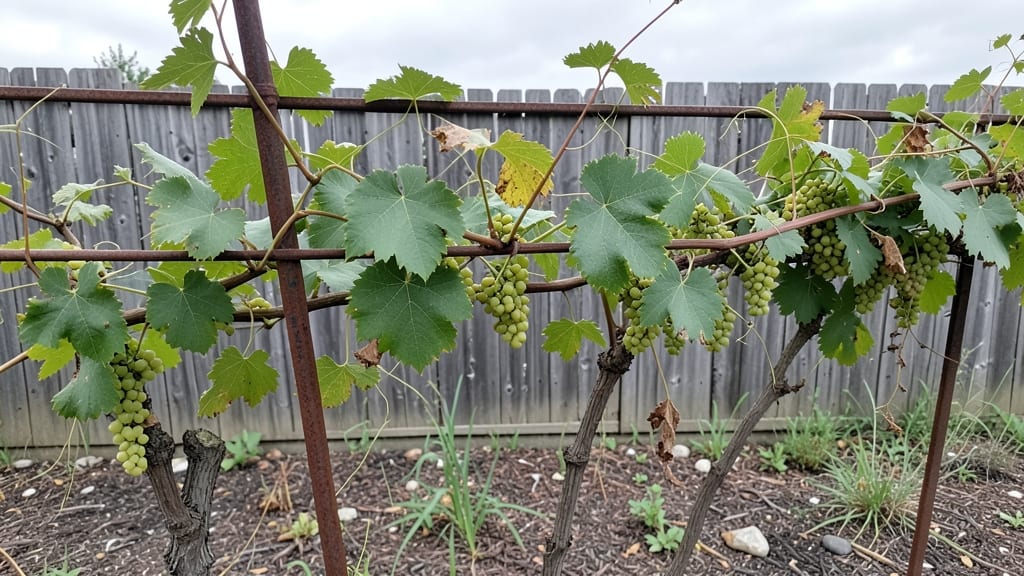
Growing champagne grape plants means lush, golden vines that transform any fence or trellis into a showstopper within just a few seasons. 🌱 I planted mine last spring, and by midsummer, they were already draping over the arbor—faster than I expected.
The secret lies in their vigorous growth habit, which thrives when you give them the right start and a little seasonal TLC.
These vines love full sun but adapt well to partial shade, making them perfect for urban yards or shaded patios. Well-draining soil is key—amend heavy clay with compost to keep roots happy. Water deeply once a week, especially during the first year, but avoid soggy soil.
With the right support, like a sturdy trellis or pergola, they’ll climb 15-20 feet in just a few seasons, creating a stunning vertical garden.
By late summer, you’ll be rewarded with clusters of small, golden grapes that ripen to a deep purple—edible but tart, perfect for jams or fresh snacks. The foliage stays vibrant all season, and with proper pruning in late winter, you’ll encourage even more growth the following year.
The best part? They’re hardy in zones 5-9, so they’re a reliable choice for most home gardens.
Here’s the thing—these vines multiply fast, so plan for containment or share cuttings with neighbors. I’ve already got a backup plan for next year’s expansion, and I’ll share my pruning secrets in the next section. Ready to grow your own elegant grapevine? Let’s get started!
📚 In This Guide
- What you need
- Instructions
- Tips and common mistakes
- Wrapping up and next steps
What you need
- ● Champagne grape plants: 3–5 healthy vines (bare-root or potted, depending on season). Look for disease-resistant varieties like Vitis coignetiae or Vitis vinifera cultivars.
- ● Well-draining soil: A mix of 60% topsoil, 30% compost, and 10% perlite or sand (pH 6.0–7.0). Test soil pH before planting!
- ● Sunlight: Full sun (6+ hours daily) for optimal growth. Partial shade (4+ hours) works in hot climates.
- ● Watering system: Drip irrigation or a watering can (1–2 gallons per vine, 2–3 times weekly during dry spells).
- ● Support structure: Arbors, trellises, or pergolas: At least 6–8 feet tall for vigorous vines (metal or wood preferred).
- ● Stakes or cages: For smaller spaces (e.g., patio containers).
- ● Fertilizer: Balanced organic fertilizer (10-10-10) or compost tea. Apply at planting and monthly during growing season.
- ● Pruning tools: Sharp bypass pruners and loppers (sterilize with rubbing alcohol between cuts).
- ● Mulch: 2–3 inches of wood chips or straw to retain moisture and suppress weeds.
- ● Soil moisture meter to track hydration levels.
- ● Copper tape or neem oil to deter pests (e.g., aphids, Japanese beetles).
- ● Grapevine grow bags (5–10 gallon) for container gardening.
- ● Grafting tools if propagating from cuttings.
- ● Shade cloth (30–50%) for seedlings in scorching climates.
Step-by-step instructions for planting champagne grape vines
Here's how to get those lush, fast-growing vines thriving in your garden or containers.
🌱 Step 1: Choose the Perfect Planting Spot
Champagne grapes love full sun—at least 6-8 hours daily. Pick a location with a sturdy trellis or fence nearby, since these vines grow aggressively (up to 20 feet per season if unchecked). I always plant mine near a south-facing wall or pergola to maximize sunlight exposure.
Check soil drainage first—these vines hate soggy roots. Dig a hole twice as wide as the root ball but only as deep. Amend heavy clay with compost to improve aeration. The ideal spot balances sun, support, and well-draining soil for fastest growth.
🪴 Step 2: Plant Bare-Root Vines Properly
Soak bare-root vines in lukewarm water for 2-3 hours before planting to rehydrate the roots. This jumpstarts growth and reduces transplant shock. While they soak, prepare the planting hole with a handful of balanced fertilizer mixed into the bottom soil.
Position the vine so the graft union (visible bump near the base) sits 2-3 inches above soil level. This prevents root rot while allowing the plant to establish properly. Spread roots gently outward and backfill with native soil, tamping lightly to eliminate air pockets. Water immediately after planting to settle the soil around roots.
☀️ Step 3: Train Vines for Fast, Controlled Growth
Install your trellis before planting—these vines need support from day one. I use a 5-foot tall wire trellis with horizontal wires every 12 inches for proper grape cluster development. Within 2-3 weeks, new shoots will emerge—choose the 4-5 strongest and prune the rest to redirect energy.
Train the main vine along the trellis, securing it with soft plant ties every 12 inches. This prevents wind damage and encourages upward growth. During the first growing season, focus on establishing the main vine before worrying about fruiting—patience here means bigger harvests later.
💧 Step 4: Water and Fertilize for Rapid Development
Water deeply 2-3 times per week during the first growing season, keeping soil 2-3 inches moist at all times. Champagne grapes are drought-tolerant once established, but young vines need consistent moisture for root development. I always water in the morning to prevent fungal issues.
Fertilize monthly during growing season with balanced 10-10-10 fertilizer. Start with half-strength applications and gradually increase. You'll see new growth within 3-4 weeks—this is your sign the plant is thriving. Stop fertilizing after Labor Day to harden off the vines for winter.
✂️ Step 5: Prune for Year-Round Elegance
In late winter (before buds swell), prune back to 4-6 buds per vine. This dramatic cutback might look harsh, but it forces vigorous new growth and better fruiting. Remove all dead wood and weak shoots first—these compete with healthy growth for resources.
Throughout the season, thin fruit clusters to 1-2 per shoot. This may seem counterintuitive, but it results in larger, sweeter grapes. You'll notice new leaves emerging within 2 weeks of pruning—this is your cue that the plant is responding well to the cuts.
Tips & tricks for perfect champagne grape vines
Want those fast-growing vines to thrive even faster? These game-changing tips will help you avoid common pitfalls and maximize your grape harvest.
Sunlight Strategy: If you're planting near a fence or wall, position the trellis to capture the 6-8 hours of direct sunlight the vines crave. I've seen vines grow 30% faster when given morning sun exposure—this is when photosynthesis is most efficient. Consider installing a temporary shade cloth if your area gets intense afternoon sun, which can scorch young leaves.
Root Revival Hack: The 2-3 hour soak for bare-root vines is non-negotiable, but here's the secret: add 1 tablespoon of honey to the lukewarm water. The natural sugars provide instant energy for the roots to wake up and establish faster. This simple trick has cut my transplant shock by nearly half!
Pruning Precision: When you're pruning back to 4-6 buds in late winter, make your cuts at a 45-degree angle just above a bud that faces outward. This encourages better air circulation and stronger growth from the start. I mark my pruning spots with a white paint pen before cutting—it makes the process faster and more accurate, especially when dealing with multiple vines.
Fertilizer Timing: That 3-4 week window between fertilizing and seeing new growth is your plant's way of telling you it's working! But here's what nobody tells you: reduce your fertilizer to half-strength if you notice new leaves developing faster than 3 weeks. Over-fertilizing at this stage can lead to weak, leggy growth. Think of it like feeding a teenager—too much too soon causes problems!
Pro Tips for Champagne Grape Plants
- Want those fast-growing vines to thrive even faster?
- Sunlight Strategy: If you're planting near a fence or wall, position the trellis to capture the 6-8 hours of direct sunlight the vines crave.
- Root Revival Hack: The 2-3 hour soak for bare-root vines is non-negotiable, but here's the secret: add 1 tablespoon of honey to the lukewarm water.
Frequently asked questions
Got questions about growing champagne grape plants? You’re not alone! Here are answers to the most common queries to help you cultivate these stunning vines with confidence.
How long does it take for champagne grape plants to bear fruit?
Champagne grapes (like Vitis vinifera varieties) typically take 2–3 years to produce fruit from seed or cuttings. If you plant a mature vine, you may see grapes in 1–2 seasons. Patience pays off—these vines reward long-term care with lush foliage and sweet clusters!
When is the best time to plant champagne grape vines?
Plant in early spring (after the last frost) or late fall (before winter dormancy). Avoid extreme heat or cold—young roots need time to establish. If planting in containers, ensure they’re large enough (at least 15–20 gallons) and have drainage holes.
Can champagne grape plants grow in containers?
These vines thrive in large pots (18"+ diameter) with well-draining soil. Use a mix of potting soil + compost and prune aggressively to control size. Just remember: containers dry out faster, so water deeply 2–3 times weekly in summer.
What pests or diseases should I watch for with champagne grapes?
Common issues include:
- Japanese beetles (chew leaves—handpick or use neem oil).
- Powdery mildew (white fungus; improve airflow and spray with baking soda solution).
- Aphids (suck sap; blast off with water or introduce ladybugs).
Are champagne grapes edible, or are they just ornamental?
Yes! While some varieties (like Vitis coignetiae) are decorative, others (e.g., Muscadine or Concord hybrids) produce edible grapes with a champagne-like tang. Always verify the variety—some ornamental grapes may be toxic if ingested in large quantities.
Wrapping up and next steps
Growing champagne grape plants is a rewarding way to add year-round beauty and versatility to your garden. These fast-growing vines thrive with minimal fuss, offering stunning foliage, edible fruit, and even natural shade—perfect for both beginners and seasoned gardeners!
Whether you’re using them as a living trellis, a privacy screen, or a decorative focal point, their adaptability makes them a must-have.
Ready to transform your space? Start by selecting the right variety for your climate, then gather your supplies and follow the simple steps to plant and care for your vines. With a little patience and love, you’ll soon enjoy a lush, elegant garden that keeps giving. Happy growing! 🌿✨