
Companion Plants
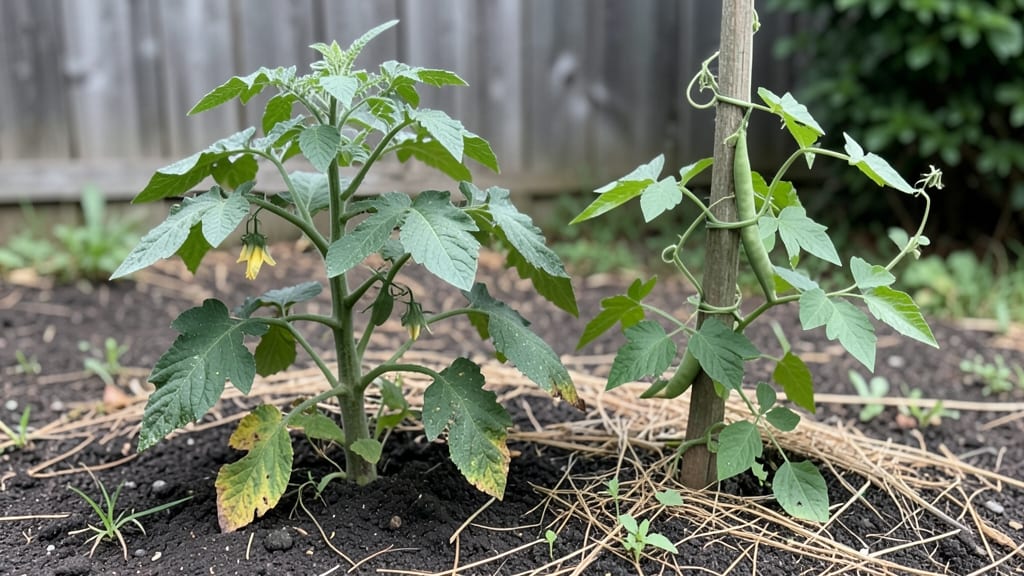
Tomatoes and green beans can be planted together as they benefit from companion planting, with tomatoes providing shade for beans while beans fix nitrogen in the soil, boosting tomato growth. Space them 18-24 inches apart for optimal airflow and yield.
This pairing works because green beans thrive in the partial shade created by tomato plants, while their deep roots help pull nutrients from deeper soil layers, leaving the topsoil richer for tomatoes. 💫 I’ve noticed that beans also act as natural pest deterrents, keeping some common tomato pests at bay while improving overall soil health through their nitrogen-fixing abilities.
For best results, plant bush beans near the base of tomato plants rather than in rows, and consider using trellises to keep beans off the ground. This setup maximizes space while preventing competition for sunlight and nutrients.
💡 In This Article
- Companion Planting Science: How Tomatoes and Green Beans Support Each Other
- Spacing and Layout Tips for Planting Tomatoes With Green Beans
Companion planting science: how tomatoes and green beans support each other
Here's what's actually happening in your garden when these two plants grow together: green beans are legumes with a special relationship with soil bacteria called Rhizobia. These bacteria live on bean roots in tiny nodules, converting atmospheric nitrogen into ammonia that the plant can absorb.
This process adds 60-100 pounds of nitrogen per acre annually to the soil—enough to feed nearby tomatoes without synthetic fertilizers. 🔥 The beans essentially become a natural fertilizer factory.
The shade provided by tomato plants is equally important. Green beans prefer partial shade, especially in hot climates where direct sun can cause their pods to become tough and stringy.
Tomato leaves filter 30-50% of sunlight, creating the ideal microclimate for beans while protecting their delicate flowers from heat stress.
This mutual benefit extends to pest control too—beans release compounds that deter some tomato pests like aphids, while tomatoes' strong scent masks the beans' natural aroma that attracts certain beetles.
What most people don't realize is how their root systems complement each other. Tomatoes develop shallow, fibrous roots that spread widely, while green beans grow deep taproots that reach 2-3 feet below the surface.
This vertical separation prevents competition for water and nutrients, allowing both plants to thrive in the same space. The beans' deep roots also help break up compacted soil, improving aeration for the tomatoes' surface roots.
This symbiotic relationship goes beyond just nitrogen. Bean plants release organic acids that help dissolve phosphorus in the soil, making it more available to tomatoes.
Meanwhile, tomatoes return the favor by improving air circulation around the beans, reducing the risk of fungal diseases like powdery mildew that commonly affect green beans in humid conditions. The combination creates a more resilient garden ecosystem that naturally suppresses pests and diseases.
Consider these key factors when implementing this pairing: the bean variety matters—bush beans like 'Blue Lake' work better than pole beans for this arrangement, as they stay more compact. Also, plant beans on the north side of tomatoes to maximize shade benefits while minimizing competition for sunlight.
The soil pH should be between 6.0-7.0 for optimal nitrogen fixation by the Rhizobia bacteria.
One advanced technique I've found effective is interplanting beans in a checkerboard pattern around tomato plants. This creates natural pathways for airflow while maintaining the companion benefits.
The beans' vertical growth habit also makes them ideal for trellising, which keeps them off the ground and prevents soil-borne diseases from spreading to tomatoes. 💫