
Propagation
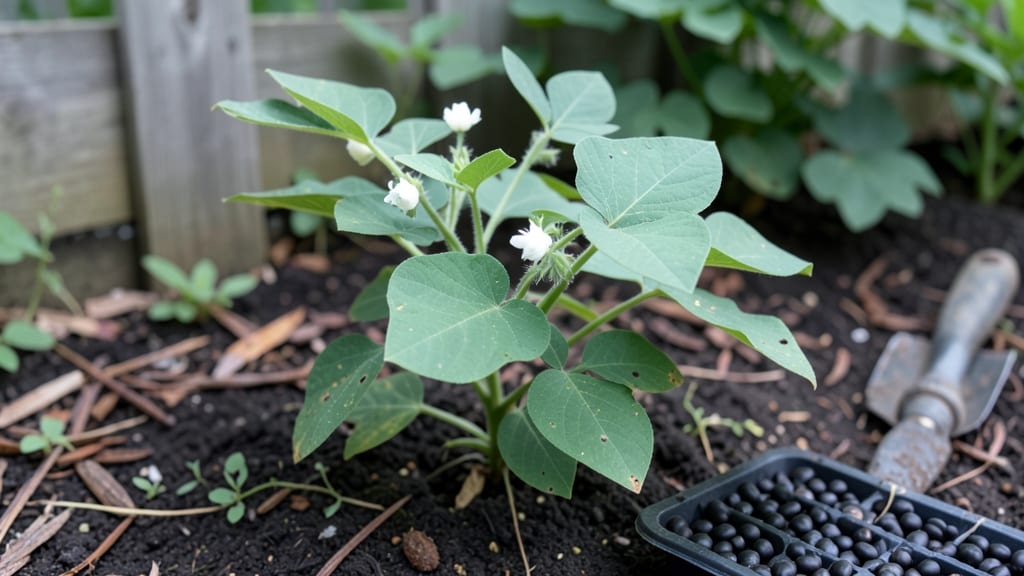
Planting black bean seeds with these germination tricks means watching your first true leaves emerge in just 5-7 days instead of the usual two weeks. I’ve learned that soaking overnight and planting in warm soil cuts the wait time dramatically—especially in cooler climates where beans often stall.
The key isn’t just patience; it’s creating the right conditions from day one, and I’ll show you exactly how to do it without fancy equipment.
You’ll need a sunny spot with well-draining soil, seeds pre-soaked for 12 hours, and a planting depth of just 1 inch—any deeper and they’ll struggle to push through.
Black beans thrive in temperatures above 65°F, so if your spring nights are still chilly, use black plastic mulch or a mini greenhouse to keep them cozy. The payoff? Strong, disease-resistant seedlings that outpace store-bought transplants by weeks.
Once sprouted, keep the soil consistently moist but never soggy—black beans hate wet feet. Thin seedlings to 4-6 inches apart when they’re 2 inches tall, and watch them shoot upward like jack-in-the-beans.
By mid-summer, you’ll be harvesting pods that stay fresh longer than grocery store beans ever could. The secret’s in the prep, not the luck.
This method works whether you’re growing in warm climates year-round or squeezing in a short-season crop before frost. For troubleshooting, we’ll cover why seeds rot, how to fix leggy seedlings, and when to replant if early germination fails. Let’s get those beans growing fast!
📚 In This Guide
- What you need
- Instructions
- Tips and common mistakes
- Wrapping up and next steps
What you need
- ● Black bean seeds: 50–100 seeds (organic, non-GMO preferred for best results). Choose heirloom varieties like Turtle or Jamaica for reliable sprouting.
- ● Growing container: A seed tray (10"x20") or shallow plastic bin with drainage holes.
- ○ Mason jars (quart-sized, 2–3 jars) for sprout growing (optional but great for indoor setups).
- ● Growing medium: Paper towels (2–3 sheets per jar) or cotton cloth (for jar sprouting).
- ● Potting soil (well-draining, seed-starting mix) or hydroponic clay pebbles (for soil-free methods).
- ● Water: Room-temperature, filtered water (avoid chlorinated water—let it sit out for 24 hours if tap water is used).
- ○ Spray bottle: (8 oz) for gentle misting (optional but helpful for soil-based setups).
- ● Fine-mesh screen: (for draining excess water in jars or trays).
- ● Plant labels: (to track varieties and planting dates).
- ● Grow lights: (LED, full-spectrum) if growing indoors without natural sunlight.
- ● Humidity dome: (clear plastic cover for trays to retain moisture during germination).
- ○ Thermometer: (optional, to monitor soil temperature—ideal range: 70–85°F).
Step-by-step instructions for fast black bean germination
Here’s how to get your black beans sprouting in just 3-5 days—no waiting weeks for stubborn seeds.
Soak the Seeds Overnight for Maximum Speed
Place 4 black bean seeds in a small bowl and cover them with warm water (about 75°F). Let them soak for 8-12 hours—this softens the tough seed coat and kickstarts germination. I like to use a fine-mesh strainer or cheesecloth to keep them submerged without overcrowding.
The next morning, drain the water and rinse the seeds gently. You’ll notice they’ve swollen slightly—that’s your signal they’re ready for planting. If you skip soaking, germination can drag on for 10-14 days, but pre-soaking cuts that time in half.
Plant in Warm, Moist Soil at the Right Depth
Fill a small pot (6-inch diameter) with well-draining potting mix and moisten it until damp but not soggy. Black beans need warmth to germinate, so place the pot in a sunny spot or near a heat source (like a sunny windowsill). Dig a hole 1 inch deep—this is critical, as planting too shallow can dry out the seeds before they sprout.
Drop the soaked seeds into the hole, spacing them 2 inches apart. Cover them lightly with soil, pressing down just enough to ensure good contact. Water gently until the surface feels moist, but avoid oversaturating—the roots need air, not a swamp. A spray bottle works best for precision.
Maintain Warmth and Moisture for Rapid Sprouting
Black beans thrive in warmth (70-80°F), so if your home runs cooler, place the pot on a seedling heat mat or near a warm (not hot) radiator. Keep the soil consistently moist—stick your finger 1 inch deep daily. If it feels dry, water lightly. Overwatering here is the biggest mistake; it causes seeds to rot before they sprout.
Within 3-5 days, you’ll see tiny sprouts pushing through the soil. That’s your cue to move them to brighter light (but not direct sun yet—young seedlings can scorch). If germination stalls after a week, check the soil temperature—cold soil slows everything down.
Thin and Support Seedlings for Strong Growth
Once the seedlings reach 2-3 inches tall, thin them to 1 plant per pot (or 3-4 inches apart if planting in a larger container). Use scissors to snip the extras at soil level—this prevents root competition. The remaining seedling will now focus its energy on growing stronger, not fighting for space.
Black beans are vining plants, so if you’re growing them vertically, install a trellis or stakes now. Gently tie the main stem to the support as it grows—this encourages upward growth and prevents sprawling. You’ll see the first true leaves (not the initial seed leaves) appear in 7-10 days, signaling it’s time to fertilize lightly with a balanced organic mix.
Tips & tricks for perfect black bean germination
Here's what I've learned after years of experimenting with black bean germination—these tricks cut your waiting time from weeks to just days.
Soaking Temperature Matters: The 8-12 hour soak at 75°F is your secret weapon for speed. Use a thermometer to verify the water temperature—cooler water (below 70°F) slows germination, while water above 80°F can damage the seeds. I find that placing the bowl of seeds in a sink with warm running water for 5 minutes before soaking helps maintain that perfect temperature throughout the night.
Planting Depth is Critical: That 1-inch planting depth isn't arbitrary—it protects the seeds from drying out while still allowing roots to establish contact with the soil. If you're using a larger pot, maintain this same depth ratio. For containers wider than 6 inches, increase the spacing between seeds to 3 inches apart to prevent overcrowding as they grow.
Warmth Acceleration: The 70-80°F range is ideal, but if your home runs cooler, don't despair. A simple seedling heat mat under your pot can make all the difference. I've seen germination times cut from 5 days to just 3 days when using this method. Just be sure to place a small thermometer in the soil to monitor temperature—black beans are sensitive to heat fluctuations.
Thinning Strategy: When you reach the 2-3 inch height and need to thin to 1 plant per pot, use clean scissors to cut at soil level rather than pulling. This prevents disturbing the roots of your remaining seedlings. I've found that the thinned seedlings often produce stronger plants because they're not competing for nutrients during their critical early growth phase.
Pro Tips for Black Bean Seeds Planting
- Here's what I've learned after years of experimenting with black bean germination—these tricks cut your waiting time from weeks to just days.
- Soaking Temperature Matters: The 8-12 hour soak at 75°F is your secret weapon for speed.
- Planting Depth is Critical: That 1-inch planting depth isn't arbitrary—it protects the seeds from drying out while still allowing roots to establish contact with the soil.
Frequently asked questions
Got questions about planting black bean seeds?
Here are answers to the most common ones to help you grow a thriving crop with ease!
How long does it take for black bean seeds to germinate?
Black bean seeds typically germinate in 5 to 10 days under ideal conditions—warm soil (70–85°F), consistent moisture, and indirect sunlight. If planted in cooler soil (<60°F), germination may take 2 to 3 weeks. For faster sprouting, soak seeds overnight before planting!
Can I plant black bean seeds indoors first?
Start seeds indoors 4–6 weeks before the last frost in biodegradable pots or peat pellets. Use a seed-starting mix, keep soil moist, and place under grow lights or in a sunny window. Transplant seedlings outdoors after they’ve developed 2–3 true leaves and soil is warm.
What’s the best soil mix for black bean seeds?
Black beans thrive in well-draining, slightly acidic soil (pH 6.0–7.0). Mix equal parts of potting soil, compost, and perlite or sand for optimal aeration. Avoid heavy clay soil, which can suffocate roots. A mulch layer (straw or leaves) helps retain moisture and warmth.
Why aren’t my black bean seeds sprouting? Troubleshooting tips
Check these common issues:
- Too cold: Use a heat mat or plant in late spring when soil warms.
- Dry soil: Keep seeds consistently moist (not soggy).
- Old seeds: Test viability by soaking in water—sinkers sprout!
- Poor drainage: Ensure pots/containers have drainage holes.
Are black beans easy to grow in containers?
Yes! Black beans adapt well to containers if given at least 10–12 inches of depth and support for vining varieties. Use a 5-gallon pot per plant and place in full sun (6+ hours daily). Dwarf varieties (like ‘Black Turtle’) are ideal for small spaces and require less support.
Wrapping up and next steps
Growing black bean seeds is a rewarding journey that connects you to nature while yielding delicious, nutrient-packed harvests! 🌱 With the right germination tricks—like soaking seeds overnight, maintaining ideal moisture, and providing warmth—you’ll soon watch tiny sprouts transform into thriving plants.
Whether you’re a beginner or a seasoned gardener, patience and care will pay off with a bountiful crop.
Ready to take the next step? Start small:
- Plant a few seeds in pots to test your technique.
- Experiment with different germination methods (like paper towels or soil).
- Share your progress with fellow gardeners—inspiration grows together! 🌟