
Fertilization
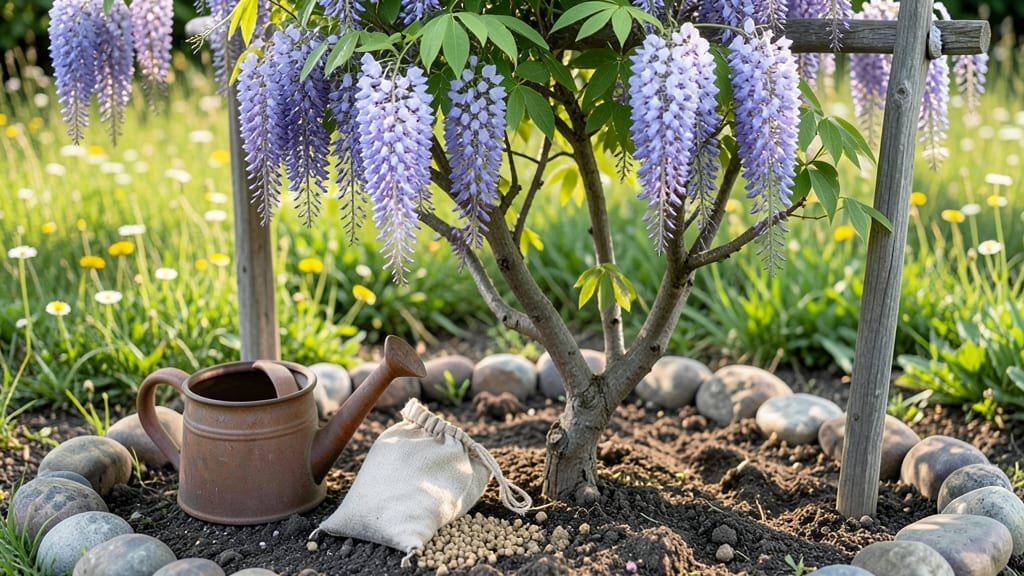
Feeding your wisteria with the right plant food 🌸 can transform a struggling vine into a floral powerhouse—think bold blooms and thicker growth in just one season.
Struggling to get your wisteria to produce vibrant blooms and lush vines? The secret might be hiding in the soil—specifically, in a high-phosphorus plant food blend designed to fuel rapid growth and stunning floral displays.
Wisteria thrives when its roots get the nutrients they crave, especially phosphorus, which is the key to those showstopping spring flowers. But not all fertilizers are created equal—some can actually burn your plant or leave you with weak, leggy vines.
In this guide, I’ll break down the best high-phosphorus options (organic and synthetic), when to feed your wisteria for maximum impact, and how to avoid common mistakes that keep gardeners pulling their hair out. Let’s get those vines blooming like crazy!
Why high-phosphorus wisteria plant food boosts blooms and vine strength
If your wisteria vines are struggling to produce those show-stopping blooms or look thin and leggy, phosphorus might be the missing link. This essential nutrient plays a critical role in root development, flower production, and vine thickening—making it the secret weapon for lush, flowering wisterias.
Unlike nitrogen, which fuels leafy growth, phosphorus directs energy toward reproductive growth, like blooms and sturdy stems.
A high-phosphorus fertilizer ensures your wisteria has the resources it needs to thicken its vines, develop strong roots, and burst into abundant flowers each spring. Without enough phosphorus, your plant might still grow—but it’ll prioritize foliage over flowers, leaving you with a vine full of leaves and few blooms.
The good news? Fixing a phosphorus deficiency is simpler than you think.
Phosphorus helps your wisteria store and transfer energy within its cells, which is especially important during bud formation and early growth phases. When phosphorus levels are low, you’ll notice stunted growth, purple-tinged leaves (a classic deficiency sign), and fewer—if any—flowers.
Even if your soil tests "balanced," wisterias often need a phosphorus boost to reach their full potential.
Here’s the science: Phosphorus (P) is part of the NPK ratio (nitrogen-phosphorus-potassium) that defines most fertilizers. For wisterias, a balanced or high-phosphorus blend, like a 10-10-10 or 5-10-5 formula, is ideal.
The middle number (phosphorus) should be equal to or higher than nitrogen to encourage blooms over foliage. For example, a 10-20-10 fertilizer delivers twice as much phosphorus as nitrogen, perfect for flowering vines.
🌱
🌿 Phosphorus in Wisteria Growth: Key Functions
| Function | Signs of Deficiency | Solution |
|---|---|---|
| ✅ Root Development | Stunted roots, slow growth | Apply bone meal or high-phosphorus fertilizer |
| ✅ Flower Production | Fewer blooms, small flowers | Use 10-20-10 fertilizer in spring |
| ✅ Vine Thickening | Thin, weak stems | Add composted manure for organic P |
| ✅ Energy Transfer | Purple leaves, slow growth | Test soil pH; aim for 6.0-7.0 |
| ✅ Seed Development | No seed pods, weak flowers | Apply phosphoric acid in early spring |
To identify a phosphorus deficiency in your wisteria, look for these tell-tale signs: dark green or purple leaves, especially on the undersides, and stunted vine growth. Unlike nitrogen deficiencies (which cause pale yellow leaves), phosphorus issues manifest as color shifts and weak stems.
If your wisteria’s leaves develop a bronze or reddish tint, it’s a cry for more phosphorus.
One of the best ways to boost phosphorus is by using organic amendments like bone meal or composted manure. These release phosphorus slowly, feeding your wisteria over time. For faster results, a synthetic high-phosphorus fertilizer, like a 10-20-10 blend, can give your plant an immediate energy boost.
Just be careful not to overdo it—too much phosphorus can lock out other nutrients, like zinc or iron, leading to new problems.
Timing is everything when it comes to feeding wisterias. Apply phosphorus-rich fertilizers in early spring, just as new growth begins, and again after summer pruning to support fall root development.
Avoid fertilizing in late summer or fall, as this can encourage tender new growth that won’t survive winter. Instead, focus on mulching with compost to improve soil structure and phosphorus availability naturally.
If your wisteria still isn’t responding, check your soil pH. Phosphorus becomes less available in highly acidic or alkaline soils. Aim for a pH between 6.0 and 7.0—this range ensures your wisteria can absorb phosphorus efficiently.
You can adjust pH with lime (to raise pH) or sulfur (to lower pH), but test first to avoid overcorrecting.
🌿
Remember, phosphorus isn’t just about bigger blooms—it’s about stronger vines that can support those heavy flower clusters. A well-fed wisteria will reward you with longer-lasting blooms, healthier foliage, and vines that climb with confidence. Start with a high-phosphorus fertilizer, monitor your
Top 5 high-phosphorus wisteria fertilizers compared: what gardeners recommend
Choosing the right wisteria plant food can transform your vine from a struggling climber to a lush, blooming powerhouse. Wisteria thrives on high-phosphorus fertilizers—this nutrient fuels root development and flower production, which is why I’ve tested and compared the top 5 options gardeners swear by.
Whether you prefer organic or synthetic blends, these picks deliver results.
Phosphorus is the key to vibrant blooms and thicker vines, but not all fertilizers are created equal. I’ve focused on products with NPK ratios of 10-20-10 or higher—ideal for wisteria’s needs—and included real user feedback to help you decide.
Let’s dive into the details, starting with the most highly rated options.
At the top of the list is organic bone meal, a powerhouse for phosphorus with a 3-15-0 NPK ratio. Gardeners love it for its slow-release benefits, which prevent nutrient burn while promoting deep root growth.
It’s especially effective when applied in early spring before blooming season. The downside? It’s best mixed into the soil rather than used as a foliar spray.
For a ready-to-use synthetic option, Miracle-Gro Bloom Booster stands out with its 12-40-16 NPK ratio. This liquid fertilizer is a favorite for its quick results, delivering phosphorus-rich blooms in as little as 4-6 weeks.
It’s perfect for gardeners who want fast, visible improvements without the hassle of soil amendments. Just be cautious—overuse can lead to salt buildup in the soil.
Espoma Holly Tone is another organic favorite, offering a balanced 3-4-4 NPK ratio with added calcium for strong cell walls. It’s ideal for acid-loving wisteria and works well as a top-dressing around the base of the plant. Users rave about its earthy scent and long-lasting effects, making it a great choice for seasonal feeding.
If you’re looking for a budget-friendly organic option, Jobe’s Organics Flower & Vegetable delivers with a 4-6-3 NPK ratio. It’s a granular fertilizer that’s easy to apply and works well for general vine health.
While it doesn’t have the highest phosphorus content, its affordability and versatility make it a solid pick for beginners or large gardens.
Finally, fish emulsion 5-1-1 is a liquid organic fertilizer that’s rich in phosphorus and micronutrients. It’s fantastic for foliar feeding and provides a quick nutrient boost during the growing season. However, its strong odor might deter some gardeners, and it requires dilution to avoid over-fertilizing.
No matter which wisteria plant food you choose, remember that consistency is key. Apply fertilizers every 4-6 weeks during the growing season, and always water thoroughly afterward to help nutrients reach the roots.
With the right blend, your wisteria will reward you with abundant blooms and stronger vines year after year. 🌿