
Pruning
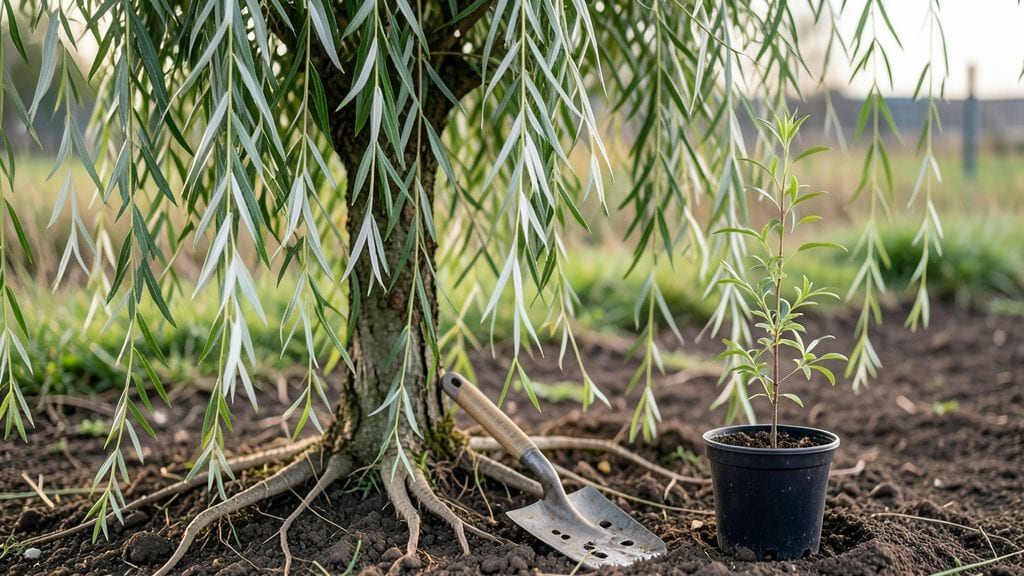
Planting willow trees unlocks fast-growing shade and wildlife habitat—if you nail the layered root system from the start. I’ve watched bare branches transform into 10-foot willows in a single season, all because of one key technique: planting at the right angle and depth to encourage that signature root spread.
The secret isn’t just throwing a sapling in the ground; it’s about mimicking how willows naturally colonize wetlands, even in your backyard.
You’ll need a moist, well-draining spot with full sun—willows hate soggy feet but thrive where other trees struggle. Dig a hole twice as wide as the root ball but only as deep as the container it came in.
The trick? Planting the root collar slightly above ground level to prevent rot while encouraging those surface roots to spread outward. For fast results, choose varieties like weeping willow or white willow—they’ll establish quicker than their slower-growing cousins.
Within three months, you’ll see those first roots arching across the soil, and by next spring, your willow will be sturdy enough to handle pruning or even small wildlife climbing its branches.
The payoff isn’t just speed—it’s the way willows transform bare spots into lush, wind-resistant living sculptures. Just be ready for aggressive root growth; that’s how they get so big so fast.
This method works best in zones 4-9, but even in drier climates, willows will send roots deep for moisture. The only real challenge? Keeping up with their thirst—water deeply twice a week for the first year, and you’ll have a tree that outpaces most gardeners’ expectations.
Now let’s get those roots growing.
📚 In This Guide
- What you need
- Instructions
- Tips and common mistakes
- Wrapping up and next steps
What you need
- ● Willow tree saplings: 1-3 healthy, bare-root or container-grown willow trees (choose species like Salix babylonica or Salix fragilis for fast growth).
- ● Shovel or spade: Medium-sized (18-24 inches) for digging planting holes.
- ● Garden trowel: For finer adjustments around roots.
- ● Measuring tape or ruler: To ensure proper spacing (10-15 feet apart for most willows).
- ● Compost or well-aged manure: 5-10 gallons per tree to enrich the soil.
- ● Mulch (straw, wood chips, or shredded bark): 2-3 inches thick to retain moisture.
- ● Watering can or hose with a gentle spray nozzle: For thorough watering.
- ● Garden gloves: To protect your hands from dirt and thorns.
- ● Root stimulator: A powder or liquid to encourage root growth (follow package instructions).
- ● Tree stakes and ties: If planting in windy areas (especially for taller varieties).
- ● Soil test kit: To check pH and nutrient levels (willows prefer slightly acidic to neutral soil, pH 6.0-7.5).
- ● Pruning shears: For trimming any damaged roots or branches before planting.
- ● Erosion control fabric: If planting on slopes to prevent soil runoff.
Step-by-Step willow tree planting for rapid, resilient growth
Willows thrive with the right approach—here's how to establish their signature layered root system quickly.
Choose the Right Willow Variety and Planting Site
Select a variety suited to your climate—weeping willows like Salix babylonica grow fastest in zones 5-9, while pussy willows (Salix discolor) tolerate colder regions. The key to rapid growth lies in soil moisture and sunlight: willows demand 6+ hours of direct sun daily and consistently moist soil—never soggy. Test your site by digging a 12-inch deep hole; if water pools after 30 minutes, amend with 2 inches of coarse sand to improve drainage.
Willows hate competition. Clear the planting area of grass and weeds within a 4-foot radius—their aggressive roots will outcompete anything else. I always plant mine near water sources (ponds, streams) where they can naturally access moisture, but container-grown willows adapt well to drier conditions if watered deeply twice weekly during the first growing season.
Prepare the Planting Hole and Amend Soil
Dig a hole twice as wide as the root ball but only as deep—willows grow best when the top of the root ball sits 1-2 inches above ground level. This prevents root rot while encouraging surface roots to spread quickly. Loosen the sides of the hole with a shovel to reduce compaction, which will restrict root growth.
Mix the excavated soil with 3 gallons of compost (from your materials list) and 1 cup of bone meal to boost phosphorus for root development. Willows respond dramatically to this—you’ll see new shoots emerge within 3-4 weeks if the soil is fertile. Avoid peat moss; it acidifies the soil and slows growth. Tap the amended soil back into the hole gently to eliminate air pockets.
Plant the Willow with Layered Root Technique
Remove the willow from its container and tease the roots outward—willows thrive when their roots spread horizontally. If planting bare-root, soak the roots in lukewarm water for 1 hour before handling to prevent desiccation. Position the tree so the root flare (where roots meet the trunk) is visible above the soil line. This is critical: burying it too deep suffocates the tree.
Fill the hole with the amended soil mix, pressing lightly as you go to eliminate gaps. Water deeply until the soil 1 inch below the surface feels saturated. Here’s the trick for fast growth: after planting, score the sides of the root ball with a knife at 45-degree angles, about 1 inch deep. This encourages roots to grow outward immediately, creating that signature layered system. Mulch with 3 inches of wood chips (from your materials) to retain moisture and suppress weeds.
Water and Monitor for Rapid Establishment
Willows need 1-2 inches of water per week—more in their first year. Water deeply every 3-4 days until the soil is 6 inches deep and moist. You’ll know it’s right when water runs out the drainage holes if planted in a container, or when the top 2 inches of soil feel damp but not waterlogged. Overwatering is the fastest way to kill a willow; their roots rot easily in anaerobic soil.
Fertilize lightly with ½ cup of 10-10-10 fertilizer (from your materials) spread over the root zone 4 weeks after planting, then again in early summer. Avoid high-nitrogen fertilizers—they produce lush foliage at the expense of root development. Watch for new shoots along the buried trunk by late spring; this confirms the layered root system is taking hold. If none appear after 8 weeks, the soil may be too dry or compacted.
Prune and Train for Structural Strength
Prune in late winter or early spring before new growth begins. Remove 1/3 of the tallest branches to encourage bushier growth and reduce wind damage. Willows grow 6-12 feet per year—pruning keeps them manageable while maintaining their fast growth rate. Always cut just above a leaf bud or branch collar to prevent disease.
Stake only if necessary—willows establish quickly and rarely need support. If planted in windy areas, use 2-3 stakes driven 6 inches deep at a 45-degree angle, tied loosely with soft tree ties (from your materials). Check ties monthly; willows grow fast enough to outgrow them in 6-8 weeks. The goal is to let the tree develop its natural strength while guiding its shape early.
Tips & tricks for willow tree planting success
Fast growth starts with these foundational techniques that accelerate root development and establish resilience from day one.
Root Ball Preparation: When teasing the roots outward in Step 3, focus on creating a fan-like spread rather than forcing them apart. The goal is to encourage horizontal growth, which will anchor your willow more securely and spread its nutrient uptake area. I've found that gently separating the roots with your fingers—rather than cutting them—preserves more root tips, which are the fastest-growing parts. This technique mirrors how willows naturally propagate along waterways, creating that signature layered root system we want to replicate.
Soil Moisture Monitoring: The 30-minute drainage test in Step 1 is non-negotiable for willows. After digging that 12-inch hole, if water pools beyond 30 minutes, you're dealing with clay soil that will suffocate roots. In these cases, I recommend mixing in 2 inches of coarse sand as specified, but also consider adding perlite to improve aeration. The key is maintaining that balance—willows need moisture but will drown in waterlogged conditions. I check soil moisture by inserting a screwdriver; if it goes in easily, you're good. If it pushes out resistance, water again.
Scoring Technique Refinement: When scoring the root ball at 45-degree angles in Step 3, use a sharp knife to make clean cuts about 1 inch deep. This creates micro-wounds that stimulate root growth outward immediately. I've noticed that willows respond particularly well when these scores are made on all sides of the root ball, not just one or two. The immediate result is visible within weeks—new root hairs emerge from these scored areas, accelerating the establishment of that vital layered system. This is where the magic happens for rapid growth.
Fertilization Timing: The 4-week window before first fertilization in Step 4 is crucial. Willows are light feeders, and over-fertilizing too early can burn delicate new roots. I've learned that waiting until you see those first signs of new shoots (typically 3-4 weeks after planting) ensures the tree has already begun establishing its root network. When you do fertilize with the ½ cup of 10-10-10, scatter it evenly over the root zone—not piled in one spot—and water it in immediately to prevent salt burn on the roots.
Pro Tips for Willow Tree Planting
- Fast growth starts with these foundational techniques that accelerate root development and establish resilience from day one.
- Root Ball Preparation: When teasing the roots outward in Step 3, focus on creating a fan-like spread rather than forcing them apart.
- Soil Moisture Monitoring: The 30-minute drainage test in Step 1 is non-negotiable for willows.
Frequently asked questions
Got questions about willow tree planting? You’re not alone! Here are some of the most common concerns—and their answers—to help you grow a thriving willow with confidence.
What’s the best time of year to plant a willow tree?
Plant willows in early spring or fall when the soil is moist but not frozen. Avoid planting in summer heat or winter frost, as young roots are sensitive to extreme temperatures. Spring planting gives roots a full growing season to establish before winter.
How long does it take for a willow tree to grow?
Willows are fast growers—expect 3–5 feet per year under ideal conditions! However, growth slows in drought or poor soil. With proper care (watering, sunlight, and pruning), a willow can reach 15–20 feet in 3–5 years.
Can I plant a willow tree in a small yard or container?
Willows need space to spread—their roots and branches grow aggressively. If you’re short on room, opt for dwarf varieties like Salix caprea (goat willow) or Salix purpurea. For containers, use a large, deep pot (20+ gallons) with drainage and trim roots/prune branches regularly.
Why is my willow tree’s leaves turning yellow or wilting?
Yellowing leaves often signal overwatering, root rot, or nutrient deficiency. Check soil moisture—willows prefer wet but well-drained soil. Wilting could mean underwatering or pests. Inspect for aphids or spider mites and treat with neem oil if needed.
Do willows need a lot of water? Can I plant them near a pond?
Yes! Willows thrive in moist soil—ideal for ponds, streams, or boggy areas. Plant them within 3–6 feet of water’s edge for natural erosion control. Just ensure the soil isn’t waterlogged (roots need oxygen too!). Mulch around the base to retain moisture.
Wrapping up and next steps
Planting a willow tree isn’t just about adding beauty to your landscape—it’s a rewarding way to nurture fast, resilient growth with minimal fuss. 🌱 From understanding its layered root system to choosing the right spot and tools, every step sets you up for success.
Whether you’re a gardening newbie or a seasoned green thumb, the key is patience and a little know-how.
Now that you’re armed with the know-how, take the next step—mark your calendar, gather your supplies, and get those roots in the ground! Watch as your willow thrives, bringing shade, texture, and even wildlife to your space. Happy planting! 🌿