
Pests
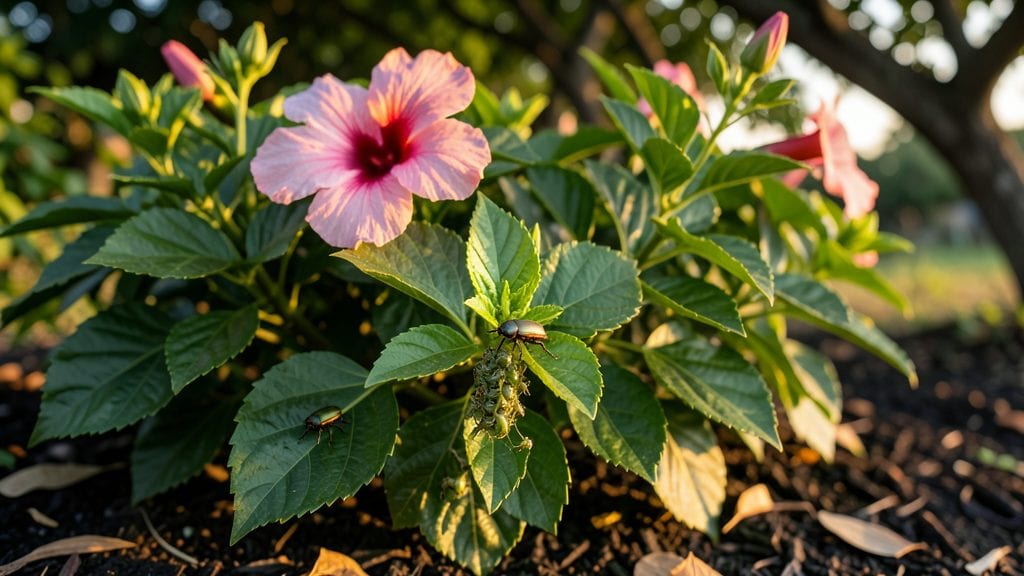
Hibiscus plants are commonly eaten by deer, rabbits, aphids, spider mites, and Japanese beetles, which chew leaves or suck sap, while slugs and snails leave behind ragged holes and slime trails. Early pest detection and organic deterrents help protect them.
Hibiscus plants face a surprising number of hungry visitors, from large mammals to tiny insects.
Deer and rabbits often target these plants during late spring and summer when food is scarce, while Japanese beetles can defoliate entire bushes in weeks. 🌿 The real challenge lies in spotting early signs—aphids leave sticky residue, spider mites cause yellowing, and slugs create silvery slime trails at night.
Regular inspections and organic sprays like neem oil can make all the difference in keeping your hibiscus thriving.
What makes this tricky is how different pests attack. Japanese beetles, for example, prefer new growth and flowers, while aphids cluster on undersides of leaves. Slugs, meanwhile, strike after dark, leaving jagged edges that look like someone took a bite.
The key is understanding these patterns so you can act fast—whether that means setting up barriers, introducing predator insects, or using homemade garlic sprays.
💡 In This Article
- Identifying Common Hibiscus Plant Predators
- Natural Ways to Protect Hibiscus from Pests
Identifying common hibiscus plant predators
Hibiscus plants face distinct attacks from different pests, each leaving unique visual clues. Deer and rabbits typically create large, irregular chew marks along leaf edges, often targeting younger shoots first.
These mammals prefer feeding during dawn or dusk when temperatures are cooler, leaving behind clean-cut damage that contrasts with the plant's natural serrated leaf edges. Their seasonal peak occurs from late spring through early fall, when food sources are abundant but competition is fierce.
Japanese beetles, on the other hand, leave behind skeletonized leaves—they consume leaf tissue between veins while leaving the structural framework intact. These ½-inch-long beetles with coppery wings appear in June and July, often in swarms that can defoliate hibiscus bushes in under two weeks.
Their feeding habits create a lace-like appearance, making identification straightforward. Aphids, meanwhile, cluster on leaf undersides, excreting sticky honeydew that attracts sooty mold fungi, creating a black, fuzzy coating on leaves.
Slugs and snails create the most distinctive damage patterns: ragged, uneven holes with a silvery slime trail (up to 1 inch wide) leading away from the plant. These pests are nocturnal, feeding between 9 PM and 4 AM when humidity is highest.
Their activity peaks during warm, rainy seasons when moisture keeps their bodies hydrated. Spider mites, though microscopic, cause yellow stippling on leaves as they pierce plant cells to extract sap, often visible as tiny white or red dots on leaf undersides.
The key to early detection lies in understanding these seasonal patterns. Deer and rabbit damage worsens during drought conditions when other forage becomes scarce, while Japanese beetle infestations surge after hot, dry spells that stress hibiscus plants.
Aphid populations explode during warm, humid weather, while slugs thrive in shady, damp microclimates near mulch piles. Regular inspections of leaf undersides and soil surfaces can reveal these pests before they cause irreversible damage.
Visual identification is your first line of defense. Deer and rabbit damage appears coarse and messy, while Japanese beetle feeding creates precise, symmetrical patterns. Slug trails have a glossy sheen that reflects light, and aphid colonies form woolly white clusters on stems.
By matching these signs to the time of year and weather conditions, you can pinpoint the culprit and apply targeted organic treatments before your hibiscus becomes a buffet. 🌿