Watering
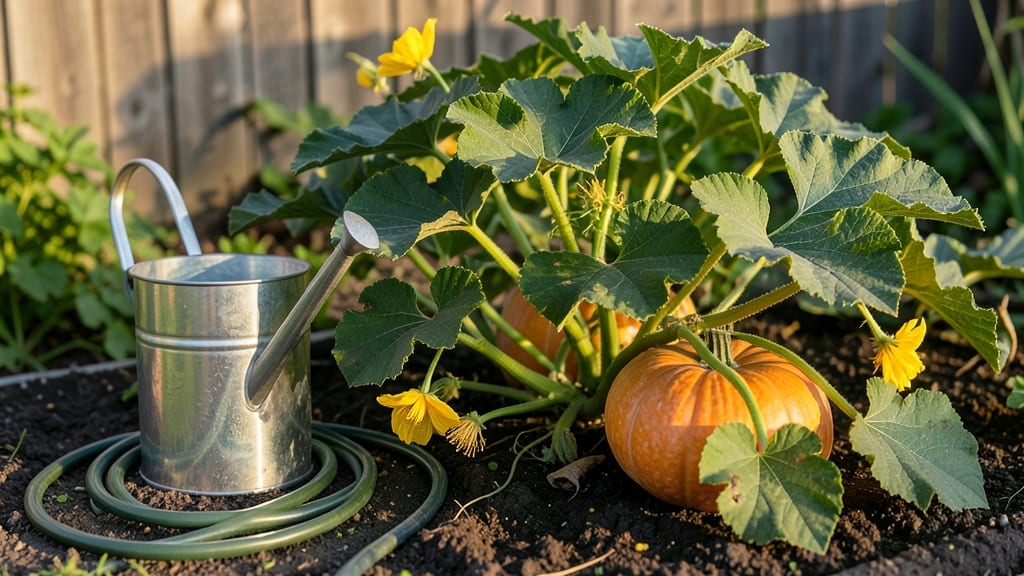
Watering pumpkin plants correctly keeps those sprawling vines 🎃 healthy and your harvest bursting with size—think 15-pound monsters instead of shriveling orbs.
Here’s the catch: pumpkins hate inconsistency. Too little water, and your leaves crisp up by afternoon; too much, and you’re drowning the roots in soggy soil. I’ve watched thriving vines collapse overnight from a single misjudged watering session—don’t let that happen to you.
Below, I’ll break down the exact watering schedule by growth stage, the sneaky signs of over- or under-watering, and why morning watering beats evening every time. No guesswork, just results.
You’ll leave here knowing when to soak the soil, how to spot wilting before it’s too late, and the one trick that keeps blossom-end rot from ruining your pumpkins. Let’s get those vines drinking right.
How much water do pumpkin plants need by growth stage?
Pumpkins are water hogs, but their thirst changes dramatically as they grow. A seedling needs gentle moisture, while a fruiting vine demands deep, consistent hydration. The key is keeping the top 1-2 inches of soil evenly moist—not soggy, not dry.
Too little water stunts growth, and too much drowns roots. Let’s break it down by stage so you can water like a pro.
Newly sprouted pumpkin seedlings are delicate and need light, frequent watering. Overwatering at this stage causes damping-off, a fungal disease that kills young plants. Aim for 1 inch of water per week, delivered in the morning to let foliage dry before evening.
Use a spray bottle for seedlings in pots or a fine mist for those in garden beds.
Once vines start spreading (typically 3-4 weeks after germination), they’ll need more water. This is the vegetative growth stage, where roots expand rapidly. Now, you’re looking at 1.5 inches of water per week, applied deeply to encourage root penetration.
Let the top inch of soil dry slightly between waterings—this prevents shallow roots that struggle when thirsty.
Here’s a quick reference for watering pumpkins by growth stage:
During the flowering stage, pumpkins need even more water—2 inches per week. This is when they’re setting fruit, and inconsistent moisture causes flowers to drop.
Use a soaker hose or drip irrigation to deliver water directly to the roots, keeping leaves dry to prevent fungal diseases like powdery mildew. If you see dropped blooms, it’s a sign of underwatering or uneven soil moisture.
The fruiting stage is the most demanding. A mature pumpkin can weigh 20+ pounds, and the vine needs 2.5-3 inches of water weekly. In extreme heat (above 90°F), water daily to prevent blossom-end rot, a common issue caused by calcium uptake problems during drought stress.
Mulch with straw to retain moisture and cool roots.
Watch for overwatering signs like yellowing leaves, mushy stems, or mold on the soil surface. If your pumpkin patch smells like rot, you’re watering too much. Underwatering shows up as crispy leaf edges, wilted vines, or fruit that’s small and misshapen.
Adjust your watering based on these clues—pumpkins are resilient but need consistency.
Morning watering is a must. It reduces evaporation and gives foliage time to dry, cutting down on fungal risks. Avoid late-afternoon watering, which leaves plants vulnerable to mildew.
If you’re using a sprinkler system, water early to prevent nighttime dampness. For container-grown pumpkins, check soil moisture daily—they dry out faster than in-ground plants.
In hot, dry climates, increase watering frequency but never let soil become waterlogged. Sandy soils drain quickly, so you may need to water twice daily.
Clay soils hold moisture longer, so adjust accordingly. Always test soil moisture by sticking your finger 1-2 inches deep—if it’s dry, it’s time to water.
Pro tip: Use a moisture meter for precision, especially during critical stages. These tools take the guesswork out of watering and help you avoid both underwatering and overwatering. With the right moisture balance, your pumpkins will thrive from seedling to harvest, giving you healthy vines and massive fruits.
5 Common watering mistakes that kill pumpkin yields (and how to fix them)
Pumpkins are heavy drinkers—skimp on water, and your vines will shrivel; overdo it, and roots drown. Even experienced gardeners make these watering mistakes that sabotage yields. The good news?
Fixing them is simple once you know the signs. Let’s dive into the most common pitfalls and how to correct them before your pumpkins turn into sad, shriveled husks.
First, inconsistent watering tops the list. Pumpkins hate moisture swings—they need steady, deep hydration to thrive. If you water sporadically, roots struggle to establish, leading to weak vines and poor fruit set.
I’ve seen entire patches of pumpkins collapse mid-season because of this one mistake. The fix? Stick to a consistent schedule and check soil moisture daily during hot spells.
⚠️ callout-warning ⚠️
🚨 Warning: Overwatering is just as deadly as underwatering!
Signs of overwatering: Yellowing leaves, mushy stems, or roots that smell rotten. Pumpkins need well-draining soil—amend clay soil with compost or sand. Water only when top 1-2 inches are dry; never let them sit in soggy conditions. Fix it now: Reduce watering, improve drainage, and remove any rotting vines immediately.
Next, neglecting the root zone is a silent killer. Pumpkin roots spread wide—up to 3 feet deep—but many gardeners only water the top inch of soil. This forces roots to grow shallow, making plants vulnerable to drought and heat stress.
To fix this, use a soaker hose or water deeply at the base of the plant, aiming for 1-1.5 inches of water per week during dry spells.
Another big mistake? Watering at the wrong time. Wet leaves at night create the perfect breeding ground for powdery mildew and fungal diseases. I’ve lost entire pumpkin patches to mildew because I watered in the evening.
Always water in the early morning (before 10 AM) so leaves dry quickly. If you must water later, avoid overhead sprinklers—stick to drip irrigation or hand-watering at the base.
Don’t overlook poor drainage, either. Pumpkins hate soggy feet. If your soil retains too much moisture (like heavy clay), roots suffocate, leading to blossom-end rot and stunted growth. Test your soil’s drainage by digging a hole, filling it with water, and timing how long it takes to drain.
If it’s slower than 4 hours, amend with organic matter like compost or coconut coir. Raised beds are a great solution for heavy soils.
Finally, ignoring wilting leaves until it’s too late. Pumpkins wilt for two reasons: underwatering or overwatering. To diagnose, press your finger 1-2 inches into the soil. If it’s bone-dry, water immediately. If it’s soggy, hold off and improve drainage.
Pro tip: Mulch with straw or shredded leaves to retain moisture and keep roots cool. A 3-inch mulch layer can cut watering needs by up to 30%.
By avoiding these mistakes, you’ll give your pumpkins the steady hydration they crave—leading to healthier vines, more blooms, and bigger fruits. Start with one fix today, like checking soil moisture or adjusting your watering schedule, and watch your pumpkin patch thrive. Happy growing! 🎃