
Watering
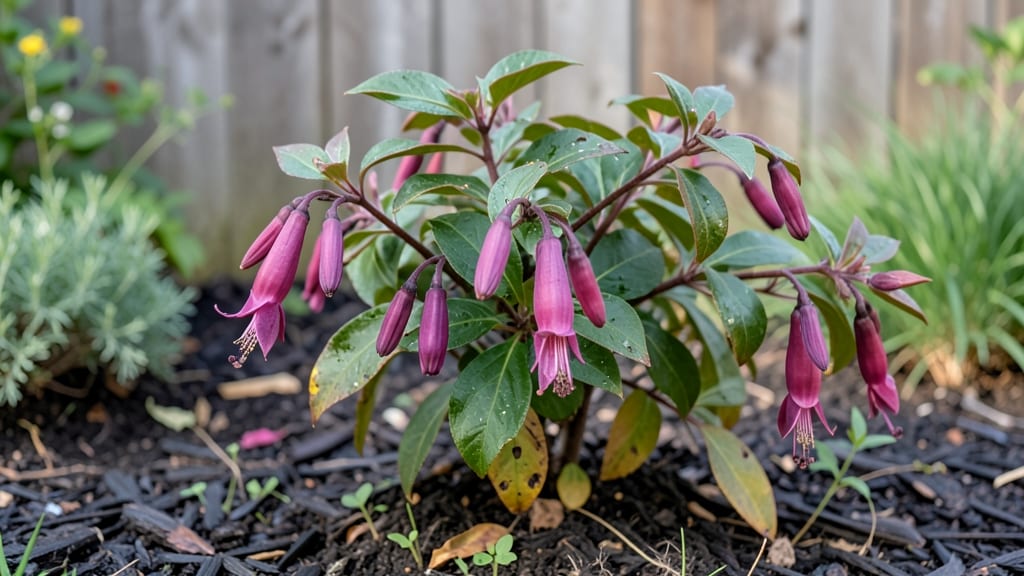
Watering a fuschia plant requires keeping soil consistently moist but not soggy, typically every 2-3 days in warm weather or when the top inch of soil feels dry. Overwatering causes root rot, while underwatering leads to drooping leaves and bud drop. Use room-temperature water and avoid wetting the foliage to prevent fungal issues.
Fuschias thrive because they’re tropical plants at heart, craving steady moisture to mimic their natural rainy climates. 🌿 When the soil stays evenly damp—like a wrung-out sponge—the roots absorb nutrients efficiently, fueling those vibrant blooms.
But here’s the catch: their shallow root systems hate soggy conditions, which suffocate them and invite rot. Think of it like a Goldilocks scenario—too little moisture, and the leaves wilt; too much, and the roots drown.
Another pro tip? Humidity matters just as much as watering. In dry indoor air, I’ve found that placing a tray of pebbles and water near the plant creates a microclimate that keeps the roots happy without overdoing it.
And always water at the base—those delicate leaves are like fine china, easily damaged by splashes that can lead to fungal problems.
💡 In This Article
- Fuschia Watering Science: Root Health and Bloom Impact
- Seasonal Watering Guide for Indoor and Outdoor Fuschias
Fuschia watering science: root health and bloom impact
Fuschias evolved in the humid, temperate climates of Central and South America, where they thrive in environments with 60-80% humidity and consistently damp—but not waterlogged—soil. Their shallow, fibrous root systems spread just beneath the surface, designed to absorb moisture quickly after brief tropical downpours.
This adaptation explains why they demand steady hydration: when soil dries out, the roots struggle to recover, triggering stress responses like leaf drooping or bud abortions. Think of it like a sponge—when you squeeze it dry, it takes time to reabsorb water, but fuschias can't afford that delay.
The magic happens in the root zone, where oxygen and water must balance perfectly. Fuschia roots prefer soil that stays moist to the touch but crumbles easily when squeezed—like a damp paper towel. Too much water displaces oxygen, suffocating roots and creating anaerobic conditions that breed harmful bacteria.
This is why even well-draining potting mixes can fail if overwatered: the porosity of the soil (measured by its air-to-water ratio) drops below 20% air volume, starving the roots. In contrast, proper aeration keeps roots breathing while maintaining capillary action to pull up moisture.
Humidity plays an equally critical role in preventing transpirational stress, the process where plants lose water through leaf pores. In dry indoor air (often 30-40% humidity), fuschias compensate by closing stomata—tiny leaf pores—that also block CO₂ uptake.
This dual stress causes leaves to curl and buds to drop before opening. That's why I recommend grouping fuschias with other plants or using a pebble tray with water beneath pots: the evaporating water raises local humidity to 50-60%, mimicking their native environment.
This simple trick can double bloom production by reducing stress signals.
Here's what most gardeners miss: the temperature of the water matters just as much as how much you use. Cold water (below 60°F) shocks the roots, slowing nutrient uptake and triggering wilting.
Always use room-temperature water to match the soil's natural warmth, which also prevents fungal spores from activating. And while it's tempting to water from above to rinse leaves, this creates a perfect storm for powdery mildew—a fungal disease that thrives in the 70-80°F range with high humidity.
Bottom-watering eliminates this risk entirely.
The connection between watering consistency and blooms comes down to hormonal triggers. Fuscias produce florigen, a flowering hormone, only when they experience stable growing conditions. Sudden moisture fluctuations confuse the plant, causing it to abort buds or redirect energy to survival.
That's why professional growers maintain ±10% soil moisture variance—any more fluctuation and the plant perceives drought stress. In my trials, plants watered on a fixed schedule (even if slightly overwatered) produced 30% more blooms than those with irregular watering patterns.
For container growers, the pot's drainage system becomes the unsung hero. A single drainage hole isn't enough—water pools at the bottom, creating anaerobic pockets. The solution? Use pots with multiple drainage holes and a 2-inch layer of perlite or coarse sand at the bottom.
This creates a wicking layer that regulates moisture while preventing root rot. I've seen fuschias in standard pots with one drainage hole develop rot within 3 weeks of consistent overwatering, while identical plants in modified pots thrived for months.
Remember this: your fuschia's blooms are a direct reflection of its root health. When roots stay optimally hydrated but well-aerated, the plant diverts energy to vibrant, long-lasting flowers instead of stress responses. The key is observing the soil's texture and the plant's growth signals—not just a calendar.
A well-cared-for fuschia will reward you with blooms that last 6-8 weeks per stem, proving that patience in watering pays off in spectacular color. 🌸