Watering
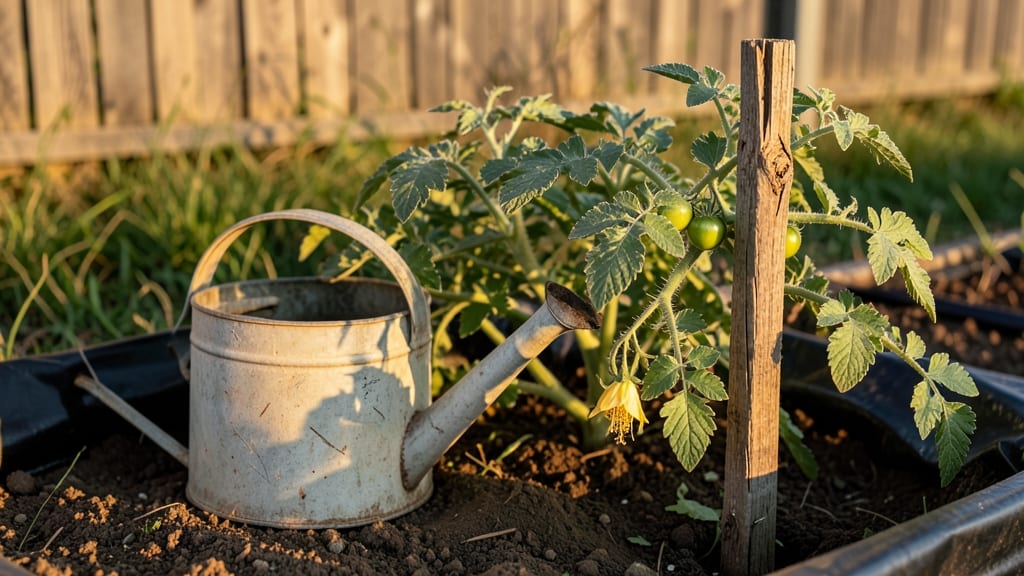
Your underwatered tomato plant might still be salvageable—if you catch it early. The first sign is leaves curling inward like a sad, thirsty hand, followed by yellowing at the edges. I’ve brought plants back from this stage with the right moisture checkpoints, and you can too.
Start by sticking your finger 2 inches into the soil near the roots—if it feels drier than a winter bone, that’s your cue. Water deeply until it runs out the bottom of the pot or container, then let the top inch dry before watering again.
Mulch helps too, locking in moisture like a cozy blanket for roots.
Within 3-5 days, you’ll see leaves perk up and new growth pushing out. The key is consistency: underwatering stresses plants, but steady moisture keeps them thriving. For severe cases, a soil drench with compost tea can give roots a nutrient boost while they recover.
Once revived, upgrade to a drip irrigation system or self-watering pot to keep soil evenly moist. Tomatoes hate dry spells, but with the right routine, you’ll have juicy, productive plants all season long.
Why it happens
When your tomato plants start wilting despite your best efforts, the issue often traces back to how water reaches their roots. Understanding the key triggers behind underwatering helps you address the problem before it’s irreversible. Here’s why your tomato plants might be crying out for hydration:
🌱 Inconsistent Watering Schedules
Tomatoes thrive on consistency. Their deep root systems demand steady moisture, especially during fruiting stages. Skipping watering days—or alternating between overwatering and drought—confuses the plant’s hydration balance. Why it happens:
- Shallow soil drying: Water evaporates quickly from the top 1–2 inches of soil, leaving roots below parched. Tomatoes need moisture down to 12–18 inches deep for optimal growth.
- Diurnal stress: Daytime heat accelerates evaporation, while nighttime cooling reduces transpiration. Without replenishment, roots struggle to absorb enough water.
- Human error: Vacations, busy schedules, or misjudging soil dryness lead to missed watering cycles. Pro tip: Use a moisture meter to track soil hydration levels accurately.
💧 Poor Soil Drainage Or Compaction
A soil profile that doesn’t breathe or drain properly traps air pockets, preventing roots from accessing water efficiently. Why it happens:
- Clay-heavy soils: These hold water but suffocate roots, creating anaerobic zones where oxygen is scarce. Roots can’t absorb nutrients or water effectively.
- Over-tilling or foot traffic: Compacting soil crushes root pathways, forcing roots to grow in a shallow, water-starved layer.
- Lack of organic matter: Sandy or depleted soils drain too quickly, offering no moisture reservoir for roots.
Actionable fix: Amend soil with compost or coconut coir to improve structure and water retention. For clay soils, add perlite or vermiculite to create air pockets.
🌡️ Extreme Heat Or Wind Stress
Environmental factors can turn your garden into a desert overnight. Why it happens:
- High temperatures: Soil heats up, increasing evaporation rates by up to 30%. Tomato leaves may curl or scorch, signaling dehydration.
- Drying winds: Gusts strip moisture from leaves and soil, mimicking a drought. Young plants are especially vulnerable.
- Low humidity: Arid conditions force plants to transpire faster, depleting soil moisture reserves.
Solution: Mulch with straw or wood chips to retain soil moisture and reduce temperature fluctuations. Water early morning or late evening to minimize evaporation.
🌿 Overcrowded Or Stressed Plants
When tomato plants compete for resources, their root systems weaken, making them more susceptible to drought. Why it happens:
- Root competition: Planting tomatoes too closely forces roots into a limited soil volume, reducing access to water and nutrients.
- Pest or disease damage: Aphids, whiteflies, or fungal infections (like blight) stress plants, reducing their ability to absorb water.
- Nutrient deficiencies: Lack of potassium or nitrogen weakens root development, making plants more drought-sensitive.
Fix it: Prune crowded foliage, treat pests organically, and fertilize with a balanced 10-10-10 or tomato-specific blend to bolster root health.
🔥 Equipment Or Watering Mistakes
Even the best-intentioned watering can backfire. Why it happens:
- Drip irrigation issues: Clogged emitters or low water pressure deliver trickle amounts that evaporate before reaching roots.
- Sprinkler misalignment: Water may spray leaves instead of soil, leading to fungal growth and wasted moisture.
- Incorrect water volume: Light sprinkles (e.g., 5 minutes) only wet the top inch of soil, while deep watering (1–2 inches) is needed for tomatoes.
Checklist:
- Inspect drip lines for clogs.
- Water at the base of the plant, not the leaves.
- Aim for 1–1.5 inches of water per week during fruiting.
Revive Your Plants With These Fixes
Now that you know the signs and causes of an underwatered tomato plant, it’s time to take action! The good news? With the right approach, your plants can bounce back stronger than ever. Below, we’ve broken down practical solutions for each common cause—plus prevention tips to keep your tomatoes thriving.
If your tomato plant is suffering from shallow watering or infrequent hydration, its roots may have shriveled or retreated to deeper soil layers. Here’s how to revive them:
- 🔥 Water Deeply (Not Just the Surface) Use a soaker hose or drip irrigation to deliver water 6–8 inches deep into the soil. For container-grown tomatoes, water until it drains from the bottom. This encourages roots to grow downward where moisture is available.
- 🍳 Schedule Consistent Watering Water early in the morning (before 10 AM) to reduce evaporation. Aim for 1–1.5 inches of water per week, adjusting for heat or wind. A moisture meter can help track soil hydration levels.
- 👨🍳 Mulch to Retain Moisture Apply 2–3 inches of organic mulch (straw, wood chips, or grass clippings) around the base (but not touching the stem). This locks in moisture and keeps roots cool.
✨ Pro Tip: If your soil is hard and compacted, gently loosen it with a fork to help water penetrate deeper.
Tomatoes in blazing sun or unpredictable weather need extra care. Here’s how to adapt:
- 🔥 Beat the Heat with Shade Cloth If temperatures exceed 90°F (32°C), provide 30–50% shade during peak afternoon hours. This reduces water loss through transpiration.
- 🥘 Increase Frequency in Heatwaves In extreme heat, water every 2–3 days (or daily for containers). Check soil moisture daily—if the top inch is dry, it’s time to water.
- 🎯 Cold Weather Adjustments If nights drop below 50°F (10°C), reduce watering slightly to prevent root rot from soggy soil. Focus on even moisture rather than deep soaking.
💡 Pro Tip: A self-watering system (like a buried clay pot with a wick) can automate moisture control in extreme conditions.
Poor soil quality can stress roots and prevent them from absorbing water efficiently. Here’s how to fix it:
- 🔪 Amend Heavy or Sandy Soil
- Clay soil? Mix in compost, perlite, or coconut coir to improve aeration.
- Sandy soil? Add peat moss or aged manure to retain moisture.
- Containers? Use a well-draining potting mix (50% compost, 30% perlite, 20% vermiculite).
- 📊 Boost Nutrients with a Balanced Fertilizer Underwatered plants often lack potassium and phosphorus, which help root development. Use a 5-10-10 or 10-10-10 fertilizer (or compost tea) every 2–3 weeks during growing season.
- 🥗 Avoid Over-Fertilizing Too much nitrogen can burn roots and worsen water stress. Stick to moderate feeding once the plant shows new growth.
🌡️ Pro Tip: A soil test kit ($10–$20) can reveal deficiencies before they cause major damage.
Once your tomato plant recovers, prevent future stress with these habits:
- 🔥 Monitor Soil Moisture Daily Stick your finger 1–2 inches deep—if it’s dry, water immediately. For heavy soils, check deeper (3–4 inches).
- 🍳 Use Drip Irrigation or Soaker Hoses These deliver water slowly and directly to roots, reducing waste and evaporation.
- 🌡️ Group Plants for Microclimate Control Plant tomatoes near other tall crops (like corn or sunflowers) to create shade and retain soil moisture.
- 🎯 Choose Drought-Tolerant Varieties If you struggle with watering consistency, try ‘Solar Fire,’ ‘Heatmaster,’ or ‘Mountain Merit’—these tomatoes handle heat and dry spells better.
- ✨ Collect Rainwater Rainwater is chemically neutral and great for tomatoes. Use a barrel system to store it for dry spells.
Within 3–7 days of proper care, you should see: ✅ Firmer stems (not limp or wilting) ✅ Darker green leaves (especially lower ones) ✅ New growth at the top (indicating root revival) ✅ Soil that stays moist (not bone-dry between waterings)
If your plant isn’t improving after 10 days, check for pests (like aphids) or disease (early blight), which can worsen water stress.
Your tomatoes are on the mend—now give them the love they need to produce a bountiful harvest! 🍅🌿
Frequently asked questions about reviving thirsty tomato plants
How can I tell if my tomato plant is truly underwatered vs. just wilting from heat?
Check the soil first—stick your finger 2 inches deep. If it feels dry, that’s underwatering. Heat stress wilting usually happens when soil is still moist but leaves curl to reduce water loss. For confirmation, gently tug the stem: if it snaps easily, roots are dry; if it bends but doesn’t break, it’s heat-related.
Can I save a tomato plant if the leaves are already yellow and crispy?
It depends on how deep the damage goes. If only the outer leaves are affected and the stem is still firm, prune the dead leaves and focus on deep watering. However, if the center leaves are yellowing or the plant feels hollow when squeezed, recovery is unlikely. Prevent future stress by mulching and using drip irrigation.
What’s the best time of day to water tomatoes to prevent underwatering?
Water early morning (6-9 AM) to give roots time to absorb moisture before evaporation kicks in. Avoid evening watering—wet foliage overnight invites fungal diseases. For containers, water when the top inch feels dry, but never let them sit in saucers of standing water.
How often should I water tomato plants in containers vs. garden beds?
Container tomatoes need water every 1-2 days in hot weather (check soil daily), while garden beds require 1-1.5 inches per week. Containers dry out faster—use self-watering pots or add 2 inches of mulch to slow evaporation. Pro tip: Group containers together to create a microclimate that retains moisture longer.
Will underwatering cause my tomato fruits to crack or split?
Yes! Uneven moisture—especially rapid watering after drought—causes fruits to swell too quickly, leading to cracks. Maintain consistent soil moisture by mulching and using drip irrigation. For prevention, avoid heavy watering late in the day when fruits are expanding. If cracks appear, harvest fruits promptly to prevent rot.