
Watering
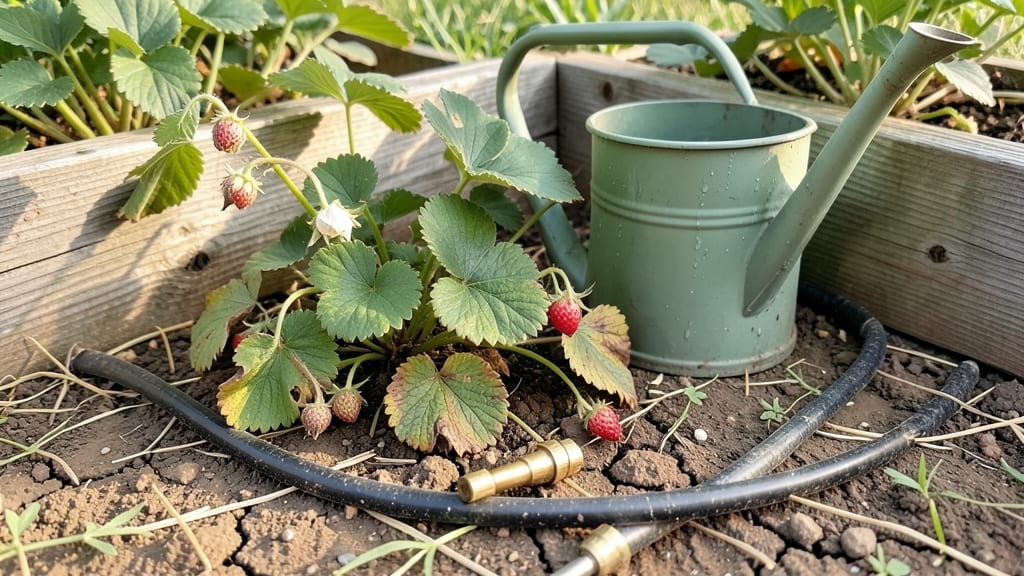
Your underwatered strawberry plants might still have a fighting chance—if you act now. 🌱 I’ve nursed back more crispy-edged leaves than I’d like to admit, and the key is recognizing the subtle signs before it’s too late.
Strawberries hate dry roots, but they bounce back faster than you’d think with the right approach.
The first clue? Leaf edges curling like parchment, or soil pulling away from the pot edges. Strawberries have shallow roots, so they need consistent moisture—not soggy soil, just damp. I check moisture by sticking my finger an inch deep; if it’s dry, it’s time to water.
Overwatering is a common trap, but strawberries wilt faster from thirst than from too much water.
Within 48 hours of proper watering, you’ll see leaves perk up and new growth at the crown. Mulch helps retain moisture, and watering at the base—not overhead—keeps roots happy. The goal isn’t to drown them, but to keep soil consistently damp without letting it dry out completely.
This works for both in-ground beds and containers, and the same rules apply whether you’re growing June-bearing or everbearing varieties. Once you’ve revived them, adjust your schedule to water every 2–3 days in hot weather, or when the top inch of soil feels dry to the touch.
Root Causes Of Thirsty Plants
Strawberries are 90% water at harvest—so when they wilt or droop, it’s often a cry for hydration. But why does underwatering happen in the first place? Let’s break down the real culprits behind a parched strawberry plant, from human habits to environmental sneaky saboteurs.
Strawberries thrive on consistency. Skipping watering days—or overwatering one day and neglecting the next—throws their roots into chaos. Here’s the science:
- Soil Moisture Fluctuations: Strawberry roots grow best in evenly moist soil (about 1–2 inches deep). When you water sporadically, roots shrink and expand like a sponge, weakening their structure. 📊 Study shows this leads to root dieback in as little as 3 days of drought.
- Surface-Level Watering: Pouring water only on the topsoil (like a quick splash) leaves deeper roots bone-dry. Strawberries need deep hydration—aim for 1–1.5 inches of water per week, split into 2–3 sessions.
- Morning vs. Evening Mistakes: Watering at night promotes fungal diseases (like Botrytis), while midday watering causes rapid evaporation. Best time? Early morning (6–9 AM) so roots absorb moisture before the heat kicks in.
💡 Pro Tip: Use a moisture meter or the "finger test"—stick your index finger 1–2 inches into the soil. If it feels drier than a bone, it’s time to water.
Strawberries are not desert survivors. When temperatures soar or rainfall vanishes, their roots struggle to keep up. Here’s how heat dehydrates them:
- Transpiration Overload: Hot, dry air forces strawberries to over-evaporate water through leaves (a process called transpiration). Without enough water in the soil, roots can’t replenish losses, causing wilting within hours.
- Soil Drying Out Fast: Sandy or rocky soil drains like a sieve, leaving roots high and dry. Clay soil, while retaining water, can bake hard in heat, suffocating roots.
- Root Zone Shrinkage: Prolonged drought causes roots to retreat into the smallest possible space to conserve moisture. This makes them vulnerable to damage when water finally returns.
🌡️ Fix It: Mulch with straw or wood chips (2–3 inches thick) to lock in moisture. For pots, use self-watering containers or add hydrogel crystals to sandy soil.
If water can’t stay where it’s poured, strawberries will always feel thirsty. Here’s why drainage fails:
- Waterlogging vs. Runoff: While some gardeners fear overwatering, poor drainage is just as deadly. If pots have no drainage holes or garden soil is clay-heavy, water pools at the surface, starving roots of oxygen. Meanwhile, sandy soil lets water escape too fast, leaving roots parched.
- Compacted Roots: Heavy foot traffic, machinery, or old garden beds compress soil, crushing root hairs that absorb water. Compacted soil also blocks oxygen, suffocating roots.
- Potted Plants Struggle: Small containers dry out 3x faster than garden beds. If your strawberry pot lacks drainage, roots rot from sogginess while upper leaves wilt from thirst.
🔨 Action Steps:
- Test drainage: Fill a pot with water—if it drains in <10 minutes, it’s too fast. Add peat moss or coconut coir to retain moisture.
- Loosen soil: Use a garden fork to aerate compacted areas every 3–4 months.
- Upgrade pots: Switch to terracotta or fabric pots with drainage holes.
Cutting back too much—or harming roots during transplanting—can trigger underwatering symptoms. Here’s how:
- Reduced Leaf Canopy: Strawberries absorb 90% of their water through leaves. Heavy pruning removes photosynthetic surfaces, reducing the plant’s ability to signal roots for water.
- Root Shock: Disturbing roots during transplanting (even gently) severs tiny root hairs, which are the plant’s primary water absorbers. It can take 2–3 weeks for new roots to form.
- Weed Competition: Aggressive weeds steal moisture from strawberry roots. A single dandelion can extract 2x more water than a strawberry plant!
🌱 Recovery Tip: After pruning or transplanting, water deeply for 10 days to help roots recover. Pull weeds within a 6-inch radius of the plant.
Rain is a strawberry’s free irrigation system—but if you’re not paying attention, you might overwater before a storm or underwater after one. Here’s how to stay ahead:
- Double Rain = Pause Watering: If your area gets 1+ inch of rain, skip scheduled watering for 2–3 days to avoid root rot.
- Wind Dries Soil Faster: A breezy day can evaporate 30% more moisture than a calm one. Adjust watering 1–2 days early if winds are forecasted.
- Humidity Matters: High humidity slows evaporation, so you might water less frequently in summer (when humidity spikes). Use a hygrometer to track levels.
📱 Tech Hack: Set up weather alerts on your phone for rainfall predictions and adjust your watering calendar accordingly.
Revive Your Strawberries Now
If your strawberry plants are drooping, crispy, or struggling to bounce back, don’t panic—these plants are resilient! The key is acting fast with the right fixes. Below, we’ve mapped out cause-specific solutions to get your berries thriving again, plus tips to keep them happy long-term. Let’s dig in!
Cause: Shallow watering or infrequent hydration leads to dry soil and stressed roots.
How to Fix It:
- 🔥 Step 1: Soak the Soil – Water deeply until the soil is 2–3 inches wet (use a trowel to check). Aim for 1–1.5 gallons per plant for mature bushes.
- 🍳 Step 2: Use the Right Tool – A drip irrigation system or soaker hose delivers water slowly to the roots, preventing runoff. Avoid overhead sprinklers—they waste water and encourage fungal diseases.
- 👨🍳 Step 3: Schedule Consistency – Water early morning (6–8 AM) to reduce evaporation. Aim for 1–1.5 inches of water per week, adjusting for heat or clay soil.
💡 Pro Tip: If your soil is sandy, water every 2–3 days—it drains faster. For clay soil, every 4–5 days may suffice.
Cause: Dry, cracked soil loses water quickly, especially in hot weather.
How to Fix It:
- 🥘 Step 1: Apply 2–3 Inches of Mulch – Use straw, wood chips, or shredded leaves around (not touching) the plant base. This locks in moisture and cools roots.
- 🔪 Step 2: Refresh as Needed – Top up mulch every few weeks to maintain coverage. Avoid synthetic mulches—they can suffocate roots.
- ⏰ Step 3: Water Before Mulching – Wet the soil first so the mulch traps moisture effectively.
🌡️ Pro Tip: Pine needles are great for acid-loving strawberries—they slowly release nutrients too!
Cause: Overwatering or underwatering can happen if you’re not matching your soil’s needs.
| Soil Type | Watering Schedule | Signs of Stress |
|---|---|---|
| Sandy | Every 2–3 days | Dry, crumbly soil |
| Loamy | Every 4–5 days | Slightly damp 1–2" down |
| Clay | Every 5–7 days | Hard, cracked surface |
🎯 Pro Tip: Test your soil with a moisture meter or stick your finger in—if the top 1" is dry, it’s time to water.
Cause: Poor watering habits lead to recurring dehydration.
How to Fix It:
- ✨ Upgrade Your System – Install a smart irrigation timer to automate watering and avoid guesswork.
- 💧 Collect Rainwater – Use a rain barrel to water plants naturally—it’s gentler on roots and free!
- 🌱 Choose Drought-Tolerant Varieties – If your climate is dry, try ‘Albion’ or ‘Seascape’ strawberries—they handle heat better.
- 🍓 Prune Wisely – Remove old leaves to reduce water loss through transpiration.
With these fixes, your strawberry plants should perk up within 3–7 days of proper hydration. Keep an eye on their progress—if leaves stay crispy after a week, check for root rot (overwatering) or pests (like spider mites). Now, go give those berries the drink they’ve been craving! 🍓💦
Frequently asked questions
How can I tell if my strawberries are truly underwatered vs. just wilting from heat?
Check the soil first—stick your finger 1–2 inches deep. If it's dry, that's thirst. For heat stress, leaves will droop but soil stays moist. Another clue: crispy leaf edges mean underwatering, while yellowing leaves often signal overwatering. Strawberries wilt faster from thirst than heat alone.
Can I revive my strawberry plant if the leaves are already crispy and brown?
Yes, but act fast! Trim the damaged leaves immediately and water deeply for 3 consecutive days. The plant may still bounce back if the roots are healthy. For severe cases, add 2 inches of mulch to retain moisture. If new growth doesn't appear within 7 days, the plant may be beyond saving.
Why do my potted strawberries dry out faster than in-ground plants?
Containers lose moisture 3x faster due to exposed sides. Use pots with drainage holes and upgrade to terracotta or fabric pots that breathe better. Add hydrogel crystals to sandy mixes or water every 2–3 days in summer. A saucer under pots helps catch runoff moisture too!
Is it better to water strawberries overhead or at the base?
Always water at the base—overhead watering wastes moisture and spreads fungal diseases like Botrytis. Use a soaker hose or drip irrigation to deliver water directly to roots. Early morning (6–8 AM) is ideal to prevent evaporation and fungal growth.
How often should I water strawberries during fruiting season?
Increase to 1.5–2 inches per week during fruiting. Split into 2–3 sessions to avoid runoff. Clay soil? Water every 4–5 days. Sandy soil? Every 2–3 days. Watch for drooping leaves—that's your cue to water. Mulch helps maintain consistent moisture during this critical growth phase!