
Watering
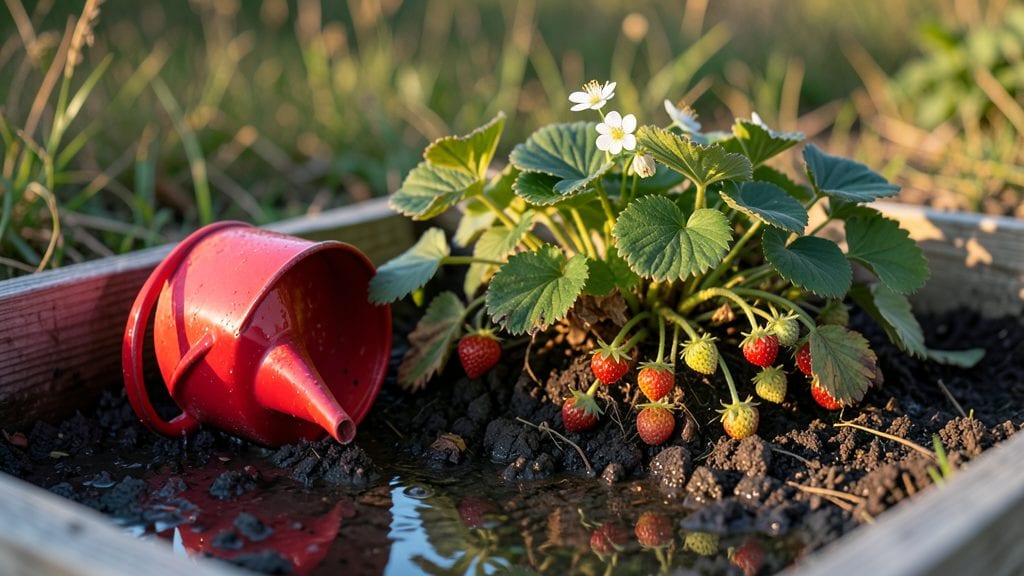
Overwatering strawberry plants turns their leaves limp and yellow faster than you can say "root rot." 🌱 I’ve watched my own berries drown in soggy soil, and the good news is you can bring them back—without losing the whole patch.
The key is catching it early and making a few simple adjustments that work even for beginners.
Yellowing leaves and moldy soil aren’t just ugly—they’re your plants screaming for help. Strawberries hate soggy feet, and once roots suffocate, recovery gets tricky. But here’s the thing: most overwatering fixes take less than 30 minutes and a handful of tools you probably already have.
We’re talking better drainage, smarter watering, and a little strategic pruning to save what’s left.
Within a week, you’ll see firmer leaves and fewer wilting signs if you act fast. The plants will bounce back with vibrant green growth, and your berries will thank you at harvest time. The secret? Stop guessing and start measuring—your strawberries will tell you when they’ve had enough.
Works for container-grown plants or in-ground beds, and the same principles apply whether you’re dealing with June-bearing or everbearing varieties. Let’s get those roots breathing again before it’s too late.
Common Causes of Plant Stress
Overwatering strawberry plants isn’t always about pouring too much water at once—it’s often a mix of poor drainage, improper soil conditions, and environmental factors that create the perfect storm for soggy roots. Understanding these triggers helps you adjust your care routine before damage sets in. Here’s why it happens:
Strawberries thrive in well-draining soil, but when water pools around roots, oxygen can’t reach them. This leads to:
- Compacted or clay-heavy soil: These soils hold water like a sponge, suffocating roots. Strawberries need loamy, sandy, or slightly gritty mixes to prevent waterlogging.
- No drainage holes in pots: Containers without exit points trap excess moisture, turning the root zone into a waterlogged swamp. Even "self-watering" pots can backfire if not monitored.
- Over-mulching: A thick layer of mulch (especially organic) can act like a barrier, preventing water evaporation and trapping humidity near the soil surface.
💡 Pro Tip: Test your soil’s drainage by filling a pot with soil and water, then timing how long it takes to drain. If it takes longer than 30 minutes, amend with perlite or coarse sand.
Strawberries hate moisture swings. Skipping water for days, then drowning them in one session, stresses the plant. Here’s why:
- Shallow root systems: Strawberries develop roots close to the surface (top 6–12 inches). Frequent shallow watering encourages weak, sprawling roots that can’t handle deep hydration.
- Fungal invitations: Alternating dry spells with heavy watering creates the ideal conditions for root rot (like Phytophthora) and gray mold.
- Overhead watering: Wetting leaves (especially in humid climates) promotes foliar diseases like powdery mildew, which weakens the plant’s ability to regulate moisture.
🎯 Fix It: Water deeply but infrequently—aim for 1–1.5 inches per week, delivered at the soil base (use a drip system or soaker hose). Early morning is best to reduce evaporation and fungal risk.
Not all water stress comes from your hose. Humidity, temperature, and even wind play sneaky roles:
| Factor | How It Causes Overwatering | Solution |
|---|---|---|
| High humidity | Slow evaporation = soil stays damp longer than it should. Strawberries in greenhouses or tropical climates are especially vulnerable. | Use well-aerated soil and space plants for airflow. |
| Cold temperatures | Cooler soil (<60°F) reduces root activity, making plants less efficient at absorbing water—leading to saturation. | Water less frequently in winter; mulch to insulate roots. |
| Wind or shade | Wind dries leaves faster, tricking you into overwatering. Shade slows evaporation, keeping soil wet. | Adjust watering based on microclimates—check soil moisture with your finger! |
✨ Remember: A moisture meter (or the "finger test") is your best friend—stick your finger 1–2 inches into the soil. If it’s damp, wait.
Most overwatering issues stem from well-intentioned but misinformed habits. Once you spot the signs (yellowing leaves, mold, or mushy stems), you can act fast to save your strawberries. Next up: how to diagnose the damage and revive your plants in 3 steps.
Fix Overwatered Strawberries Fast
Now that you know the signs and causes of overwatering, let’s get your strawberry plants back on track! The good news? With a few simple adjustments, you can revive drooping leaves, prevent root rot, and save your harvest.
Below, we’ve mapped out practical fixes based on the most common issues—plus prevention tips to keep your plants thriving long-term.
Problem: Too-frequent or deep watering leads to soggy soil, suffocating roots, and fungal growth.
How to Fix It:
- 🔥 Stop Watering Immediately – Let the soil dry out slightly (about 1–2 inches deep) before watering again. Stick your finger in the soil—if it’s damp past your first knuckle, wait.
- 🍳 Water Deeply but Less Often – Strawberries prefer 1–1.5 inches of water per week (including rainfall). Use a soaker hose or drip irrigation to deliver water slowly at the base, avoiding wetting leaves (which spreads disease).
- ⏰ Time It Right – Water early in the morning (before 10 AM) to reduce evaporation and fungal risks. Avoid evening watering, as damp leaves overnight invite mold.
💡 Prevention Tip: Install a moisture meter ($10–$20) to track soil dampness accurately. Overwatering is easier to prevent than fix!
Problem: Compacted or clay-heavy soil traps excess moisture, strangles roots, and invites rot.
How to Fix It:
- 🔪 Loosen the Soil – Gently aerate the top 6 inches of soil around plants using a fork or hand trowel. Avoid disturbing roots too much!
- 🥘 Add Organic Matter – Mix in compost, perlite, or coarse sand (1 part to 3 parts soil) to improve drainage. Avoid fresh mulch until soil dries—it can hold moisture and worsen the problem.
- 🌡️ Elevate Planting Beds (If Needed) – For heavy clay soil, consider raised beds with a mix of 50% garden soil, 30% compost, and 20% perlite/pine bark.
💡 Prevention Tip: Test your soil’s drainage by filling a jar with soil, adding water, and timing how long it takes to drain. If it sits longer than 30 minutes, amend it!
Problem: Yellow, mushy, or blackened leaves are signs of root rot or fungal infections—and they’re draining your plant’s energy.
How to Fix It:
- ✂️ Snip Off Diseased Leaves – Use sterilized scissors to cut away yellow, brown, or moldy leaves at the base. Dispose of them in the trash (not compost).
- 🌿 Focus on Healthy Growth – Prune back overly leggy or crowded stems to improve airflow. Aim for 3–4 strong leaves per plant to reduce stress.
- 🔥 Disinfect Tools – Wipe scissors with rubbing alcohol between cuts to prevent spreading disease.
💡 Prevention Tip: Space strawberry plants 12–18 inches apart to maximize airflow. Crowded plants stay damp longer and rot faster!
Problem: Overwatering creates the perfect breeding ground for gray mold (Botrytis), powdery mildew, or root rot.
How to Fix It:
- 💊 Apply Fungicide – Spray plants with a copper-based fungicide (like Bordeaux mixture) or neem oil solution (1 tbsp neem oil + 1 tsp mild soap per quart of water). Reapply every 7–10 days until new growth appears.
- 🌿 Remove Affected Fruit – If berries show signs of rot, pick and discard them immediately to stop the spread.
- 🔥 Boost Plant Immunity – Feed plants with a balanced fertilizer (10-10-10) or compost tea to strengthen their defenses.
💡 Prevention Tip: Rotate crops if you replant strawberries in the same spot yearly—fungi linger in soil!
With proper care, you’ll see improvement in 3–7 days:
- Day 1–3: Leaves may wilt further as roots adjust.
- Day 4–7: New growth emerges, and soil firms up.
- Week 2+: Plants regain vigor, and flowers/fruit form again.
✨ Pro Tip: If roots are black and mushy, the plant may not recover. In that case, snip it at the base and propagate from healthy runners!
Final Reminder: Overwatering is a fixable mistake—just act fast and adjust your habits. Your strawberries will bounce back with a little TLC! 🍓💚
Frequently asked questions
How do I know if my strawberries are overwatered vs. underwatered?
Check the soil first: stick your finger 1-2 inches deep. If it's damp, you're likely overwatering. Look for yellowing leaves (especially lower ones), mushy stems, or white mold on soil—these are red flags. Underwatered plants have crispy, dry edges and wilted leaves that don't bounce back when you touch them.
Can I save strawberries with root rot from overwatering?
It depends on how severe it is. If only the leaves are yellow but roots look firm, trim affected foliage and adjust watering. For black, mushy roots, the plant may not recover—try propagating from healthy runners instead. Always sterilize tools and improve drainage to prevent spread.
What's the best way to water strawberries to prevent overwatering?
Use a soaker hose or drip irrigation at the base, delivering 1-1.5 inches per week (including rain). Water early morning only—never overhead—and space plants 12-18 inches apart for airflow. A moisture meter ($10) takes the guesswork out of timing.
Will mulch make my strawberries more prone to overwatering?
Only if it's too thick! Use 2-3 inches of straw or wood chips—never fresh mulch on wet soil. Organic mulch should be pulled back slightly from stems to prevent rot. In heavy clay soil, skip mulch entirely until drainage improves.
How long does it take for strawberries to recover from overwatering?
With proper care, you'll see improvement in 3-7 days. New growth appears by Day 4-7, and full recovery takes 2-3 weeks if roots aren't severely damaged. Monitor soil moisture closely—overcorrecting by underwatering is just as harmful!