
Blooming
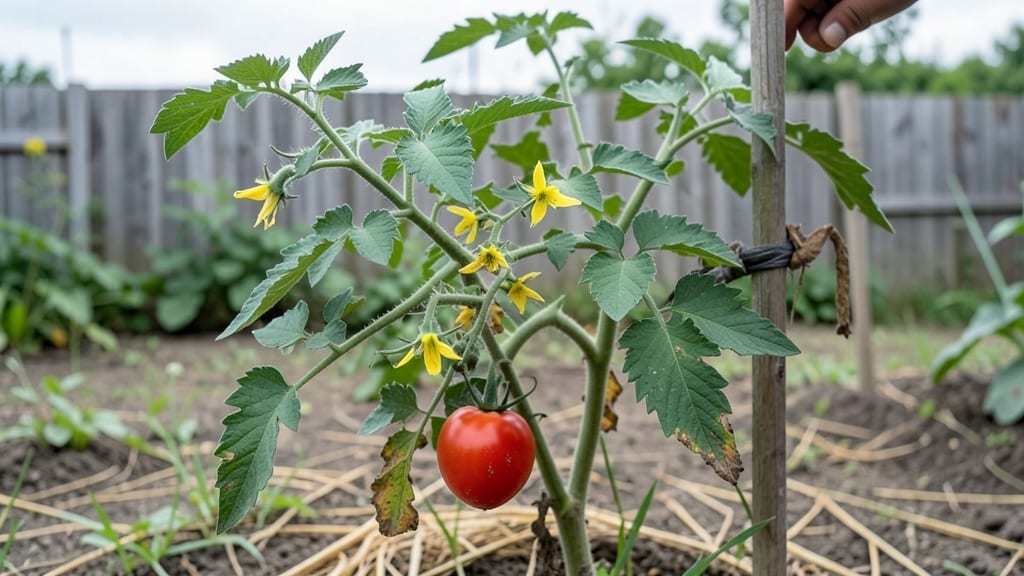
Tomato plants blooming early often signal ideal growing conditions, but can also indicate stress or improper care. Prune suckers to redirect energy, ensure consistent moisture, and protect from cold snaps to support healthy fruit development.
When your tomato plants start flowering earlier than expected, it’s often because they’ve hit their sweet spot—warm soil, plenty of sunlight, and just the right nutrients.
However, this rapid growth can sometimes backfire, leading to weaker stems or poor fruit set if the plant isn’t given proper support. 🌱 I’ve found that a little extra attention to watering consistency and protecting those blossoms from unexpected cold snaps can make all the difference in turning those early flowers into a bountiful harvest.
One key move I always make is switching fertilizers to a phosphorus-heavy blend once blooms appear, since this helps direct energy toward fruit development instead of leafy growth.
And don’t forget to prune those competitive suckers—they’re siphoning off energy your plant could be using to strengthen its structure and support those blossoms.
💡 In This Article
- Environmental Triggers for Early Tomato Blooms
- Adjusting Care for Early-Blooming Tomato Plants
Environmental triggers for early tomato blooms
Here's what's actually happening when tomato plants bloom early: they're responding to a perfect storm of environmental cues. Warm soil temperatures above 60°F trigger root activity that signals the plant to shift from vegetative growth to flowering.
This is especially true for varieties like 'Early Girl' or 'Stupice' that mature quickly—once soil hits 70°F consistently for 10-14 days, flowering can accelerate dramatically. The plant's internal clock also responds to daylight length, with many varieties needing 14-16 hours of light to initiate bloom formation.
Sunlight exposure plays a critical role too, but it's not just about duration—intensity matters. Tomatoes need 6-8 hours of direct sunlight daily to produce the energy required for flowering.
When plants receive full sun exposure (6+ hours), their leaves produce more photosynthates (sugars) through photosynthesis, which the plant then converts into floral hormones.
I've noticed that plants in southern climates often bloom earlier because they receive more intense sunlight even during shorter winter days, while northern plants may need supplemental grow lights to trigger the same response.
The soil nutrient profile creates another critical trigger. Tomatoes are heavy feeders, and when soil tests show high levels of nitrogen (N) without sufficient phosphorus (P) or potassium (K), plants prioritize leafy growth over fruit production.
However, once nitrogen levels drop (through leaching or plant uptake), the plant automatically shifts to flowering mode. This is why many gardeners see early blooms after a heavy rain flushes out excess nitrogen—suddenly, the plant's energy focus changes entirely.
The key ratio for flowering is a 1-2-2 NPK blend (nitrogen-phosphorus-potassium), which provides the phosphorus needed for root and flower development.
What most people don't realize is how temperature fluctuations can backfire on this process. While warm days trigger blooming, nights dropping below 55°F can cause flower buds to abort.
This temperature sensitivity explains why early blooms often lead to stunted fruit or blossom-end rot—the plant's energy gets diverted to protecting existing flowers rather than developing new ones.
The calcium deficiency that causes blossom-end rot becomes more pronounced when rapid growth (from warm days) isn't matched by consistent moisture and nutrient availability.
Consider these specific examples of how these triggers interact: In my Zone 7b garden, I've seen 'Cherry Tomato' plants bloom in early May when soil temperatures hit 65°F after a warm spell, only to have 70% of those flowers drop if night temperatures dip below 50°F.
The remaining flowers that set fruit often develop blossom-end rot because the plant's calcium uptake gets disrupted by the temperature swings.
This is why protecting early blooms with row covers during cold snaps is crucial—it maintains stable temperatures that allow the plant to focus on fruit development rather than stress responses.
One advanced technique I've used successfully is creating a "bloom trigger" by combining these factors intentionally. I'll start with a balanced 10-10-10 fertilizer when planting, then switch to a 5-10-10 blend once seedlings reach 6 inches tall.
When soil temperatures hit 60°F, I'll add a calcium nitrate supplement (1 tablespoon per gallon of water) every two weeks to prevent blossom-end rot while supporting the flowering transition. This approach gives me control over the blooming process and significantly reduces the risk of fruit set problems.