
Planting
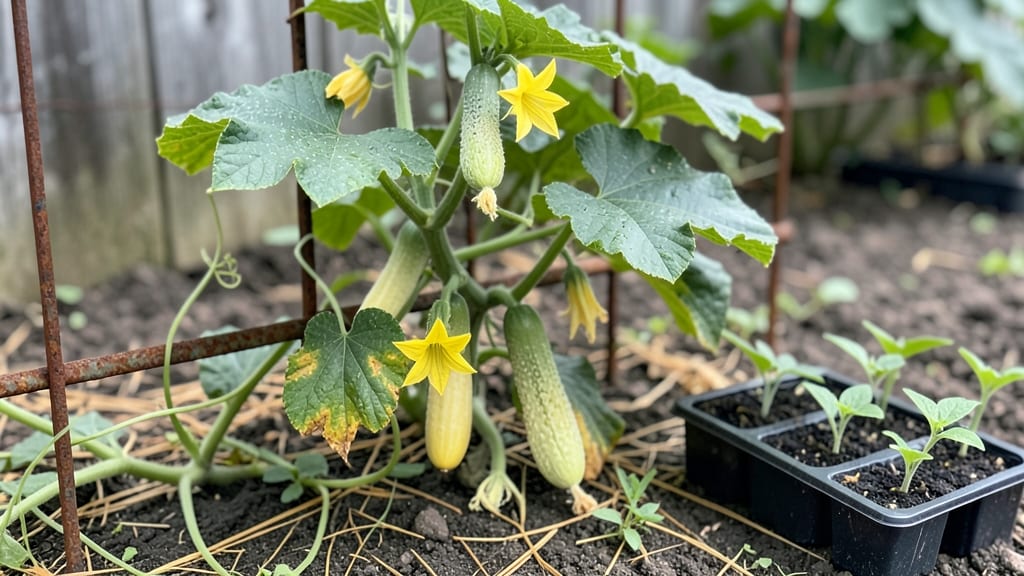
Planting lemon cucumbers in warm soil unlocks a harvest that tastes nothing like the bland store-bought kind. 🌱 I’ve grown them for three summers now, and the difference is shocking—bright, tangy fruit that’s perfect for salads or slicing into sandwiches.
The key starts with timing: wait until the soil reaches at least 60°F before planting, and you’ll avoid the bitter, stunted growth that comes from cold starts.
You’ll need a sunny spot with 6-8 hours of direct light daily, well-draining soil, and plenty of space—these vines sprawl 10-15 feet if left unchecked. I plant mine near a trellis to save space, and the vertical growth keeps the fruit cleaner and easier to harvest.
Start seeds indoors 4-6 weeks before your last frost for a head start, or buy sturdy seedlings from a nursery.
Once planted, keep the soil consistently moist but not soggy—lemon cucumbers hate wet feet. A mulch layer helps retain moisture and keeps weeds down, while regular feeding with compost tea or balanced fertilizer boosts yield.
Within 50-60 days, you’ll see those signature lemon-shaped fruits ripening on the vine, bursting with flavor.
Here’s the secret weapon: prune aggressively to encourage more fruit production. Pinch off early flowers if your plant looks stressed, and harvest frequently—overripe cucumbers signal the plant to slow down. Even in small spaces, these vines deliver abundant harvests if you give them the right conditions.
📚 In This Guide
- What you need
- Instructions
- Tips and common mistakes
- Wrapping up and next steps
What you need
- ● Lemon cucumber seeds – 10–15 seeds (or 3–5 seedlings if transplanting). Look for heirloom varieties like ‘Lemon Cucumber’ or ‘Lemon Drop’ for that tangy twist!
- ● Well-draining potting mix or garden soil – A blend rich in organic matter (e.g., compost + perlite or coconut coir). Avoid heavy clay soils.
- ● Containers or garden bed: Containers: 5-gallon pots or larger (at least 12" deep) with drainage holes. 3–5 plants per container (they’re vining!).
- ● Garden bed: Full-sun spot (6+ hours/day) with space for vines to sprawl (12–18" apart in rows, 3–4 ft between rows).
- ● Support structure – Trellis, cage, or sturdy stakes (4–6 ft tall) to guide vines upward and improve airflow.
- ● Fertilizer: Balanced organic fertilizer (10-10-10 or 5-5-5) at planting.
- ● Compost or worm castings for a slow-release boost.
- ● Gloves – To protect your hands from prickly vines and soil.
- ● Trowel or small shovel – For planting seeds/seedlings.
- ● Watering can or hose with a gentle spray nozzle – Cucumbers hate soggy roots!
- ● Pruning shears – For trimming vines and harvesting.
- ○ pH test kit (optional) – Aim for soil pH 6.0–6.8; amend with lime or sulfur if needed.
- ● Mulch (straw or shredded leaves) – To retain moisture and suppress weeds.
- ● Warmth – Lemon cucumbers thrive in 70–90°F soil temps. Wait until after the last frost (or start indoors 3–4 weeks before transplanting).
- ● Sunlight – Full sun (6+ hours/day) is a must for sweet, flavorful fruits.
- ● Water access – Consistent moisture (1–2 inches per week). Drought stress = bitter cucumbers!
Step-by-Step instructions for planting lemon cucumbers
Here's how to grow vibrant, productive lemon cucumber vines that thrive in full sun.
🌱 Step 1: Prepare the Planting Site for Optimal Growth
Lemon cucumbers demand rich, well-draining soil with plenty of organic matter. Work the first 12 inches of soil, amending it with 2-3 inches of compost or aged manure. These vines are heavy feeders, so I always mix in a 1/2 cup of balanced organic fertilizer (10-10-10) per planting hole. The goal is loose, airy soil that won't compact around roots.
Choose a location with at least 6-8 hours of direct sunlight daily. Lemon cucumbers produce their best fruit when basking in full sun. If your garden gets afternoon shade, position the vines where they'll receive morning sun and partial afternoon light instead. Avoid low spots where cold air settles—these vines are tender and won't tolerate frost.
🪴 Step 2: Plant Seeds or Transplants at the Right Depth
If starting from seed, sow 1 inch deep in warm soil (70-80°F). I plant 3-4 seeds per mound to ensure germination success, then thin to the strongest plant after 2-3 weeks. For transplants, dig a hole twice as wide as the root ball and place the plant so the top of the root ball sits 1 inch below soil level—this encourages strong root development.
Space plants 3-4 feet apart in rows that are 5-6 feet apart. This gives vines room to sprawl or climb while maintaining good air circulation. I always add a 2-inch layer of straw mulch around the base immediately after planting to retain moisture and suppress weeds. The mulch should stop 2 inches away from the stem to prevent rot.
☀️ Step 3: Provide Support and Consistent Watering
Lemon cucumbers need support to keep fruit off the ground. Install 5-6 foot tall trellises, stakes, or cages right when you plant. I use galvanized wire trellises because they last multiple seasons and provide excellent vine support. Train vines by gently weaving them through the trellis as they grow—this prevents breakage when fruit gets heavy.
Water deeply 2-3 times per week, aiming for 1-2 inches of water per week. The soil should stay consistently moist but not soggy. You'll know it's right when the top 1-2 inches feel damp but not waterlogged. Avoid overhead watering once plants flower—wet blossoms can lead to poor fruit set. Instead, water at the base using a soaker hose or drip irrigation.
✂️ Step 4: Maintain Through the Growing Season
Regular maintenance keeps lemon cucumbers productive. Prune vines weekly to remove any yellow or diseased leaves, using clean, sharp pruners. I also pinch off the first few flowers that appear—this encourages stronger vine growth before the main harvest. Once fruit begins setting, let it grow until 6-8 inches long for optimal flavor and texture.
Fertilize every 3-4 weeks with a liquid organic fertilizer (like fish emulsion) to replenish nutrients. You'll notice vines respond with darker green leaves and more vigorous growth. Watch for pests like cucumber beetles—handpick them early in the morning when they're sluggish. A row cover can also protect young plants from these pests.
🌿 Step 5: Harvest at Peak Ripeness
Lemon cucumbers are ready to harvest when they reach 6-8 inches long and develop a bright yellow-green color. Use a sharp knife or pruning shears to cut stems, leaving about 1/2 inch of stem attached to the vine. This encourages more fruit to set. Harvest every 2-3 days during peak production to keep the plant focused on producing new fruit.
Store harvested cucumbers in the refrigerator for up to 5-7 days. Here's the thing—these cucumbers are best eaten fresh. Their crisp texture and tangy flavor diminish quickly once picked. For maximum yield, keep the vines growing strong by removing any overripe or misshapen fruit immediately. You'll love the burst of flavor these homegrown vines deliver straight from your garden to your plate.
Tips & tricks for perfect lemon cucumber planting
Here's what I've learned after years of growing these vibrant vines that make all the difference between a decent harvest and a bountiful one.
Soil Preparation Secret: When amending your soil with that 2-3 inches of compost in Step 1, don't just mix it in—create small mounds where you'll plant. This gives roots immediate access to nutrients while preventing compaction. I also add a handful of egg shells (crushed) to each mound for extra calcium, which prevents blossom-end rot in the fruit. The 12-inch deep loosening is crucial—lemon cucumbers hate compacted soil.
Timing is Everything: Those 70-80°F soil temperatures in Step 2 are non-negotiable for germination. Use a soil thermometer to confirm—cold soil will delay sprouting by weeks. I've found that planting in late spring, after your last frost date but before summer heat arrives, gives vines the perfect 6-8 hours of sunlight they need without stressing from extreme temperatures. Morning sun is especially important for these varieties.
Support System Strategy: Don't wait until vines are established to install your 5-6 foot trellises in Step 3. Set them up immediately after planting—this gives vines something to grab onto right away. I use galvanized wire trellises because they're durable and allow air circulation, which prevents fungal diseases. Train vines by gently weaving them through the trellis every few days rather than letting them sprawl. This creates stronger stems that can support those 6-8 inch cucumbers without breaking.
Watering Wisdom: The 2-3 times per week watering schedule in Step 3 works best when you water deeply at the base rather than lightly on top. I've learned that checking soil moisture by feeling the top 1-2 inches is more reliable than guessing—it should feel damp like a wrung-out sponge, not bone-dry or soggy. Once flowers appear, switch to drip irrigation to keep blossoms dry, which prevents poor fruit set. This simple adjustment can double your yield!
Pro Tips for Planting Lemon Cucumbers
- Here's what I've learned after years of growing these vibrant vines that make all the difference between a decent harvest and a bountiful one.
- Soil Preparation Secret: When amending your soil with that 2-3 inches of compost in Step 1, don't just mix it in—create small mounds where you'll plant.
- Timing is Everything: Those 70-80°F soil temperatures in Step 2 are non-negotiable for germination.
Frequently asked questions
Got questions about growing lemon cucumbers? You’re not alone! Here are some of the most common queries—answered simply so you can get started with confidence.
When’s the best time to plant lemon cucumbers?
Plant lemon cucumbers after the last frost when soil temperatures hit 70°F (21°C) or warmer. Start indoors 4–6 weeks before transplanting if your growing season is short. They thrive in warm weather, so wait until daytime temps consistently stay above 60°F (15°C) for best results.
Are lemon cucumbers the same as regular cucumbers?
Yes! Lemon cucumbers are a variety of cucumber (like ‘Lemon Cucumber’ or ‘Lemon Drop’), not a separate plant. They’re just named for their bright yellow-green rind and tangy flavor—great for pickling or fresh eating. They grow like regular cucumbers but pack a zesty punch!
How do I support lemon cucumber vines?
Lemon cucumbers are vining plants, so they need support to grow upward. Use:
- A trellis (saves space and improves airflow)
- A cage (like a tomato cage, but taller)
- A stake (for smaller plants)
What pests or diseases should I watch for?
Lemon cucumbers can attract:
- Cucumber beetles (strip leaves; use row covers early)
- Powdery mildew (fuzzy white spots; improve airflow)
- Blossom end rot (dark spots on fruit; ensure consistent watering)
Can I grow lemon cucumbers in containers?
Lemon cucumbers thrive in 5-gallon containers with:
- Well-draining soil
- A trellis or cage (to save space)
- Full sun (6+ hours daily)
Wrapping up and next steps
Growing lemon cucumbers is a rewarding journey that brings tangy, refreshing flavors straight to your kitchen! With the right soil, sunlight, and care, you’ll enjoy a bountiful harvest of these unique vines—perfect for salads, snacks, or even pickling. 🌱
Now that you’re armed with all the tips and tricks, it’s time to roll up your sleeves and plant those seeds. Start small, keep experimenting, and soon you’ll be savoring homegrown zing in every bite. Happy gardening! 🌞